
When sourcing fabrics for apparel production, buyers often encounter quotes that vary not only in price but also in key fabric parameters such as GSM (grams per square meter), width, fiber composition, and finishing processes. Comparing these quotes directly by price alone can be misleading because each factor affects the fabric’s performance, suitability for the intended application, and ultimately the product quality. To make an informed decision, buyers need a structured approach that evaluates quotes based on how these fabric characteristics align with their production needs and end-use requirements.
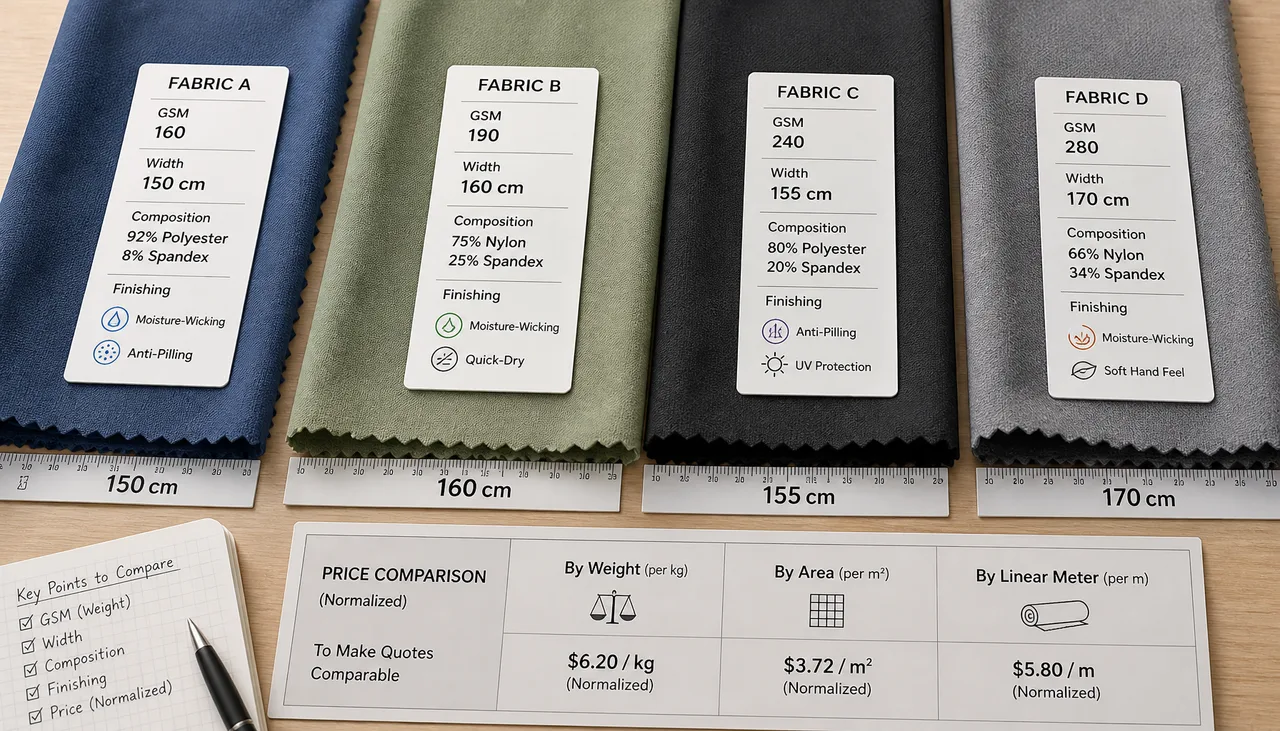
This guide explains practical criteria and considerations for buyers to compare fabric quotes effectively when GSM, width, composition, and finishing differ between suppliers.
—
1. Understand the Role of Key Fabric Parameters
GSM (Fabric Weight)
- GSM measures fabric density and is expressed in grams per square meter.
- A higher GSM indicates a heavier, usually thicker fabric, which often affects durability, opacity, drape, and warmth.
- The suitable GSM depends on the apparel type: for example, yoga leggings might require a medium GSM for stretch and support, while shapewear may need a higher GSM for compression.
- When comparing quotes, calculate price per unit of usable fabric weight (e.g., price per kilogram or price per square meter adjusted for GSM) rather than per linear meter alone.
Width
- Fabric width impacts how much fabric is needed for a given garment and influences cutting efficiency.
- A wider fabric can reduce fabric waste and lower cutting costs.
- When widths differ, buyers should normalize prices to a common usable area (e.g., price per square meter) for a fair comparison.
Composition (Fiber Content)
- Different fiber blends (e.g., polyester-spandex vs nylon-spandex) affect hand feel, stretch, durability, moisture management, and care requirements.
- Buyers should assess which composition best meets the functional and aesthetic needs of their apparel product.
- Composition also influences compatibility with finishing processes and overall fabric performance.
Finishing
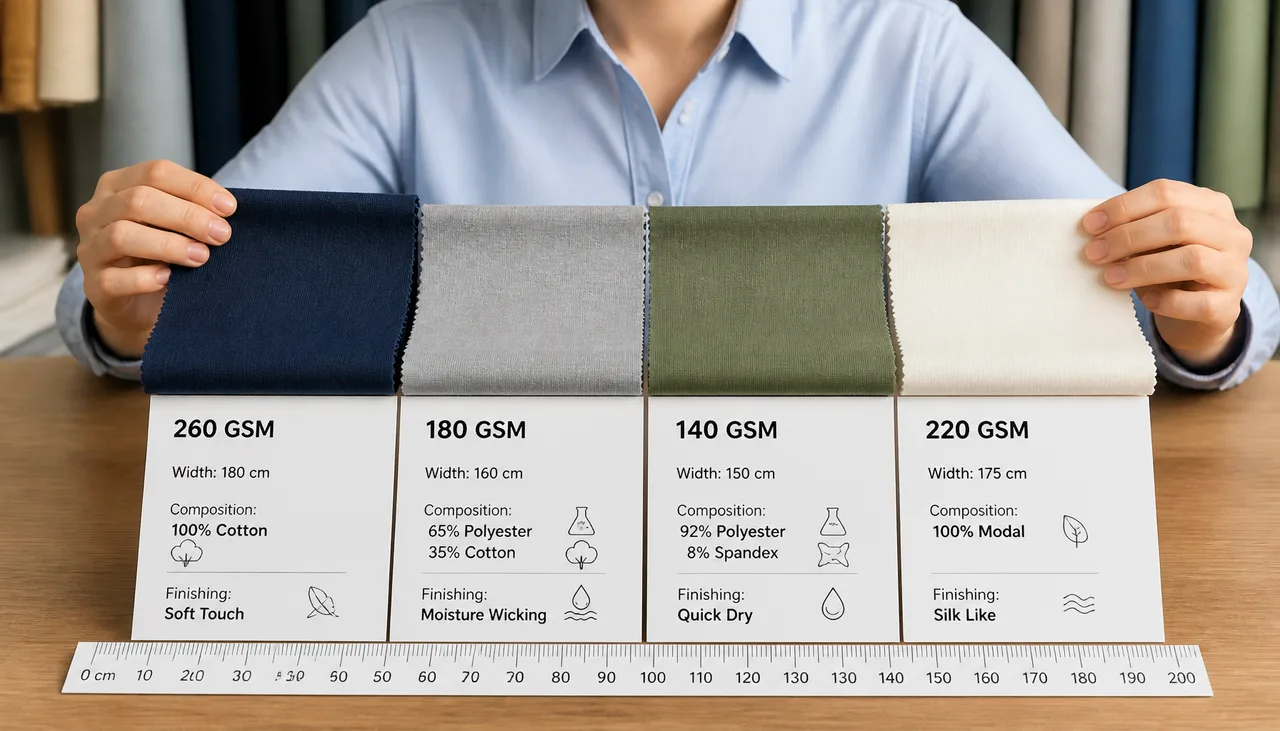
- Finishing treatments (e.g., anti-pilling, moisture-wicking, softening) add value by enhancing fabric properties.
- Finishing can affect price, feel, performance, and suitability for specific apparel uses.
- Buyers need to verify that finishing aligns with end-use requirements and production processes.
—
2. Normalize Quotes to a Common Basis
To compare quotes fairly when fabric parameters differ, buyers should convert prices into a common measurement basis that reflects the true cost and value.
- **Price per square meter or square yard**: Accounts for width and length, giving a direct basis for area comparison.
- **Price per kilogram**: Useful when GSM and fiber content affect fabric weight.
- **Adjusted price considering finishing and composition**: Recognize that some finishes or fiber blends add functional benefits worth a price premium.
Example: A fabric with higher GSM but lower price per linear meter may actually cost more per kilogram or per square meter than a lighter fabric with a higher linear meter price.
—
3. Align Fabric Specifications with Application Needs
A key step in comparing quotes is to evaluate how each fabric’s characteristics fit the intended apparel application.
- Identify the required **hand feel**, **stretch**, **durability**, and **functional performance** (e.g., moisture management, compression).
- Match GSM and composition to the product type (e.g., sportswear, lingerie, yoga wear).
- Consider finishing treatments needed to meet quality and performance criteria.
- Discuss with suppliers about fabric solution capabilities rather than only off-the-shelf fabrics to get a fabric that fits your exact needs.
—
4. Evaluate Supplier Service and Fabric Solution Approach
Price and fabric specs are important, but supplier capabilities and service quality matter.
- Confirm the supplier’s ability to provide stable supply and after-sales service.
- Check minimum order quantities (typically around 150 kg or 600 meters per color) to ensure your order fits their production model.
- Prefer suppliers who offer a fabric-solution approach — working with you to understand your application, fabric feel, function, GSM, and composition needs, providing sampling, testing, and confirmation before bulk production.
—
5. Practical Comparison Steps
1. Request detailed fabric data sheets including GSM, width, composition, finishing details, and test reports.
2. Calculate normalized price metrics such as price per kilogram and price per square meter.
3. Assess fabric suitability against your product requirements for hand feel, performance, and durability.
4. Consider finishing and additional treatments that add value or cost.
5. Factor in supplier MOQ and service reliability.
6. Conduct or request fabric sampling and testing to validate performance claims.
7. Engage with suppliers on fabric solutions, not just prices, to optimize your choice.
—
Summary
When GSM, width, composition, and finishing differ across fabric quotes, buyers should avoid comparing price alone. Instead, normalize prices to comparable units, evaluate fabric attributes in relation to end-use needs, and factor in supplier service and fabric solution capabilities. This structured approach ensures selecting a fabric that balances cost, quality, and performance for successful apparel production.
—
*This guidance reflects best practices for B2B fabric sourcing and fabric-solution workflows in stretch knitted synthetic fabrics for lingerie, sportswear, yoga wear, and related apparel, emphasizing the importance of matching fabric characteristics to application needs and supplier partnership.*