
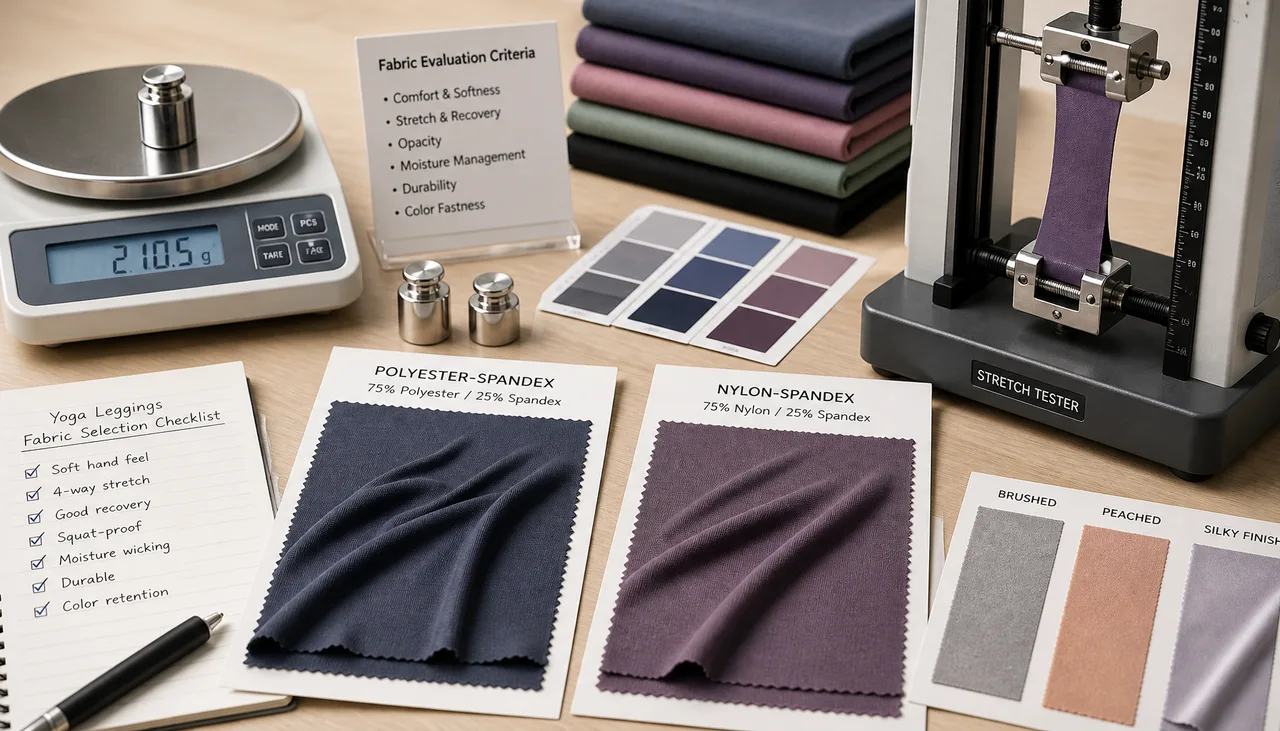
Choosing the right fabric for yoga leggings is a critical decision for apparel brands aiming to meet consumer expectations for comfort, performance, and durability. For brands sourcing stretch knitted fabrics suitable for yoga wear, understanding how fabric characteristics align with application needs is essential. This guide outlines key considerations and a practical approach to selecting fabric for yoga leggings based on established B2B fabric solution knowledge.
—
1. Understand the Application and Buyer Needs
The starting point for fabric selection is a clear understanding of the intended application—yoga leggings—and the buyer’s specific needs. This includes:
- **Performance requirements:** Stretchability, breathability, moisture management, and durability.
- **Hand feel:** The tactile comfort and smoothness against the skin.
- **Functional needs:** Compression level, shape retention, and freedom of movement.
- **Fabric weight (GSM):** The fabric’s grams per square meter, which affects opacity, warmth, and fit.
- **Fabric type:** The fiber composition and knit structure that influence stretch and recovery.
This comprehensive profiling ensures the fabric choice aligns with the leggings’ functional and aesthetic demands.
—
2. Key Fabric Types for Yoga Leggings: Polyester-Spandex vs Nylon-Spandex
Two core synthetic fabric blends dominate activewear, including yoga leggings:
– Polyester-Spandex: Known for durability, colorfastness, and moisture-wicking properties. Polyester blends tend to have good dimensional stability and quick drying times, making them suitable for intense physical activity.
– Nylon-Spandex: Offers superior softness and a smooth hand feel, with excellent stretch and recovery. Nylon blends typically provide a more luxurious touch and higher abrasion resistance, which can enhance garment longevity.
Both blends can be engineered with varying stretch levels and finishes to match specific yoga wear performance needs. The final choice depends on the precise balance of comfort, support, and durability the brand wants to achieve.
—
3. Consider Fabric Weight (GSM)
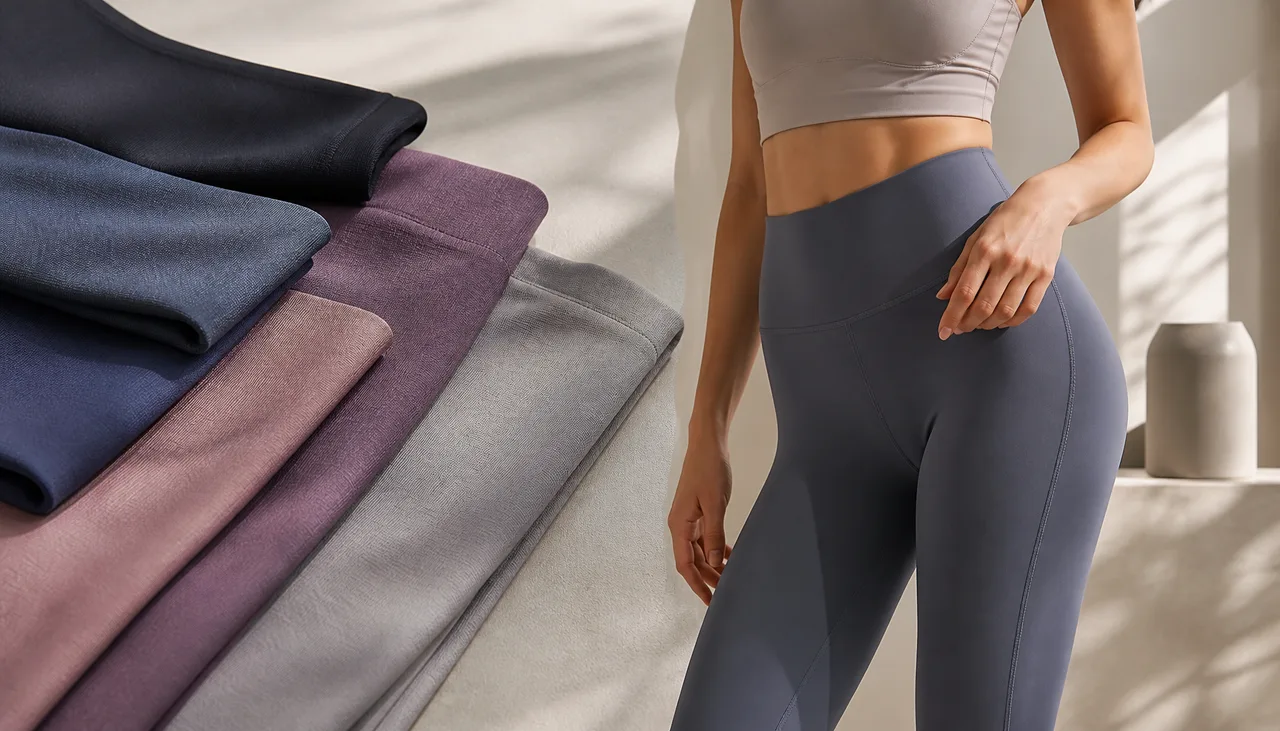
Fabric weight, measured in grams per square meter (GSM), influences the leggings’ feel and functionality:
- **Lower GSM fabrics** are lighter and more breathable but may offer less opacity and compression.
- **Higher GSM fabrics** provide better coverage and shaping but might reduce breathability.
Brands should select a GSM that balances coverage and comfort appropriate for yoga practice, where flexibility and moisture management are critical.
—
4. Assess Stretch and Recovery Properties
Yoga leggings require fabrics with multi-directional stretch (typically four-way stretch) to facilitate unrestricted movement. The fabric must also have excellent recovery to maintain shape after repeated wear and washing.
Stretch knitted fabrics designed for activewear combine spandex with synthetic fibers to offer this performance. Testing fabric stretch and recovery during sampling phases is crucial to confirm suitability.
—
5. Evaluate Finishing and Quality Control
Finishing processes affect the fabric’s hand feel, durability, and appearance. For yoga leggings, finishes may enhance softness, reduce pilling, or impart antimicrobial properties.
Quality control is essential to ensure consistency in fabric performance across production batches, supporting stable supply and customer satisfaction.
—
6. Leverage a Fabric Solution Provider’s Workflow
Working with a fabric supplier that offers a full fabric solution workflow can streamline the selection process:
- **Needs analysis:** The supplier collaborates with the brand to understand application, hand feel, function, GSM, and fabric type preferences.
- **Fabric matching:** Existing fabric options are analyzed against the buyer’s requirements.
- **Fabric development:** If needed, customized fabric solutions are developed.
- **Sampling and testing:** Prototypes are produced and evaluated for performance criteria.
- **Confirmation and bulk production:** Once approved, stable supply and after-sales service support the brand’s production schedule.
This approach ensures fabric selection is application-driven and quality-assured rather than a simple product purchase.
—
7. Additional Considerations
- **Minimum order quantity (MOQ):** Brands should confirm MOQ requirements with suppliers to align with production scale.
- **Stable demand and sourcing team:** A professional sourcing team helps maintain consistent communication and quality control.
- **End-use environment:** Consider yoga wear’s exposure to sweat, stretching, washing frequency, and wearer comfort.
—
Summary
Apparel brands choosing fabric for yoga leggings should anchor their decision on a thorough understanding of the leggings’ functional and aesthetic needs, focusing on fabric type (polyester-spandex or nylon-spandex), fabric weight, stretch and recovery, and finishing quality. Collaborating with a fabric solution provider that offers a comprehensive development and supply workflow can help brands match fabric attributes precisely to their yoga wear application, ensuring performance, comfort, and durability in the final product.
—
*This guidance draws on B2B fabric solution expertise, emphasizing a buyer-centric, application-driven approach to fabric selection for stretch knitted apparel such as yoga leggings.*