When apparel brands compare roll-length requirements across fabric suppliers, they should consider several key factors to ensure alignment with their production needs and sourcing strategies. Here is a clear explanation to guide apparel brands in this comparison:
- Understand Minimum Order Quantities (MOQs) and Roll Length Standards
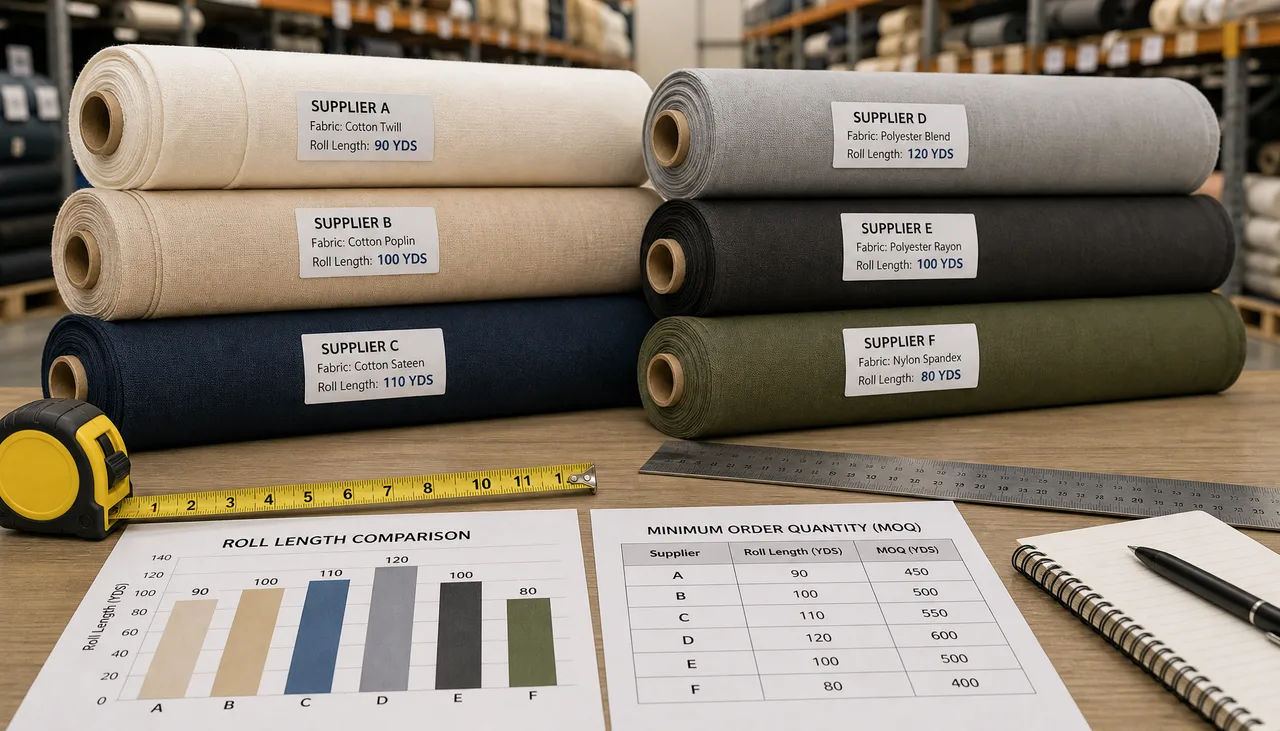
Fabric suppliers typically set minimum order quantities to manage production and inventory efficiently. For example, a common MOQ reference is about 150 kilograms per color, which translates roughly to 600 meters per color roll. Brands should confirm each supplier’s MOQ and typical roll length to ensure these fit their production volume and scheduling.
- Brands with stable, larger production needs benefit from suppliers offering consistent roll lengths meeting these MOQ thresholds.
- Brands with smaller or variable orders should be aware that some suppliers may not accommodate small one-off purchases or very short roll lengths.
- Align Roll Length with Production Planning and Fabric Matching
Since fabric suppliers often position themselves as fabric solution providers—focusing not just on supplying fabric but also on helping buyers match fabric choices to end-use application, hand feel, functional needs, and fabric type—the roll length offered should support this solution-oriented approach.
- Consistent roll lengths simplify cutting and reduce fabric waste during garment manufacturing.
- Clear roll-length requirements help ensure that fabric lots are homogeneous in color and performance, which is critical for apparel quality and appearance.
-
Evaluate Supplier Stability and After-Sales Service
Stable supply and reliable after-sales service are vital for successful sourcing partnerships. When comparing roll lengths, brands should also consider the supplier’s ability to deliver consistent roll sizes over time and maintain fabric quality batch-to-batch. This stability helps avoid production delays and quality issues related to fabric inconsistencies. -
Consider the Fabric Type and Application Needs
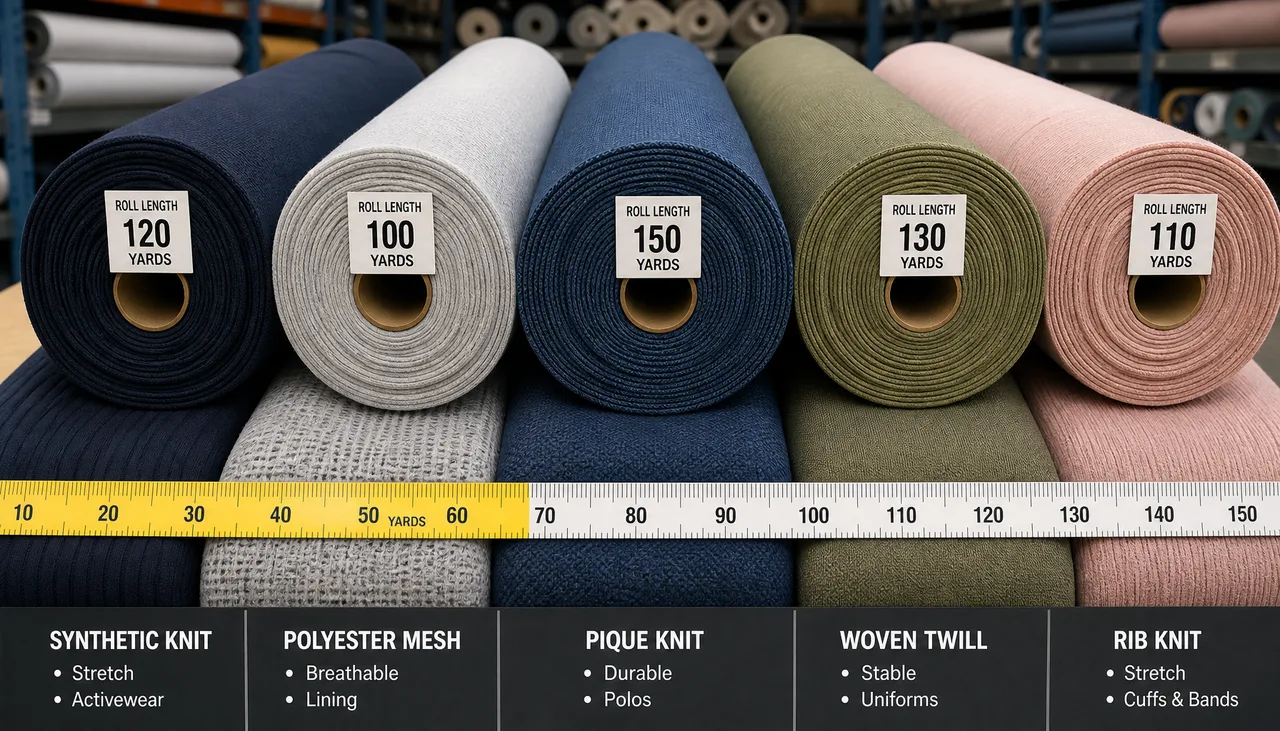
Different fabric types and applications might influence preferred roll length. For example, synthetic knitted fabrics used for lingerie, sportswear, yoga wear, and shapewear often require precise fabric qualities and finishing.
- Brands should verify that roll length offerings meet the technical and performance testing requirements, facilitating proper sample approval and bulk production.
Summary
Apparel brands comparing roll-length requirements across fabric suppliers should:
- Confirm each supplier’s MOQ and roll length standards (e.g., ~600 meters per color roll for typical MOQ).
- Ensure roll lengths suit their production volume and fabric application needs.
- Prioritize suppliers who provide stable supply, consistent quality, and after-sales support.
- Align roll-length expectations with the supplier’s fabric solution approach to optimize fabric matching and production efficiency.
By carefully evaluating these aspects, brands can select suppliers whose roll-length offerings and fabric capabilities best support their production goals and product quality standards.