
When apparel brands consider sourcing stretch fabrics—such as those used in lingerie, sportswear, yoga wear, and shapewear—thorough supplier qualification is essential before committing to bulk purchases. This process helps ensure the fabric aligns with the intended application requirements, quality standards, and production needs. Key qualification steps and criteria include:
1. Confirm Real Production Needs and Stable Demand
Brands should verify that their projected fabric volumes and order frequency meet the supplier’s minimum order quantity (MOQ) and business model. For example, a typical MOQ for stretch fabrics might be around 150 kilograms or 600 meters per color. Suppliers generally prefer buyers with stable demand and production plans over small, one-off purchases or purely price-driven inquiries.
2. Evaluate Fabric Application Fit and Performance
A critical step is assessing whether the fabric matches the brand’s specific application requirements. This includes understanding:
– The intended apparel use (e.g., lingerie, yoga leggings, sports bras)
– Desired hand feel and stretch characteristics
– Functional properties such as durability and finishing
– Fabric weight (expressed as GSM) and composition (commonly polyester-spandex or nylon-spandex blends)
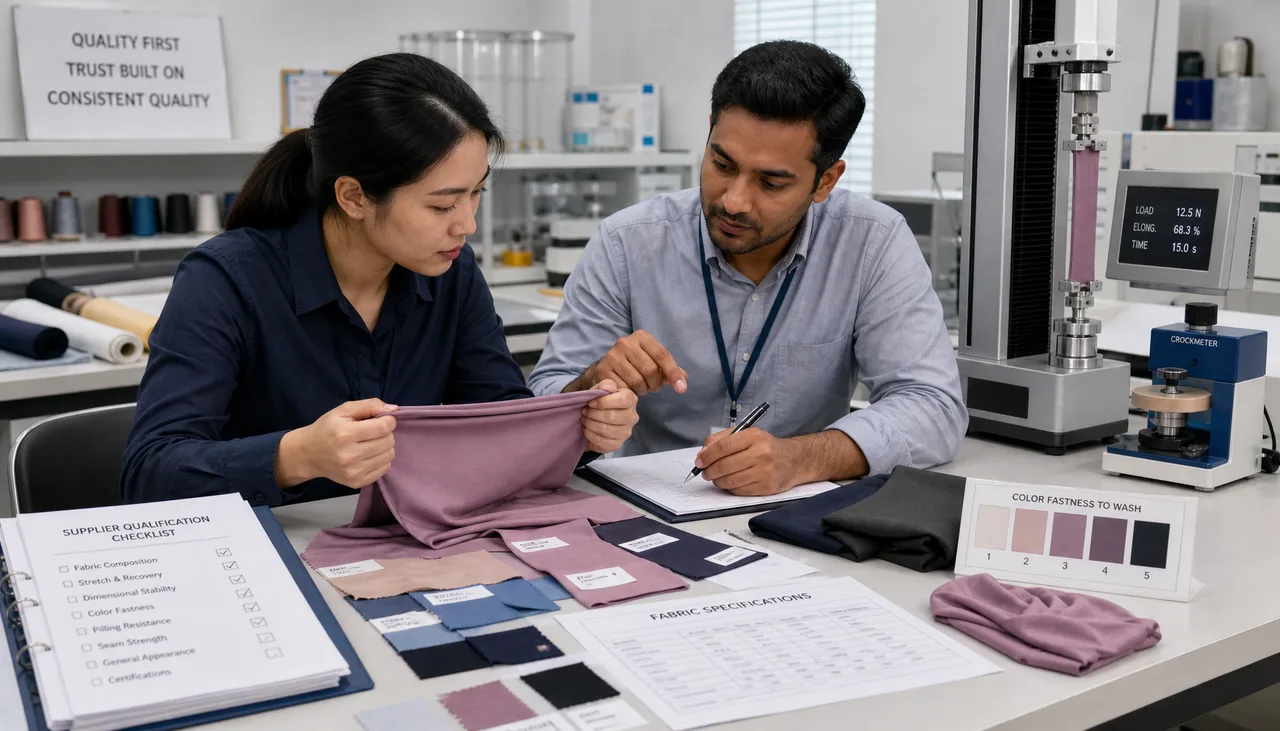
Brands should work with suppliers who can help analyze these needs and recommend suitable fabric options tailored to the end use.
3. Request and Review Fabric Samples Through a First Article Test
Before bulk ordering, brands should obtain samples for testing and confirmation. The first article test involves:
– Receiving fabric samples that reflect the requested specifications
– Conducting performance evaluations such as stretch recovery, hand feel, colorfastness, and finishing quality
– Confirming the fabric meets both functional and aesthetic criteria
This step reduces risk by validating that the supplier’s fabrics perform as promised in real production scenarios.
4. Assess Supplier’s Production and Quality Control Capabilities
Brands should inquire about the supplier’s:
– Fabric development workflow, from yarn selection and knitting to dyeing, printing, finishing, and quality control
– Ability to provide stable supply and reliable after-sales service to support ongoing production needs
– Experience with similar apparel categories and fabric types

A supplier that offers a one-stop fabric solution workflow and demonstrates rigorous quality assurance is better positioned to meet brand expectations.
5. Verify Professionalism and Communication
Preferred suppliers usually have a professional sourcing or service team capable of efficiently handling technical questions, fabric matching, lead times, and logistical details. Brands benefit from working with suppliers who clearly communicate product capabilities, MOQ requirements, and provide helpful content addressing common buyer questions.
Summary
To qualify a new stretch-fabric supplier before placing a bulk order, brands should:
– Confirm their production volume and demand align with supplier MOQs
– Clearly define and communicate fabric application needs and performance criteria
– Conduct first article testing to validate fabric samples
– Evaluate the supplier’s manufacturing, quality control, and service capabilities
– Ensure professional and transparent communication channels
This methodical approach helps brands mitigate risks and select suppliers who can reliably deliver fabrics tailored to their product performance and quality standards.