
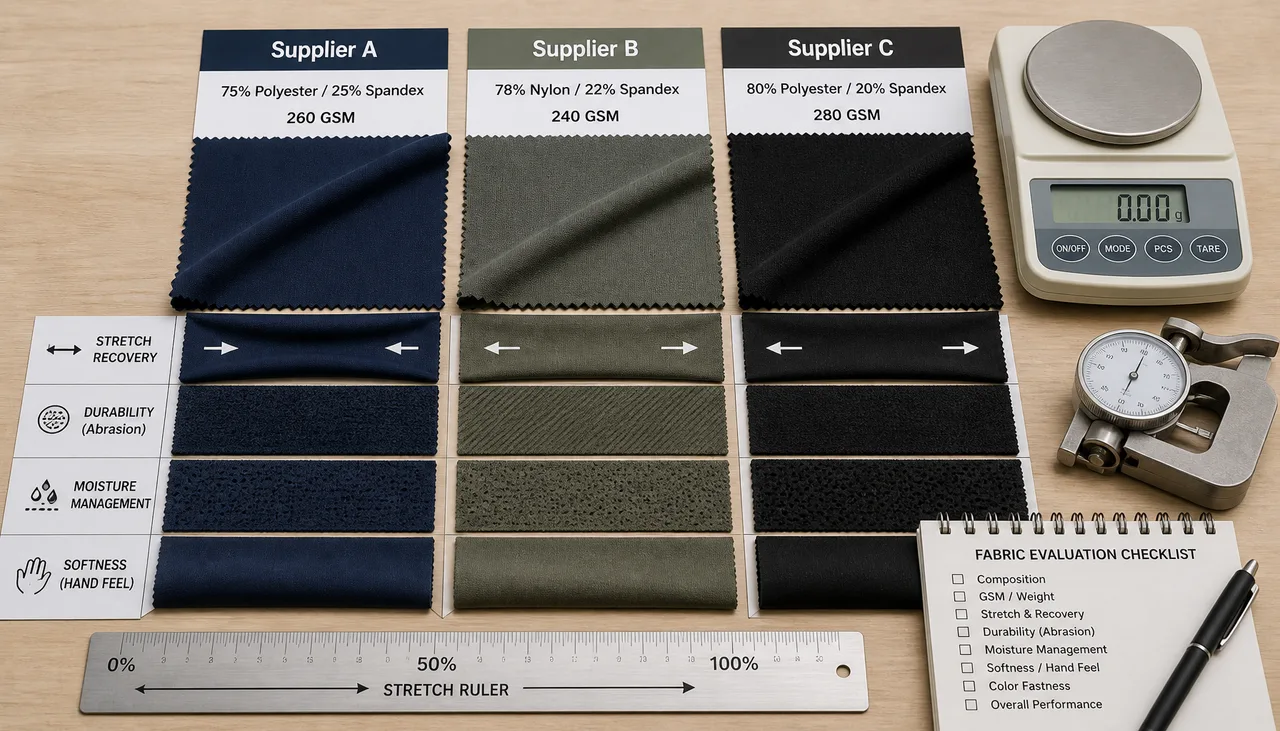
How Should Buyers Compare Suppliers of Fabric for Running Tights?
When sourcing fabric for running tights, B2B apparel buyers need to evaluate suppliers based on a comprehensive fabric solution approach rather than just the fabric product itself. The following key factors should guide buyers in comparing fabric suppliers effectively:
- Understanding Buyer Needs and Application Fit
The starting point is clearly defining the intended application—in this case, running tights—and the functional requirements such as stretch, durability, hand feel, and moisture management. Buyers should assess how well a supplier understands these needs and whether they can match fabric options that meet specific performance criteria. For running tights, this typically involves stretch knitted fabrics made from polyester-spandex or nylon-spandex blends, known for their elasticity and comfort.
-
Fabric Type, Composition, and GSM
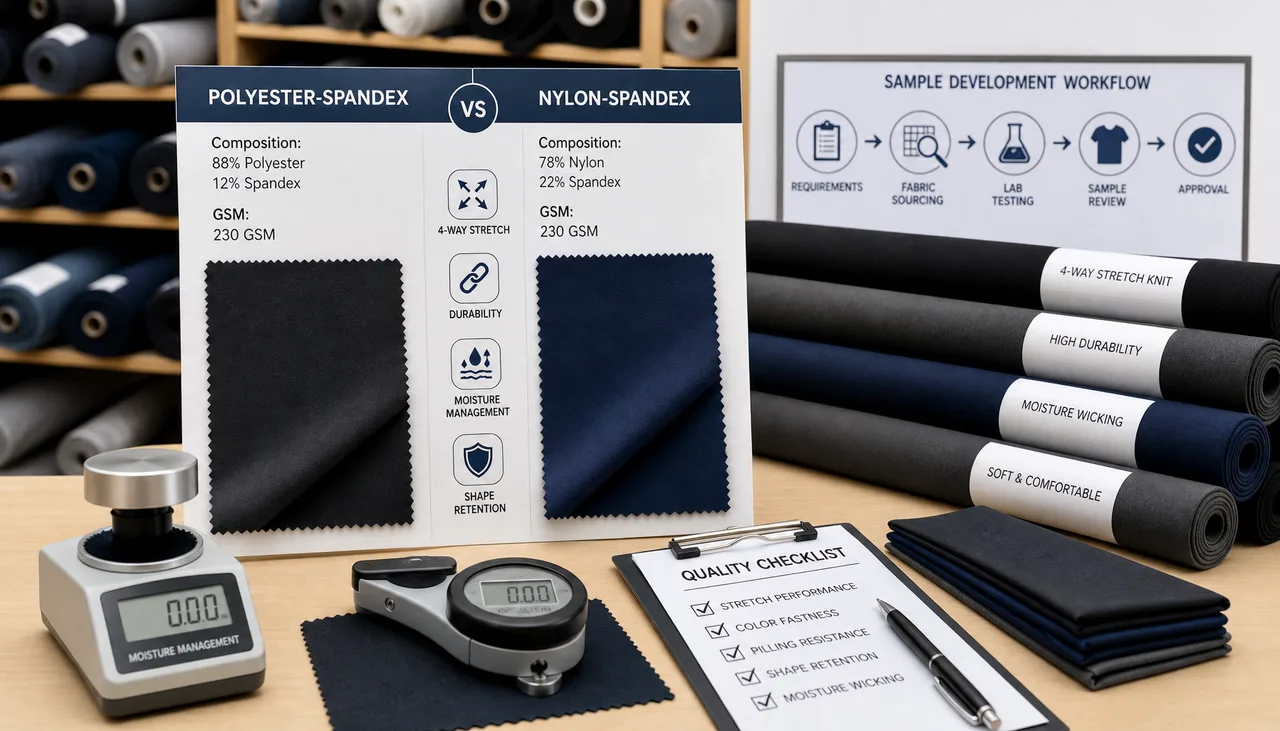
Buyers should compare the types of knitted synthetic fabrics offered, focusing on composition differences like polyester-spandex versus nylon-spandex, which affect feel, durability, and performance. The fabric weight, indicated by GSM (grams per square meter), is another important parameter influencing stretch, opacity, and support. A good supplier will provide guidance on suitable GSM ranges for running tights to balance comfort and functionality. -
Quality Control and Finishing Processes
The supplier’s ability to maintain consistent quality through knitting, dyeing, printing, finishing, and quality control is critical. Buyers should inquire about the supplier’s testing processes and quality assurance measures to ensure the fabric maintains performance standards through production and wear. -
Sample Process and Fabric Matching Support
A key differentiator is whether the supplier offers a fabric solution workflow: from understanding buyer requirements, providing existing suitable products, developing or designing customized fabric solutions, to sampling, testing, and confirmation. This collaborative approach helps ensure the fabric meets the end-use demands before committing to bulk orders. -
Minimum Order Quantities (MOQ) and Supply Stability
Buyers need to consider the supplier’s MOQ, typically around 150 kg per color (approximately 600 meters), to ensure it aligns with production needs. Evaluating the supplier’s ability to provide a stable supply chain and after-sales service is also essential for long-term partnerships. -
Professionalism and Buyer Support
Preferred suppliers cater to buyers with real production needs, stable demand, and professional sourcing teams. Suppliers that actively support application-specific fabric selection, provide clear MOQ information, and offer transparent communication about fabric capabilities are generally more reliable partners.
In summary, when comparing fabric suppliers for running tights, buyers should prioritize those offering a fabric solution mindset—combining technical fabric knowledge, application-focused guidance, sample development, and reliable production support—rather than simply sourcing an individual fabric SKU. This approach helps align fabric properties with the performance and feel requirements of running tights, facilitating successful product development and production.