
When selecting sun-protection fabrics with cooling claims, buyers—especially those in B2B apparel sourcing and product development—need to carefully assess these claims in the context of real production needs and application requirements. Cooling performance is a functional characteristic that must be matched appropriately to the intended apparel use, fabric type, and wearer expectations. Here are key factors for buyers to consider when evaluating cooling claims in sun-protection fabrics:
1. Understand the Application and Functional Needs
Cooling claims should be assessed relative to the garment’s end use, such as activewear, outdoor sportswear, or casual sun-protective clothing. Buyers need to clarify whether the cooling effect is intended to enhance wearer comfort during physical activity, reduce heat buildup in direct sunlight, or provide moisture management. The fabric’s hand feel, breathability, and stretch properties also influence how the cooling function performs in the final product.
2. Examine Fabric Composition and Construction
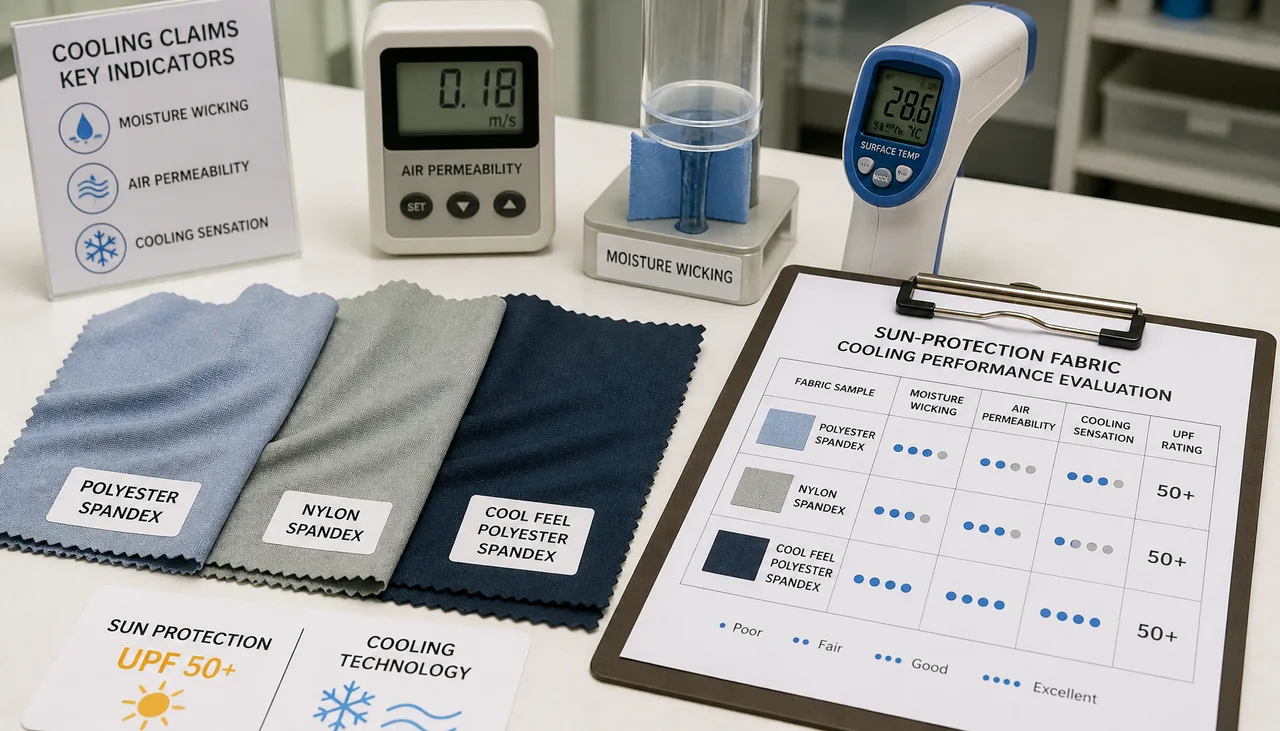
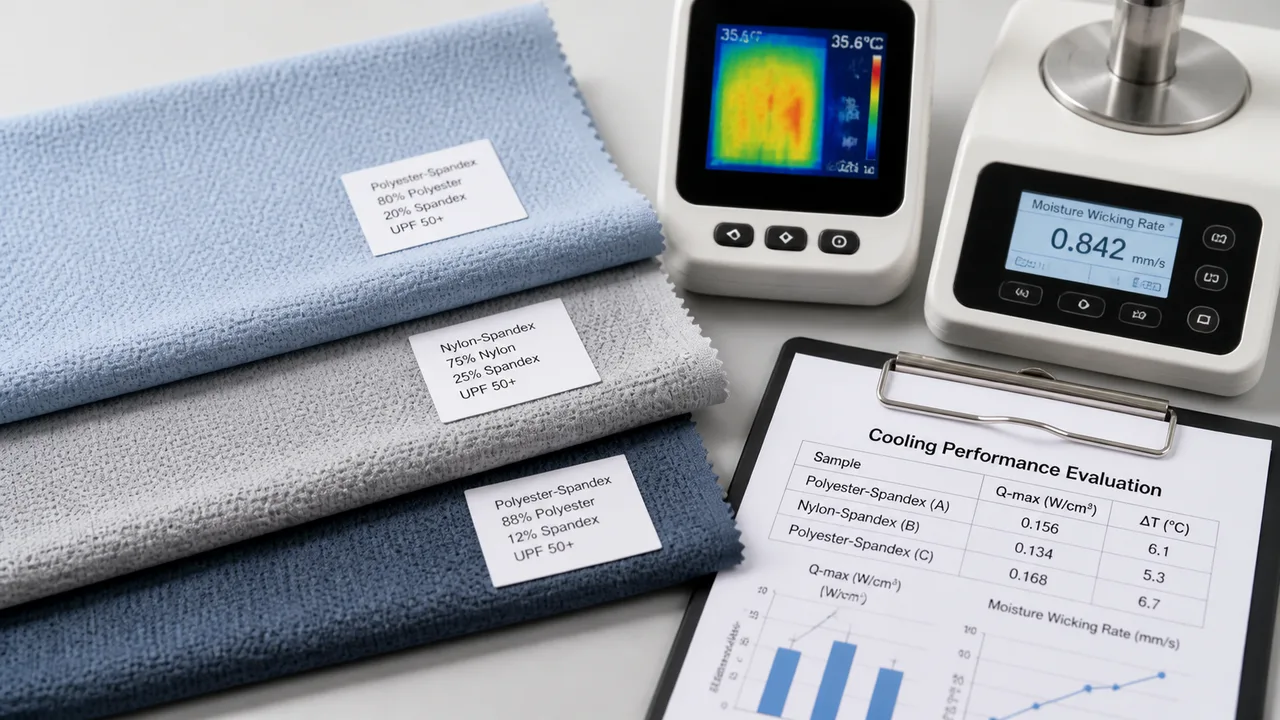
Sun-protection fabrics often use knitted synthetic fibers like polyester-spandex or nylon-spandex blends. These fiber types and their fabric weight (measured in GSM) critically affect thermal regulation and moisture wicking, which contribute to cooling. Buyers should inquire about the fabric composition and weight, as heavier or denser fabrics may hinder cooling despite sun-protection claims.
3. Demand Objective Performance Data and Testing
Cooling claims should be supported by standardized testing or reliable performance data rather than marketing statements alone. Buyers should request evidence of laboratory testing that evaluates parameters such as moisture wicking rate, air permeability, thermal resistance, or infrared reflectance. This technical information helps verify if the fabric’s cooling features are effective under conditions that simulate actual wear.
4. Consider the Fabric Supplier’s Solution Approach
A reputable fabric supplier does more than offer off-the-shelf products; they provide fabric solutions tailored to buyer needs. Buyers should engage suppliers who understand their application requirements and can match or develop fabrics with proven cooling functionality integrated alongside sun protection, stretch, and comfort factors. This collaborative process typically includes sampling, performance testing, and confirmation before bulk production.
5. Evaluate Supply Stability and After-Sales Support
Cooling performance can depend on fabric finishing techniques or special treatments that affect durability. Buyers should consider suppliers that guarantee stable supply and after-sales service to maintain consistent fabric quality and cooling effectiveness over time.
In summary, buyers evaluating cooling claims in sun-protection fabrics should focus on how the fabric’s composition, construction, and tested performance align with their specific apparel application and wearer comfort goals. Collaborating closely with knowledgeable fabric suppliers who provide solution-oriented services and verifiable data is essential to making informed purchasing decisions.