
When selecting stretch knitted fabrics for activewear such as yoga wear, sports bras, lingerie, or shapewear, B2B apparel buyers must carefully evaluate two critical fabric performance aspects: stretch and recovery. These factors directly influence the comfort, fit, and durability of the finished garment. Understanding how to assess them before ordering fabric can help buyers ensure their products meet functional and quality expectations.
Why Stretch and Recovery Matter in Activewear Fabrics
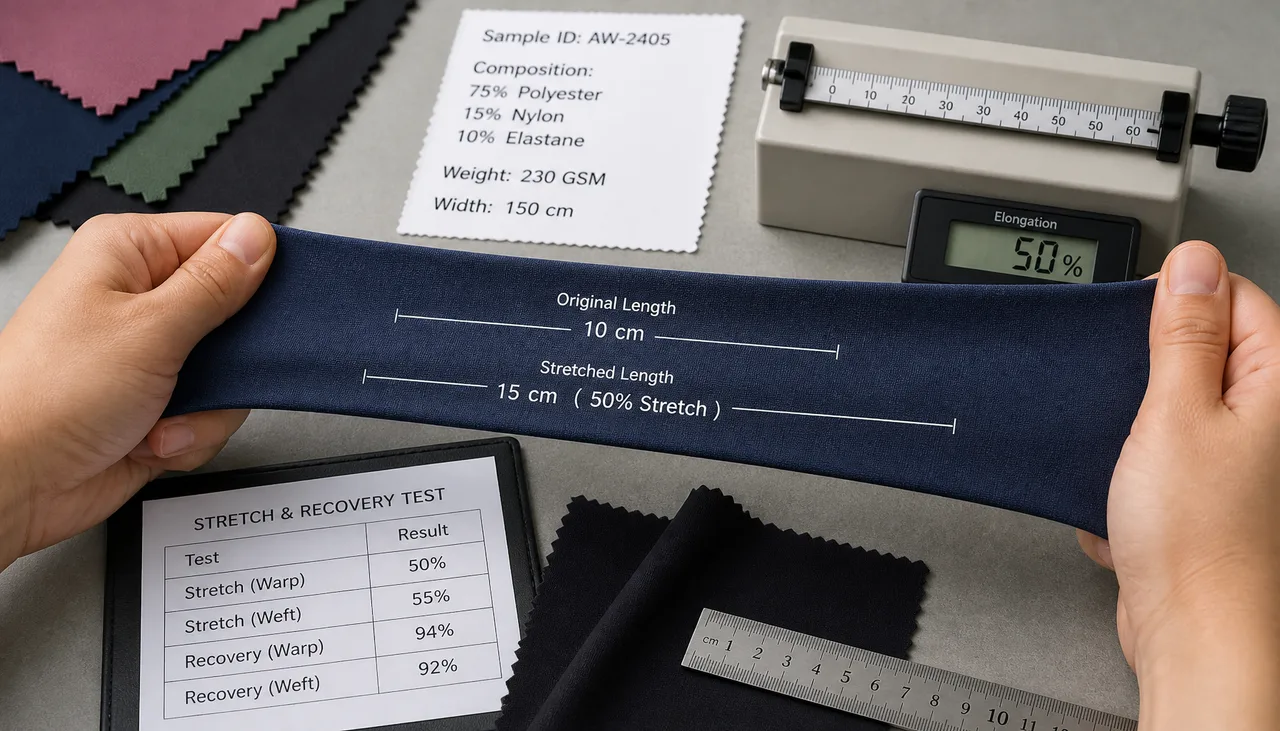
Activewear fabrics need to accommodate body movement and return to their original shape after stretching. “Stretch” refers to the fabric’s ability to elongate under tension, enabling garments to move with the wearer. “Recovery” is the fabric’s capacity to return to its initial dimensions after stretching, which prevents sagging and loss of support over time. Both properties are vital for maintaining garment fit, support, and aesthetic appeal, especially in performance apparel designed for dynamic activities.
Key Factors Buyers Should Consider
1. Application and Functional Requirements
Buyers should first clarify the intended use of the fabric—yoga pants, sports bras, shapewear, or lingerie—as different applications demand different levels of stretch and recovery. For example, shapewear requires higher compression and strong recovery to maintain shape, while yoga leggings prioritize comfort and four-way stretch for unrestricted movement.
2. Fabric Composition and Type
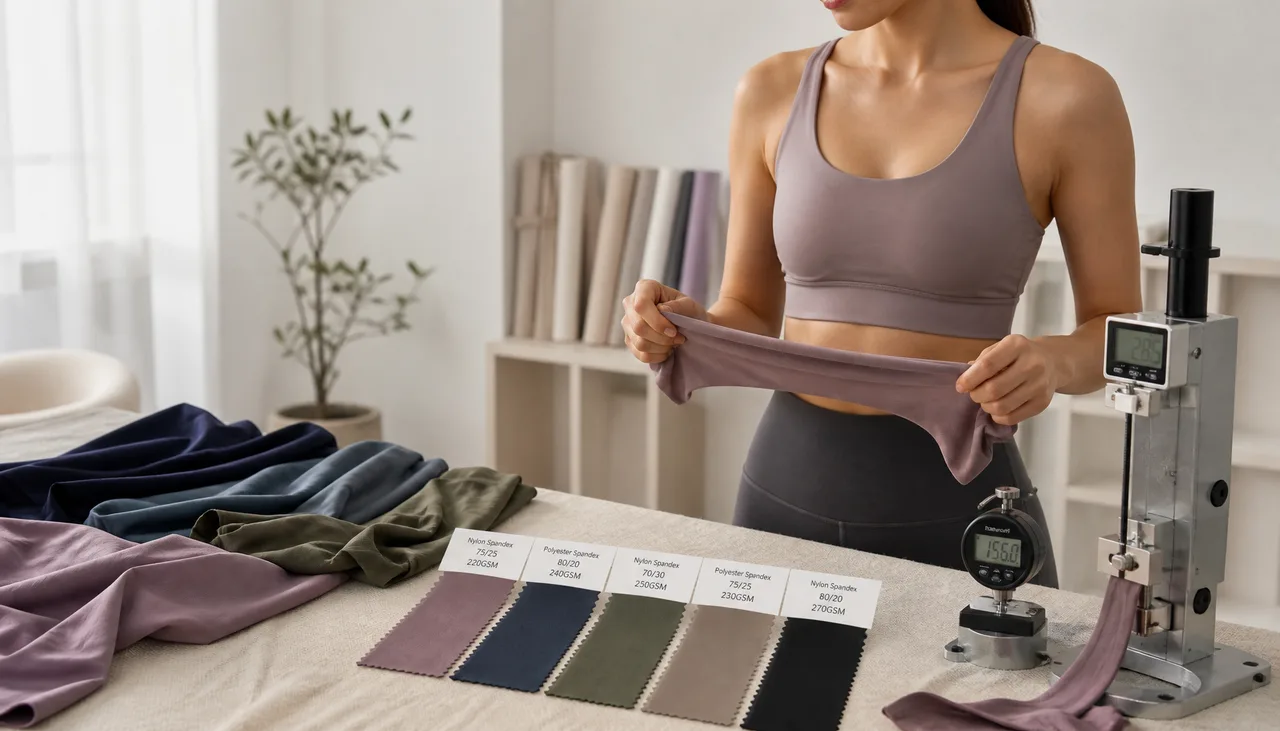
Common activewear fabrics blend synthetic fibers like polyester or nylon with elastane (spandex). Polyester-spandex and nylon-spandex blends have different hand feels and stretch characteristics, influencing both stretchability and recovery. Knowing the fiber blend helps anticipate fabric behavior under strain.
3. Fabric Weight (GSM)
The fabric’s weight, measured in grams per square meter (GSM), affects stretch and recovery. Heavier fabrics may provide greater compression and recovery but can reduce breathability and softness. Buyers should select GSM appropriate for the garment’s performance and comfort goals.
4. Hand Feel and Durability
The tactile sensation (hand feel) and the fabric’s resistance to wear impact buyer preference. A fabric with good stretch but poor recovery may feel soft initially but lose shape quickly. Durable fabrics maintain stretch and recovery through repeated use and washing.
How to Evaluate Stretch and Recovery Before Ordering
– Request Fabric Samples for Testing
Before bulk ordering, buyers should obtain fabric swatches or first articles to conduct physical stretch and recovery tests. This step verifies the fabric’s performance matches the application’s needs.
– Perform Stretch Tests
Measure how far the fabric can stretch in the desired directions (often four-way stretch is preferred for activewear). Quantitative stretch percentages help compare fabric options.
– Assess Recovery Rate
After stretching, assess how quickly and completely the fabric returns to its original size. Poor recovery indicates potential for garment deformation.
– Consult Supplier Expertise
Engaging with fabric suppliers who offer one-stop fabric solution services can facilitate matching fabric choices to application, hand feel, function, GSM, and fiber type. Suppliers often provide insights based on buyer needs and fabric performance data.
– Consider Minimum Order Quantities and Supply Stability
Buyers with real production needs and stable demand should ensure that the chosen fabric meets minimum order requirements and that the supplier can provide stable supply and after-sales support.
Summary
Evaluating stretch and recovery is crucial for selecting activewear fabrics that meet performance and quality expectations. Buyers should consider the garment’s application, fabric composition, weight, and feel, then conduct sample testing to verify stretchability and recovery. Collaborating with knowledgeable fabric solution providers helps buyers make informed decisions, ensuring their activewear delivers comfort, durability, and consistent fit in production.
This thorough evaluation approach aligns fabric choice with application requirements, supporting successful activewear product development.