
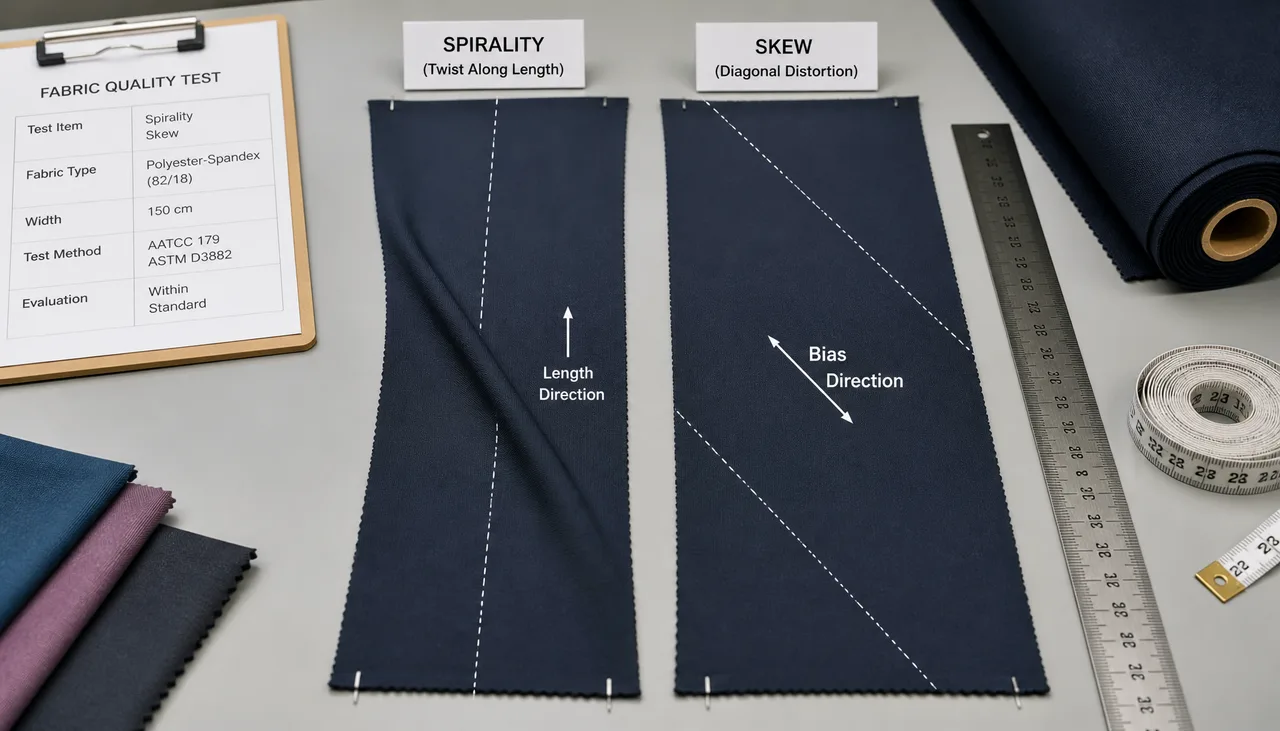
When buyers review spirality and skew test results for activewear fabrics, they should interpret these results as critical indicators of fabric quality and suitability for stretch apparel applications such as yoga wear, sports bras, and leggings. Spirality and skew describe how a fabric might twist or distort after cutting or during wear, which directly affects garment fit, appearance, and performance.
Understanding Spirality and Skew in Activewear Fabrics
- Spirality refers to the fabric’s tendency to twist along its length after being cut. This twisting can cause seams and hems to misalign, compromising garment shape and wearer comfort.
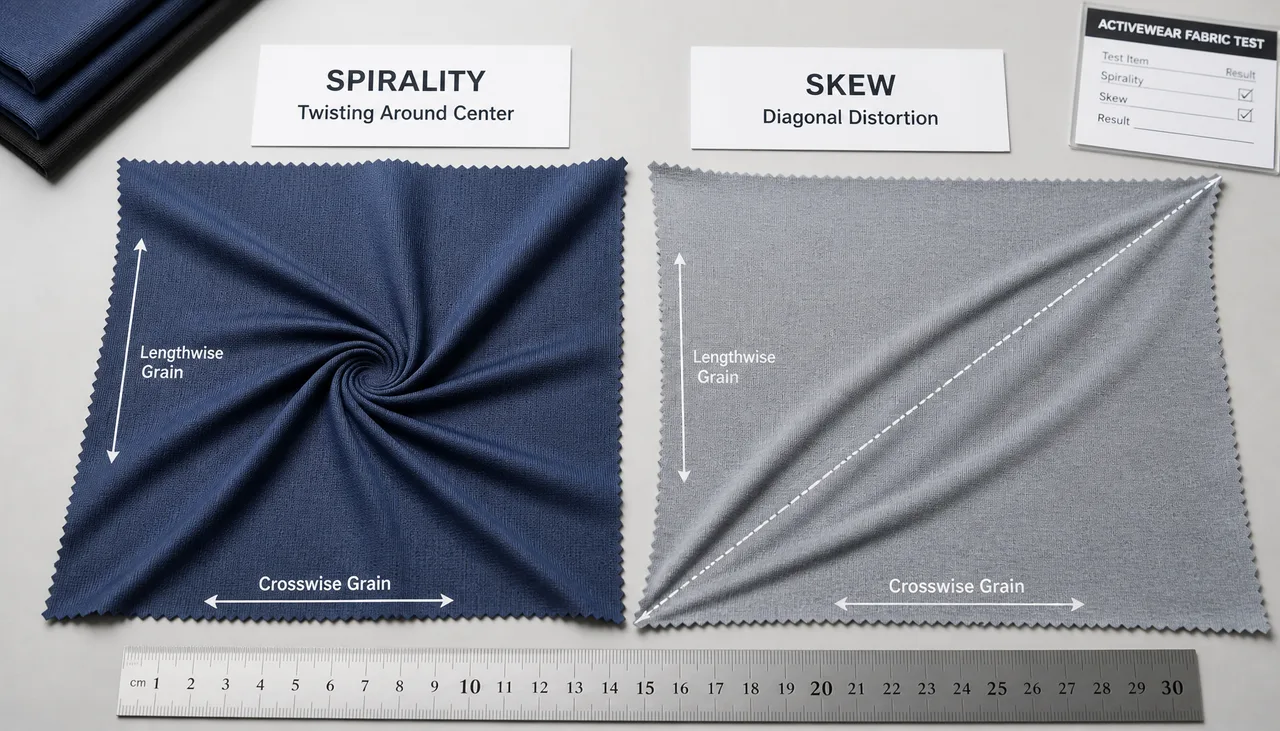
- Skew indicates the fabric’s diagonal distortion, where the fabric’s grain lines shift away from true right angles. Excessive skew can lead to uneven stretching and visual distortion in finished garments.
Why These Tests Matter in Fabric Selection
For activewear, which often combines synthetic knitted fabrics like polyester-spandex or nylon-spandex, controlling spirality and skew is important to maintain the fabric’s stretch performance, durability, and aesthetic appeal. Buyers aiming to source fabrics for applications such as yoga leggings or sports bras should seek materials with minimal spirality and skew to ensure garments hold their shape during movement and repeated use.
How Buyers Should Use Test Results
-
Assess Fabric Suitability for Intended Application:
Buyers should consider how spirality and skew values align with the functional requirements of the end product. For example, yoga wear and sports bras demand high stretch recovery and stable fabric structure to avoid distortion during exercise. -
Integrate Test Results with Other Fabric Attributes:
Spirality and skew are part of broader performance considerations including hand feel, GSM (grams per square meter), fabric type, and stretch characteristics. Evaluating these factors together helps ensure the fabric meets both comfort and durability needs. -
Communicate with Suppliers for Fabric Solutions:
Since fabric suppliers often provide fabric solutions rather than single products, buyers should collaborate with suppliers to select or develop fabrics with controlled spirality and skew levels fitting their production and application needs. -
Use Test Results to Confirm Sample Quality:
Before bulk production, buyers should review spirality and skew test results on fabric samples to confirm consistency and suitability, reducing risks of production issues and returns.
Summary
Spirality and skew test results are valuable tools for B2B apparel buyers to evaluate activewear fabrics’ structural stability and performance. Understanding these metrics helps buyers choose fabrics that maintain garment integrity and wearer comfort in demanding stretch apparel applications. Combined with other fabric characteristics and supplier collaboration, these tests support informed sourcing decisions that align fabric properties with product function and quality expectations.