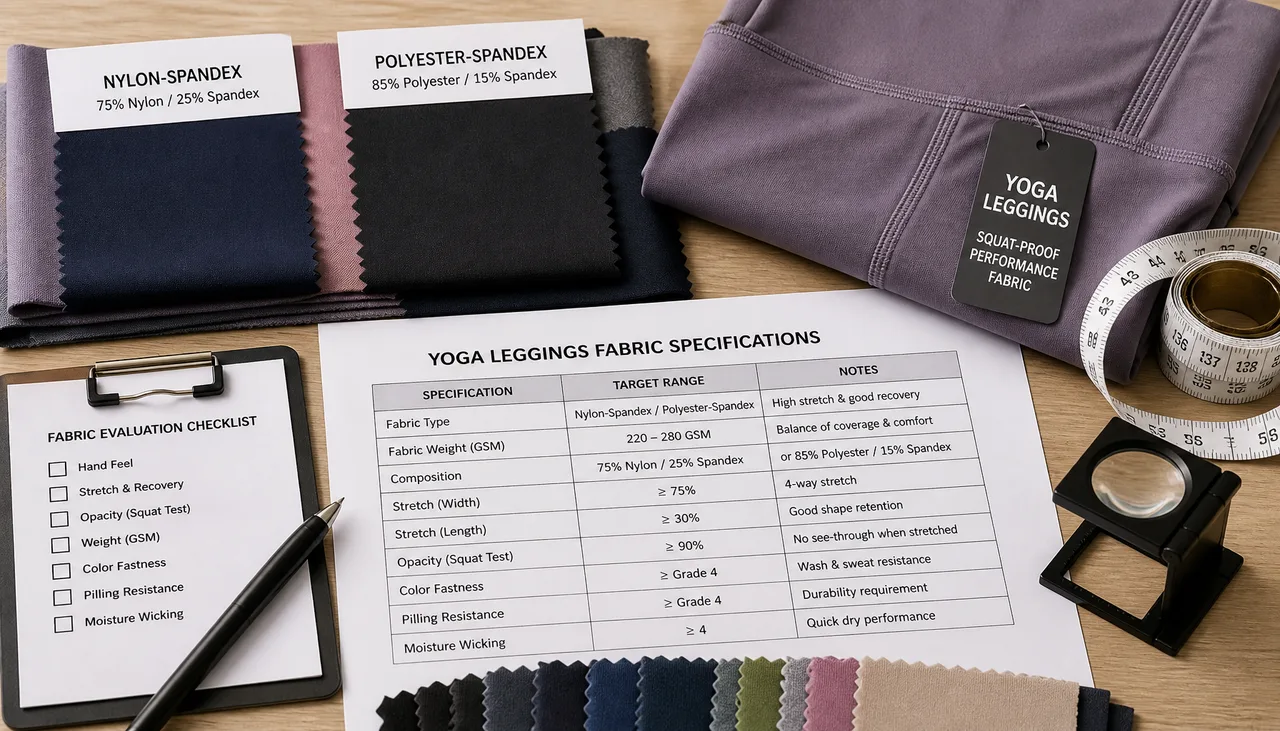
When buyers seek to source fabric for squat-proof yoga leggings, setting clear and realistic fabric specifications before requesting quotes is essential. This ensures the fabric meets the performance, comfort, and durability needs of the end product while aligning with supplier capabilities and minimum order requirements.
Key Considerations for Buyers:
1. Define the Application and Performance Requirements
– Confirm the product type as yoga leggings, emphasizing "squat-proof" performance, which means the fabric must maintain opacity, stretch, and recovery under stress.
– Specify functional needs such as stretchability, compression level, breathability, moisture-wicking, and durability essential for activewear, especially yoga apparel.
2. Choose Appropriate Fabric Type and Composition
– Select between common core fabric types used for yoga wear: polyester-spandex or nylon-spandex blends. Both are widely applied to stretch apparel including yoga leggings, sportswear, and shapewear.
– Nylon-spandex blends often provide good stretch recovery and smooth hand feel, while polyester-spandex may offer durability and moisture management benefits.
– Buyers should communicate their preference based on desired hand feel and functional properties.
3. Specify Fabric Weight (GSM)
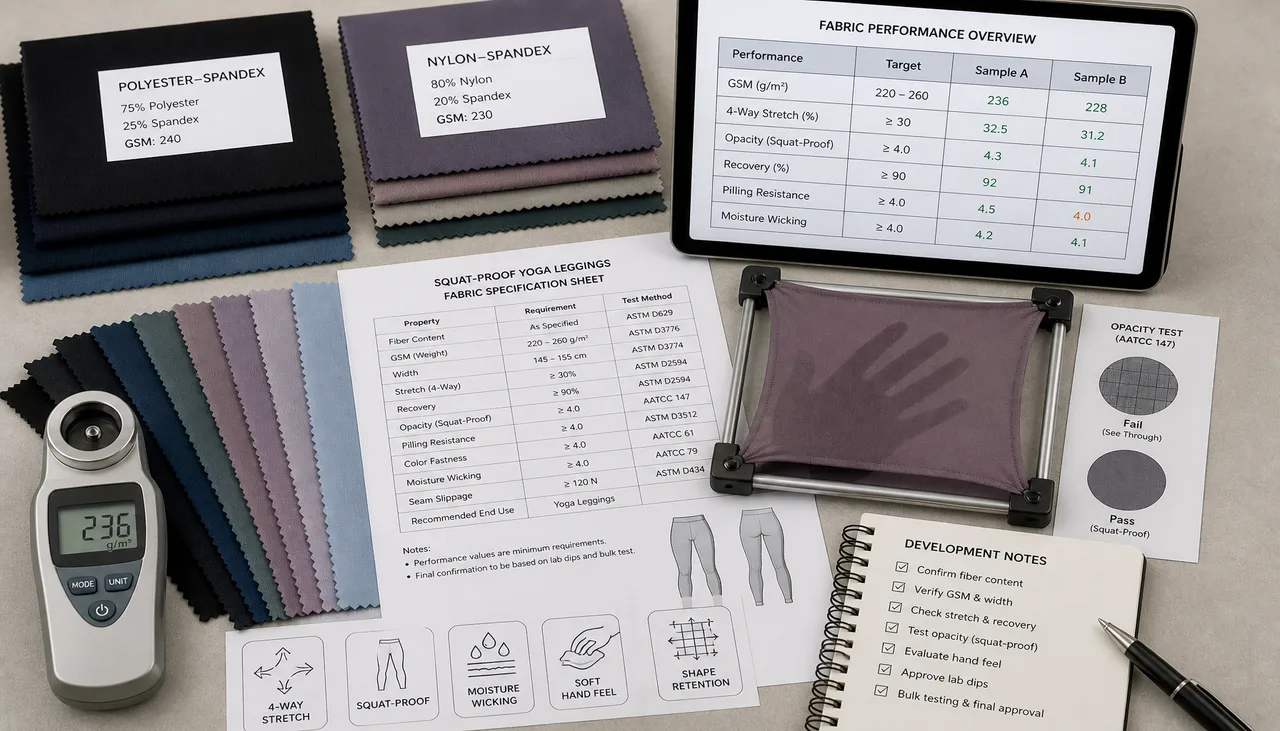
– Fabric weight, measured in grams per square meter (GSM), influences opacity, coverage, and durability.
– For squat-proof leggings, a suitable GSM range should ensure the fabric is thick enough to prevent transparency when stretched but still comfortable and breathable.
– Buyers should specify their GSM target or range to help suppliers match fabrics appropriately.
4. Indicate Hand Feel and Finishing Preferences
– The tactile quality (hand feel) matters for comfort and perceived quality. Buyers should describe desired softness, smoothness, or texture.
– Finishing treatments that enhance durability, colorfastness, or moisture management can be specified.
5. Understand Production Requirements and MOQ
– Confirm stable production needs and volume projections, as suppliers generally require minimum order quantities (MOQs). For example, a common MOQ reference is around 150 kilograms or approximately 600 meters per color.
– Buyers should ensure their order quantities align with supplier MOQs to facilitate sampling and bulk production.
6. Plan for Sampling and Testing
– Engage with suppliers to develop or select fabric solutions based on the detailed specifications.
– Initial sampling and performance testing (stretch, opacity under stress, durability) are critical steps before production confirmation.
7. Work with a Fabric Solution Provider
– Prefer suppliers who act as fabric solution providers rather than just fabric sellers, helping match buyer needs with suitable knitted synthetic fabric options.
– Such suppliers analyze application, hand feel, functional requirements, GSM, and fabric type to recommend and develop optimal fabrics.
Summary Workflow for Buyers Before Requesting Quotes:
- Clearly communicate the product application (squat-proof yoga leggings) and key performance criteria (stretch, opacity, comfort).
- Specify preferred fabric type (nylon-spandex or polyester-spandex) and GSM range to control coverage and durability.
- Describe hand feel and finishing expectations.
- Confirm production volume and MOQ compatibility.
- Request fabric matching, sampling, and testing services from suppliers positioned as fabric solution providers.
This approach helps buyers obtain accurate, realistic quotes and fabric options aligned with their product goals, reducing development risks and facilitating smoother sourcing and production.
—
This guidance draws on typical B2B fabric sourcing practices for activewear, emphasizing the importance of detailed specification setting and collaboration with knowledgeable fabric solution suppliers.