
When selecting fabric for activewear such as yoga leggings, sports bras, and shapewear, buyers often face the choice between nylon-spandex and polyester-spandex blends. Both fabric types are common in stretch knitted synthetic fabrics used for lingerie, sportswear, yoga wear, and compression garments. Understanding how to choose between them requires considering application needs, fabric feel, functional requirements, fabric weight (GSM), and supply considerations.
—
Key Factors for Choosing Activewear Fabric
### 1. Application and End Use
The intended garment type strongly influences fabric choice. For example:
- **Yoga Leggings and Sportswear:** Require high stretch, breathability, and moisture management.
- **Sports Bras:** Need good support, stretch recovery, and skin comfort.
- **Shapewear / Compression Garments:** Demand firm stretch, compression, and durability.
Matching the fabric to the specific apparel program ensures optimal performance and wearer satisfaction.
### 2. Fabric Feel and Hand
The tactile experience or "hand feel" of a fabric affects consumer comfort and garment appeal.
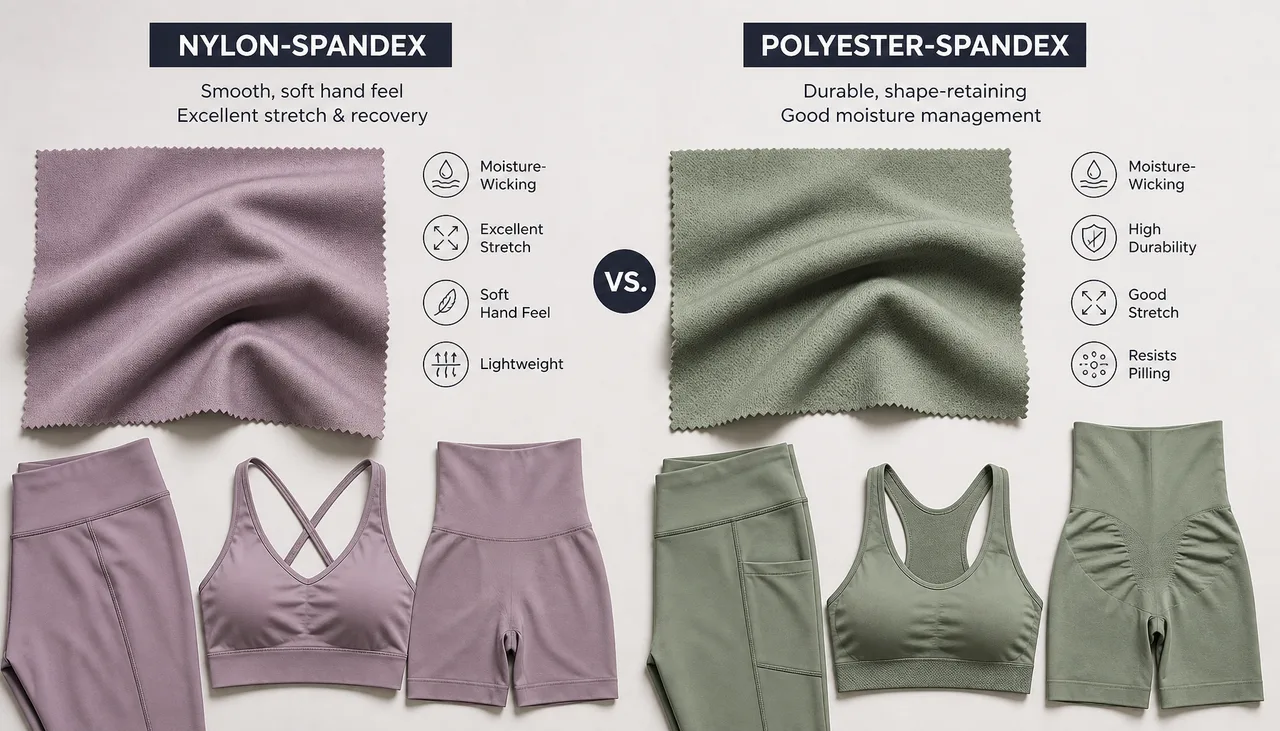
- **Nylon-spandex blends** typically offer a smooth, silky feel with excellent softness.
- **Polyester-spandex blends** may provide a slightly different texture that can be engineered for softness but often have good durability.
Buyers should assess which hand feel best suits their brand positioning and target customer preferences.
### 3. Functional Performance
Functionality includes stretch, recovery, moisture management, durability, and finishing.
- Both nylon-spandex and polyester-spandex provide stretch and recovery due to spandex content.
- **Moisture-wicking:** Polyester fibers generally have better moisture management and quick-drying properties than nylon.
- **Durability:** Nylon is known for strength and abrasion resistance, which may benefit high-use garments.
- Finishing and quality control processes also impact final fabric performance.
### 4. Fabric Weight (GSM)
Fabric weight, measured as grams per square meter (GSM), influences comfort and suitability.
- Lightweight fabrics (lower GSM) are preferred for yoga wear and sports bras for breathability.
- Heavier GSM fabrics may be selected for compression wear or durable sportswear.
Buyers should specify GSM requirements aligned with garment function.
### 5. Supply Stability and MOQ
For production, stable fabric supply and meeting minimum order quantities (MOQ) are critical.
- Typical MOQ for knitted synthetic fabrics is about 150 kg per color (~600 meters).
- Buyers with stable demand and professional sourcing teams are preferred partners for fabric suppliers.
—
Comparing Nylon-Spandex and Polyester-Spandex for Activewear
| Criteria | Nylon-Spandex | Polyester-Spandex |
|——————–|—————————————-|————————————–|
| Hand Feel | Smooth, silky, soft | Slightly different texture, can be soft |
| Moisture Management | Moderate moisture management | Superior moisture-wicking and quick-dry |
| Durability | High strength and abrasion resistance | Good durability |
| Stretch & Recovery | Excellent stretch and recovery | Excellent stretch and recovery |
| Typical Use Cases | Lingerie, sportswear, yoga wear, shapewear | Lingerie, sportswear, yoga wear, shapewear |
| Fabric Weight (GSM)| Variable, matched to application | Variable, matched to application |
—
Practical Guidance for Buyers
1. Define the Apparel Application: Clarify if the garment prioritizes softness, moisture management, compression, or durability.
2. Specify Desired Hand Feel and Fabric Weight: Communicate target hand feel and GSM to fabric suppliers.
3. Evaluate Functional Needs: Consider moisture-wicking importance and abrasion resistance based on activewear intensity.
4. Work with a Fabric Solution Provider: Engage suppliers who analyze buyer needs and match fabric accordingly, including sampling, testing, and confirmation steps.
5. Plan for Production Volume and MOQ: Ensure your order volume meets supplier requirements for stable supply and cost efficiency.
—
Conclusion
Choosing between nylon-spandex and polyester-spandex for activewear depends on the balance between hand feel, functional performance, and production needs. Polyester-spandex fabrics generally excel in moisture management and quick drying, making them suitable for high-intensity sportswear, while nylon-spandex offers a silky hand feel and durability favored for lingerie and shapewear. Buyers should articulate their specific garment requirements and collaborate closely with fabric suppliers to select the most appropriate stretch knitted fabric that meets application, feel, function, and supply conditions.
This approach ensures optimal fabric performance and aligns production with practical business considerations.