
When developing garments—especially in categories like lingerie, sportswear, yoga wear, and shapewear—the choice of knit structure plays a critical role in determining fabric performance, hand feel, durability, and suitability for the intended application. Among common knit structures, pique, interlock, and rib each bring distinct characteristics that influence garment development decisions.
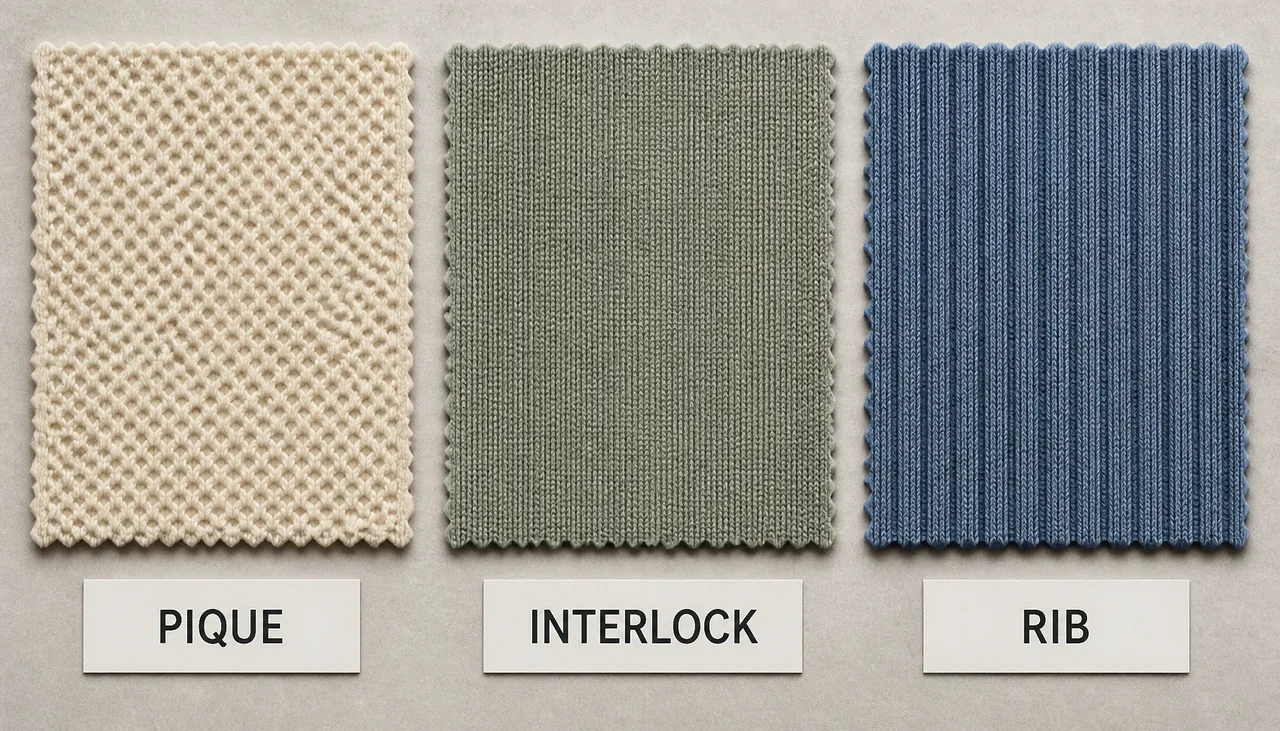
Understanding Knit Structures and Their Impact
### 1. Pique Knit Structure
– Texture and Appearance: Pique fabric has a textured, waffle-like surface. This raised pattern provides visual interest and a unique hand feel.
– Performance: It typically offers moderate stretch with good breathability, making it suitable for activewear where ventilation is important.
– Application: Pique is often favored in sportswear and some yoga apparel where moisture management and comfort are priorities.
### 2. Interlock Knit Structure
– Texture and Appearance: Interlock is a smooth, dense double-knit fabric with a flat surface on both sides. This structure provides thickness and a stable shape.
– Performance: It offers excellent stretch recovery and durability, with a soft hand feel and moderate weight (usually higher GSM). Interlock is less prone to curling at edges.
– Application: Ideal for garments requiring structure and support, such as sports bras, shapewear, and high-quality yoga wear. Its stability supports compression and shaping functions.
### 3. Rib Knit Structure
– Texture and Appearance: Rib knit features vertical ridges formed by alternating knit and purl stitches. This gives the fabric high elasticity, especially in the widthwise direction.
– Performance: Rib knits are very stretchable and conform well to body contours. They provide elasticity and recovery, essential for fitted garments.
– Application: Commonly used for cuffs, collars, waistbands, and also full garments like leggings and compression garments that demand flexibility and snug fit.
How Knit Structure Influences Fabric Selection in Garment Development
Choosing the appropriate knit structure depends on several factors related to the garment’s end use:
- **Stretch and Recovery:** Rib knits typically offer the highest elasticity, followed by interlock and pique. This affects fit and comfort in activewear and lingerie.
- **Hand Feel and Comfort:** Interlock’s smooth surface is pleasant against the skin, while pique’s texture may add breathability. Rib knits provide a distinctive tactile feel due to their ridges.
- **Durability and Shape Retention:** Interlock knits resist deformation and edge curling, supporting garment longevity and consistent fit.
- **Weight and Thickness (GSM):** Interlock fabrics generally have a higher GSM, giving more coverage and shaping potential; pique and rib knits can vary widely depending on yarn and construction.
- **Functional Needs:** For compression garments or shapewear, interlock’s stable structure is advantageous. For breathable sportswear, pique’s texture supports airflow. Rib knits excel where stretch and contouring are primary.
Integrating Knit Structure Choice into Fabric Solutions
For B2B apparel buyers and product developers, the knit structure is a core consideration within a broader fabric solution approach. This approach matches fabric choices to the application, desired hand feel, functional requirements, GSM (grams per square meter), and fabric composition (such as polyester-spandex or nylon-spandex blends).
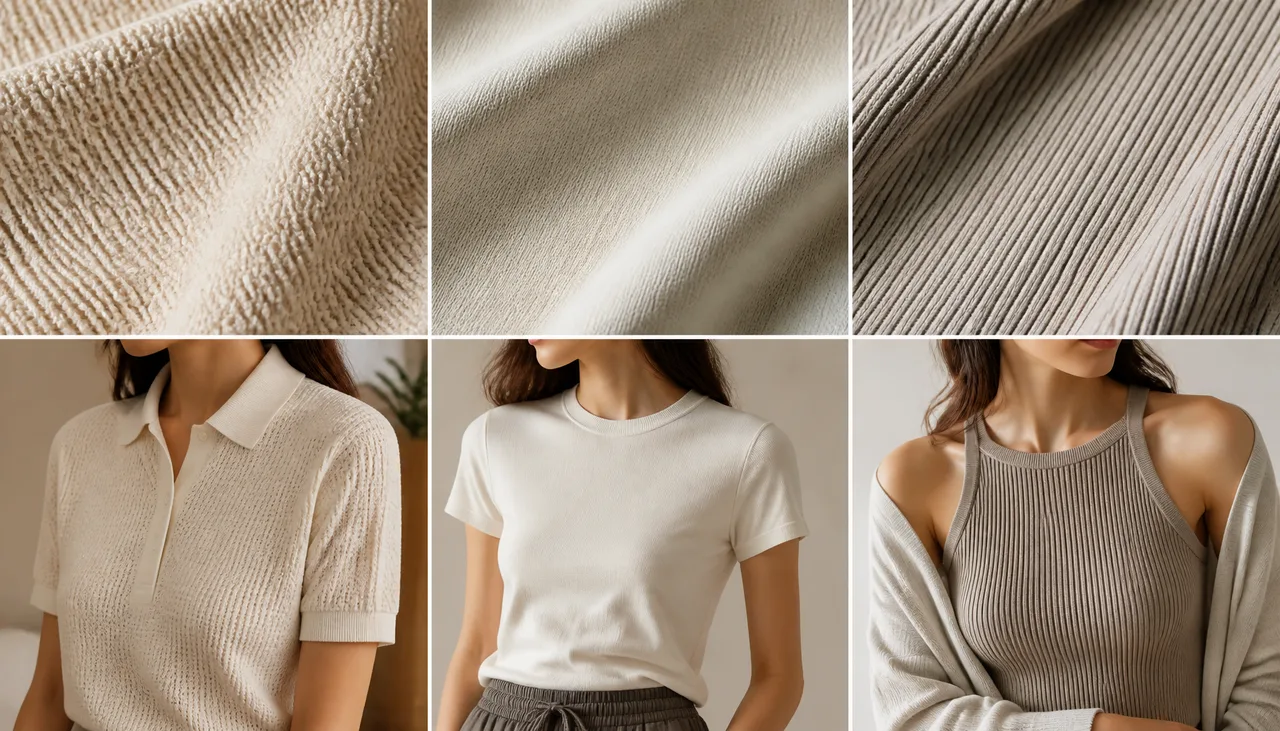
A fabric solution workflow typically includes:
1. Understanding Buyer Needs: Clarify the garment application, performance criteria, hand feel preferences, and production parameters.
2. Fabric Matching: Analyze available knit structures and synthetic fiber blends to find the best match.
3. Sampling and Testing: Generate fabric samples for performance testing, including stretch, durability, and finishing.
4. Confirmation and Bulk Production: Finalize fabric choice and proceed to stable supply with quality control and after-sales support.
This process ensures the selected knit structure and fabric composition align with the garment’s end use, performance expectations, and production requirements.
Conclusion
Knit structures like pique, interlock, and rib each offer unique benefits and trade-offs that directly affect garment development outcomes. Understanding their characteristics helps apparel developers select fabrics that deliver optimal stretch, comfort, durability, and fit for lingerie, sportswear, yoga wear, and shapewear. Integrating knit structure decisions into a comprehensive fabric solution approach enables B2B buyers and sourcing teams to meet real production needs efficiently and effectively.
—
*This explanation is based on fabric knowledge and solution workflows relevant to knitted synthetic fabrics in active and intimate apparel applications.*