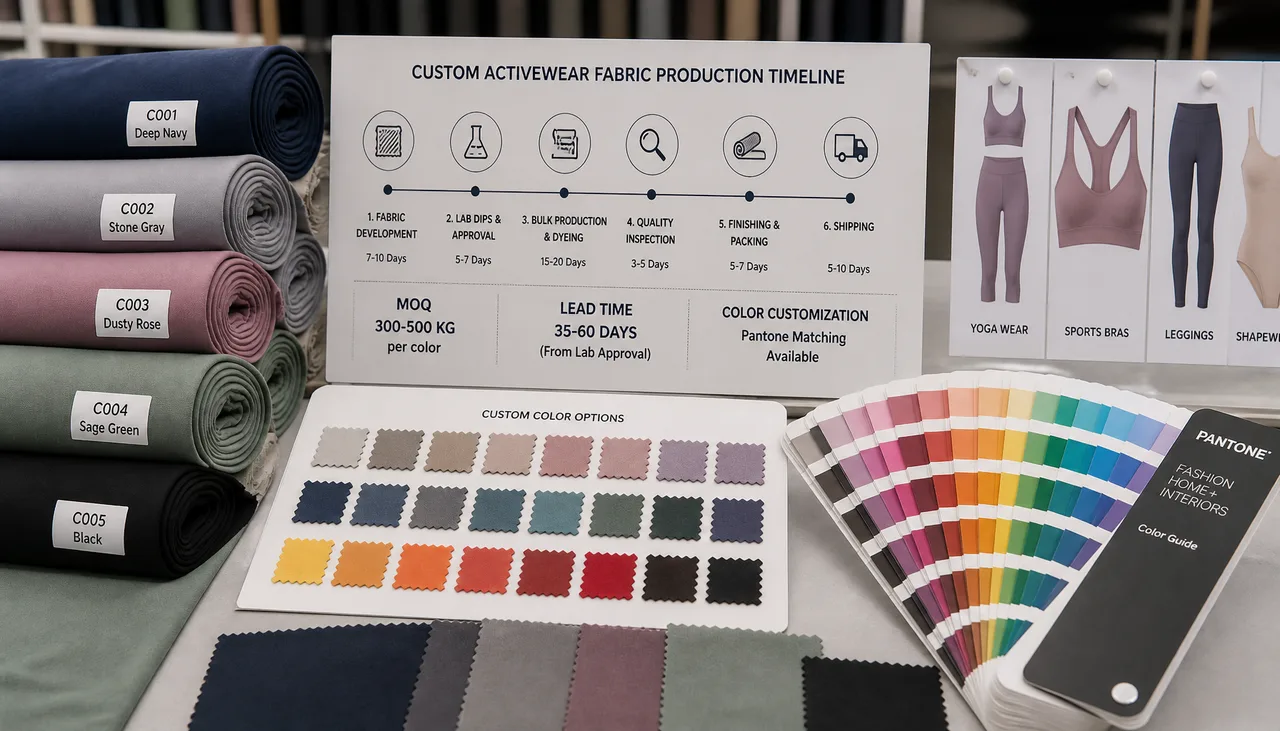
When brands embark on developing custom fabrics for activewear—including categories like yoga wear, sports bras, leggings, and shapewear—clarifying certain production parameters upfront is essential for successful sourcing and manufacturing. Three critical factors brands should confirm with their fabric suppliers are Minimum Order Quantity (MOQ), lead time, and color requirements. Understanding these helps align expectations, optimize costs, and ensure timely delivery of quality fabric suited to specific applications.
1. Minimum Order Quantity (MOQ)
For custom activewear fabrics, MOQ is a fundamental parameter that defines the smallest amount of fabric a supplier will produce or sell per color. This threshold is primarily driven by production efficiency and cost-effectiveness in fabric dyeing and finishing processes.
- **Typical MOQ Standard:** A commonly referenced MOQ for custom fabrics in this sector is approximately 150 kilograms per color, which translates to about 600 meters of fabric per color. This scale supports stable production runs and cost-efficient dye lots.
- **Why MOQ Matters:** Meeting MOQ requirements ensures the supplier can manage production without excessive cost or operational complexity, thereby maintaining fabric quality and stable supply.
- **Buyer Profile Compatibility:** Brands with consistent production volumes, stable demand, and professional sourcing capabilities are more likely to meet MOQ constraints and build long-term supplier relationships.
2. Lead Time Expectations
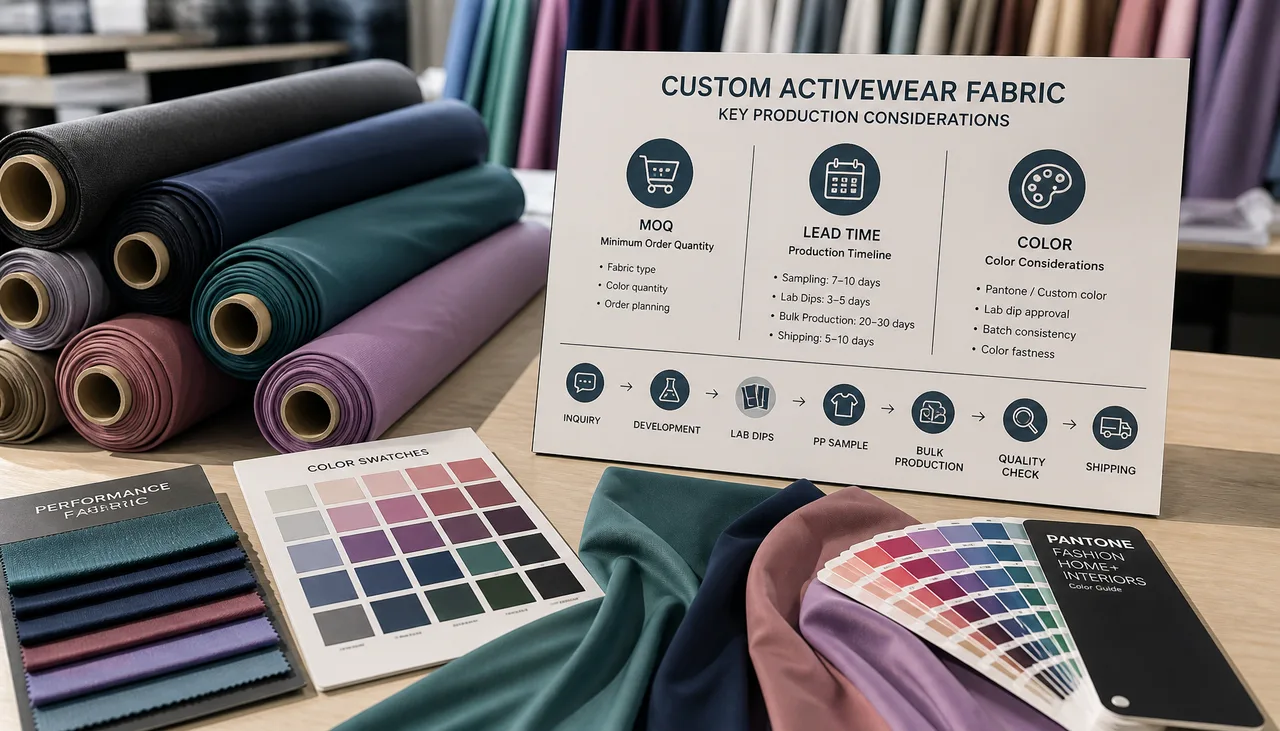
Lead time reflects the duration from order confirmation to delivery of the finished fabric. For custom activewear fabrics, lead time depends on stages such as yarn procurement, knitting, dyeing, printing, finishing, and quality control.
- **Stable Supply and Service:** Suppliers serving B2B activewear brands typically emphasize reliable lead times supported by stable supply chains and after-sales service.
- **Production Workflow:** The fabric development workflow generally includes sampling, testing, confirmation, then bulk production—each phase influencing overall lead time.
- **Planning Implications:** Brands should incorporate realistic lead times into their product development calendar to allow for sampling iterations and quality assurance before full production.
3. Color Requirements
Color selection is a key customization factor affecting both aesthetic appeal and brand identity of activewear collections.
- **Per-Color MOQ:** Given MOQ is defined per color, brands must plan colorways carefully to avoid excessive inventory or cost overruns.
- **Color Matching and Consistency:** Suppliers often provide fabric color matching services aligned with the buyer’s specifications, ensuring consistency across production batches.
- **Development Considerations:** Early communication of color requirements helps suppliers allocate dye lots and manage finishing processes efficiently.
—
Summary for Brands Developing Custom Activewear Fabric
Before engaging fabric suppliers, activewear brands should confirm:
- **MOQ:** Typically around 150 kg (600 meters) per color to ensure production feasibility.
- **Lead Time:** Understand the supplier’s end-to-end workflow timing—including sampling and bulk production—to align with product launch schedules.
- **Color Specifications:** Define color palettes clearly, considering MOQ impact and supplier color matching capabilities.
By clarifying these parameters early, brands can collaborate effectively with fabric solution providers, optimizing fabric selection to meet application-specific needs such as stretch, hand feel, durability, and performance, all crucial for activewear categories like sports bras, yoga wear, and shapewear.