
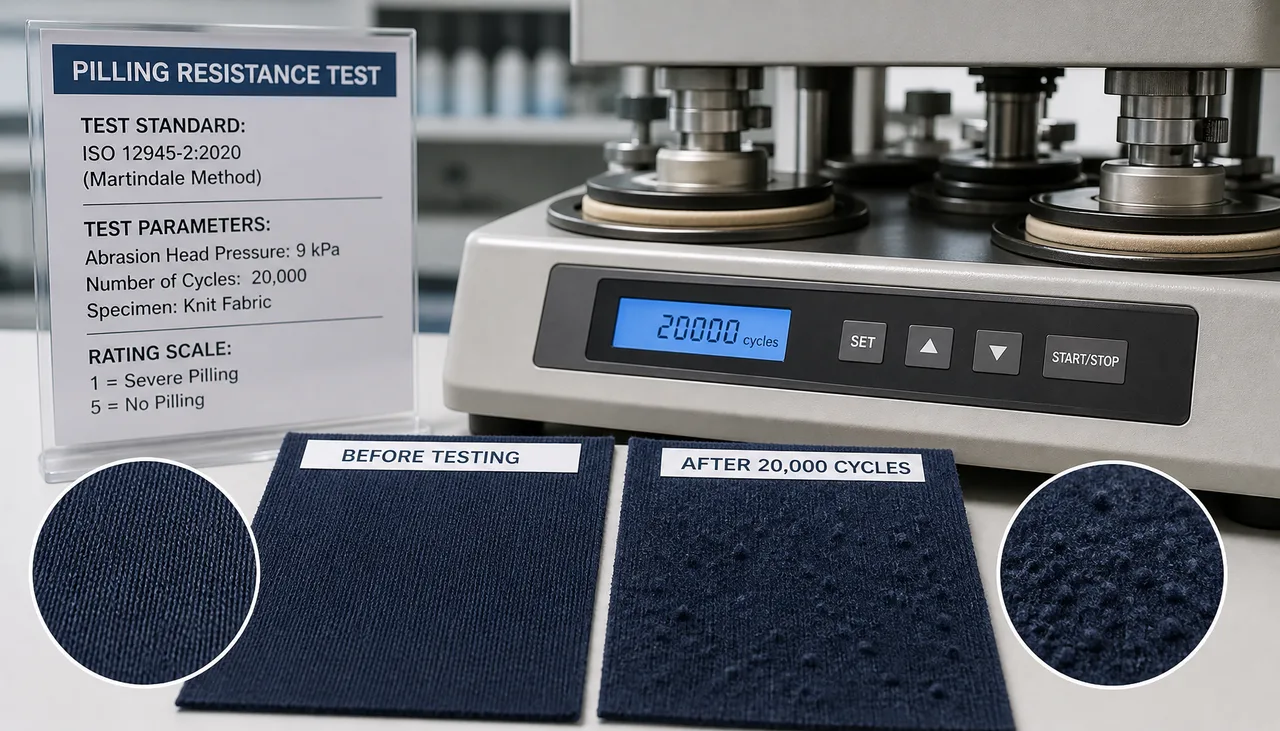
When brands engage an independent laboratory to verify pilling resistance of fabrics, they should ask for clear, standardized, and application-relevant verification that aligns with their production needs and fabric use cases. Pilling resistance testing assesses how well a fabric resists the formation of small fiber balls (“pills”) on its surface after wear or abrasion, which is critical for apparel durability and appearance.
Key points brands should request from an independent lab about pilling resistance verification include:
- Testing Method and Standard Used
Brands should ask the lab to specify which recognized test method is applied, such as ISO 12945-2 (Martindale method) or ASTM D3511, which simulate abrasion and wear to evaluate pilling. Clear mention of the standard ensures the test is credible and comparable.
-
Fabric Sample Preparation and Conditions
The lab should describe how fabric samples are prepared, including any pre-washing or conditioning to reflect actual garment use. This ensures that results represent real-world performance. -
Testing Parameters and Duration
Inquiry about the number of abrasion cycles or test duration is important, as this affects pilling severity. Brands should ensure the test simulates the expected usage level of the fabric in their target application (e.g., lingerie, yoga wear, sportswear). -
Pilling Grade or Rating Scale
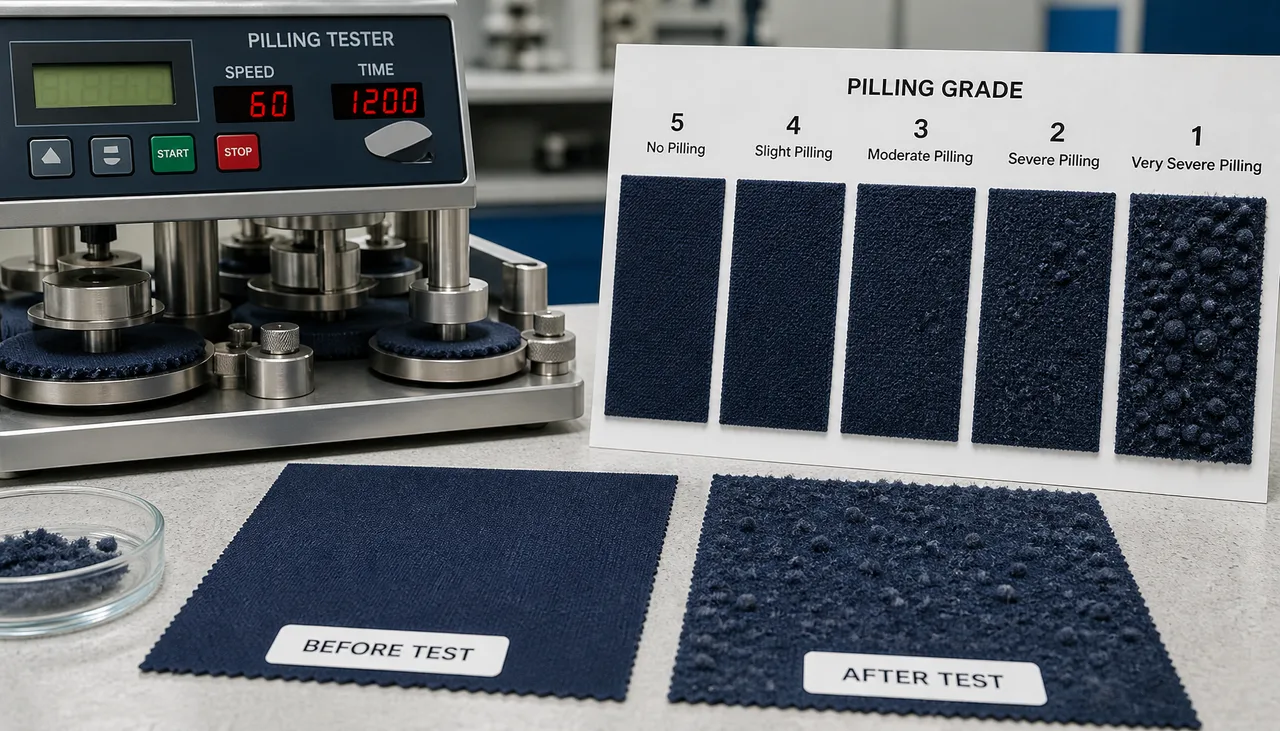
The lab should provide a pilling grade based on an accepted scale (often 1 to 5, where 5 indicates no pilling and 1 severe pilling). This quantitative result allows brands to compare fabrics objectively. -
Visual Evidence and Documentation
Requesting photos or detailed descriptions of the fabric surface before and after testing helps brands visually confirm pilling levels. Complete test reports should document all findings and conditions. -
Relevance to Fabric Type and End Use
Brands should confirm that the lab understands the fabric composition (e.g., polyester-spandex or nylon-spandex) and application (lingerie, yoga wear, sportswear), as pilling resistance requirements vary by use case. -
Repeatability and Reliability of Results
It is important to verify that the lab follows strict quality control and that tests can be reproduced with consistent results, ensuring reliable fabric selection decisions.
By focusing on these verification aspects, brands can make informed sourcing decisions that balance fabric hand feel, function, durability, and appearance for their specific apparel applications. This approach aligns with a professional fabric-sourcing workflow that emphasizes matching fabric characteristics, including pilling resistance, to end-use requirements and stable production volume.