When sourcing knitted synthetic fabrics—such as polyester-spandex or nylon-spandex blends—for apparel applications like lingerie, sportswear, or yoga wear, buyers must carefully inspect pre-production fabric approval samples to ensure the final production meets their real needs. The fabric approval sample is a critical checkpoint in the fabric solution workflow that helps confirm the fabric’s suitability before bulk production begins.
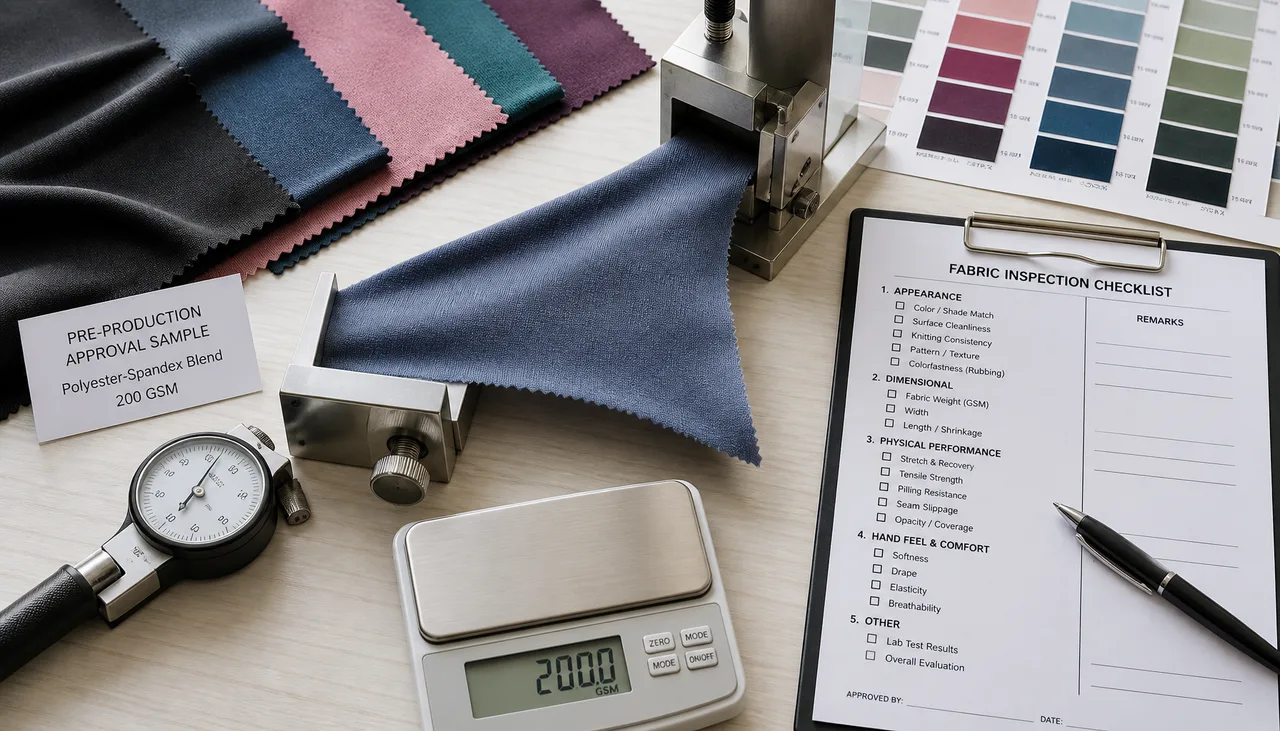
Below are the key aspects buyers should evaluate in such samples, based on B2B fabric sourcing best practices and fabric solution principles:
—
1. Fabric Application Suitability
Buyers should first verify that the fabric sample aligns with the intended apparel application. Different uses—lingerie, yoga wear, sports bras, shapewear—have distinct performance and feel requirements. The fabric’s composition, stretch, and weight (GSM) must match those needs.
- **Application Fit:** Confirm the fabric’s stretchability, support level, and breathability suit the garment type.
- **Material Type:** Check whether the fabric is polyester-spandex, nylon-spandex, or another knitted synthetic blend as required.
- **GSM (grams per square meter):** Ensure fabric weight matches the performance and feel expectations for the end product.
—
2. Hand Feel and Comfort
The tactile properties of the fabric are essential, especially for close-to-skin garments like lingerie and activewear.
- **Softness:** Assess the smoothness and softness to ensure comfort during wear.
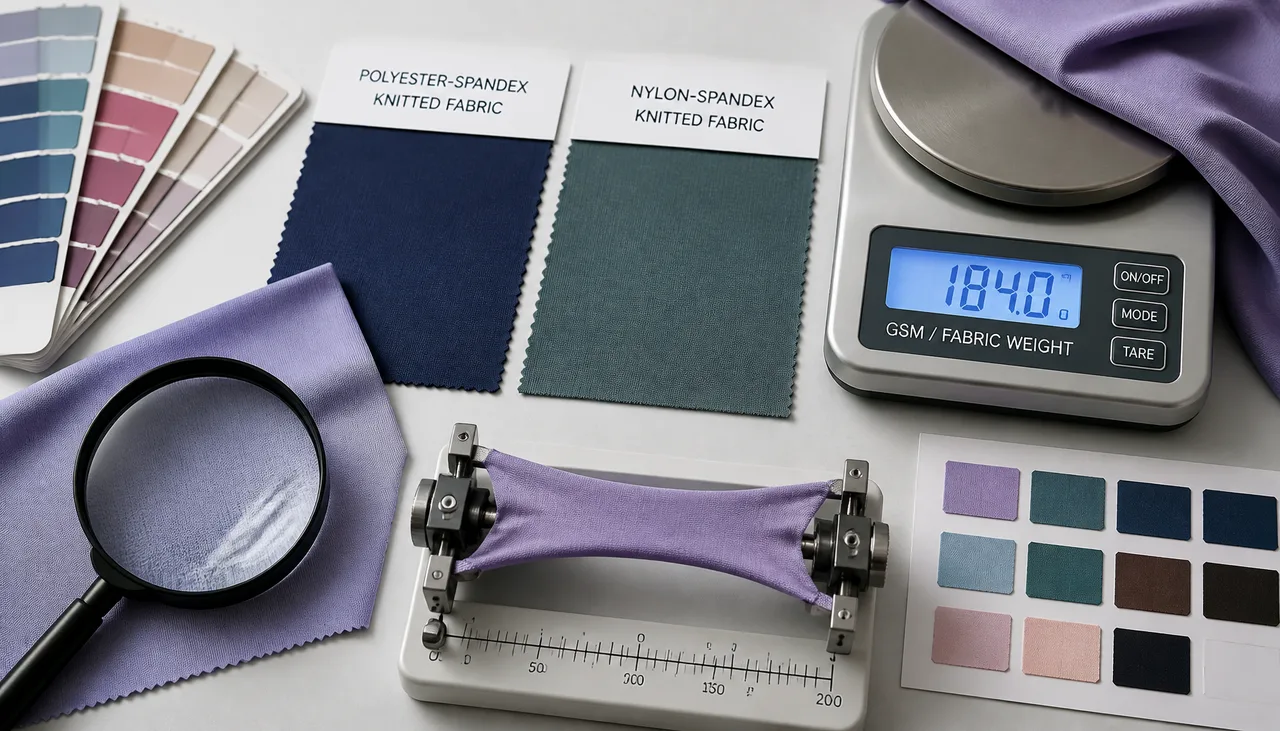
- **Stretch and Recovery:** Test the fabric’s elasticity and ability to return to its original shape after stretching.
- **Surface Finish:** Look for any surface irregularities or finishes that might affect comfort or appearance.
—
3. Fabric Performance Properties
Buyers should evaluate technical performance factors that impact garment durability and function.
- **Stretch and Recovery:** Confirm the fabric stretches adequately in required directions and recovers without deformation.
- **Durability:** Check for resistance to abrasion, pilling, and wear—especially important for sportswear and yoga apparel.
- **Finishing Quality:** Inspect the finishing processes for consistency, colorfastness, and resistance to washing or sweat.
—
4. Consistency and Quality Control
Fabric approval samples should demonstrate consistent quality that can be maintained in bulk production.
- **Color and Shade Match:** Verify the sample’s color matches approved standards and will remain stable in production quantities.
- **Fabric Width and Weight:** Check that fabric width and GSM conform to specifications.
- **Defect Inspection:** Look for any weaving or knitting defects, holes, or inconsistencies.
—
5. Compliance with MOQ and Supply Stability
Since fabric suppliers typically set minimum order quantities (MOQs)—for example, around 150 kg or 600 meters per color—buyers should confirm that the sample fabric’s specifications align with these requirements for stable supply.
- **MOQ Alignment:** Ensure the sample fabric is representative of what can be consistently supplied at MOQ.
- **Supplier Reliability:** Confirm the supplier’s capability for stable production and after-sales support.
—
6. Testing and Validation
The approval sample is a chance to conduct or request technical tests to confirm fabric properties.
- **First Article Testing:** Run or review stretch, durability, hand feel, finishing, and quality control tests.
- **Performance Testing:** Validate fabric performance under conditions mimicking actual wear and care.