
When selecting fabric for UPF 50+ shirts, buyers must carefully verify multiple factors to ensure the fabric meets both functional and application-specific requirements. This guidance outlines the key considerations that informed buyers and sourcing teams should evaluate before making a decision.
—
1. Understand the Application and End-Use Requirements
The starting point is a clear understanding of the shirt’s intended application. UPF 50+ shirts are designed primarily for sun protection, often used in outdoor activewear, sportswear, or casual apparel. Buyers should identify:
- The typical activities and environments where the shirt will be worn (e.g., hiking, golfing, casual wear)
- Desired hand feel and comfort level since UPF fabrics should also be comfortable for extended wear
- Functional needs beyond UV protection, such as breathability, moisture management, stretch, and durability
This initial clarity helps narrow fabric types and construction methods suitable for the application.
—
2. Verify Fabric Type and Composition
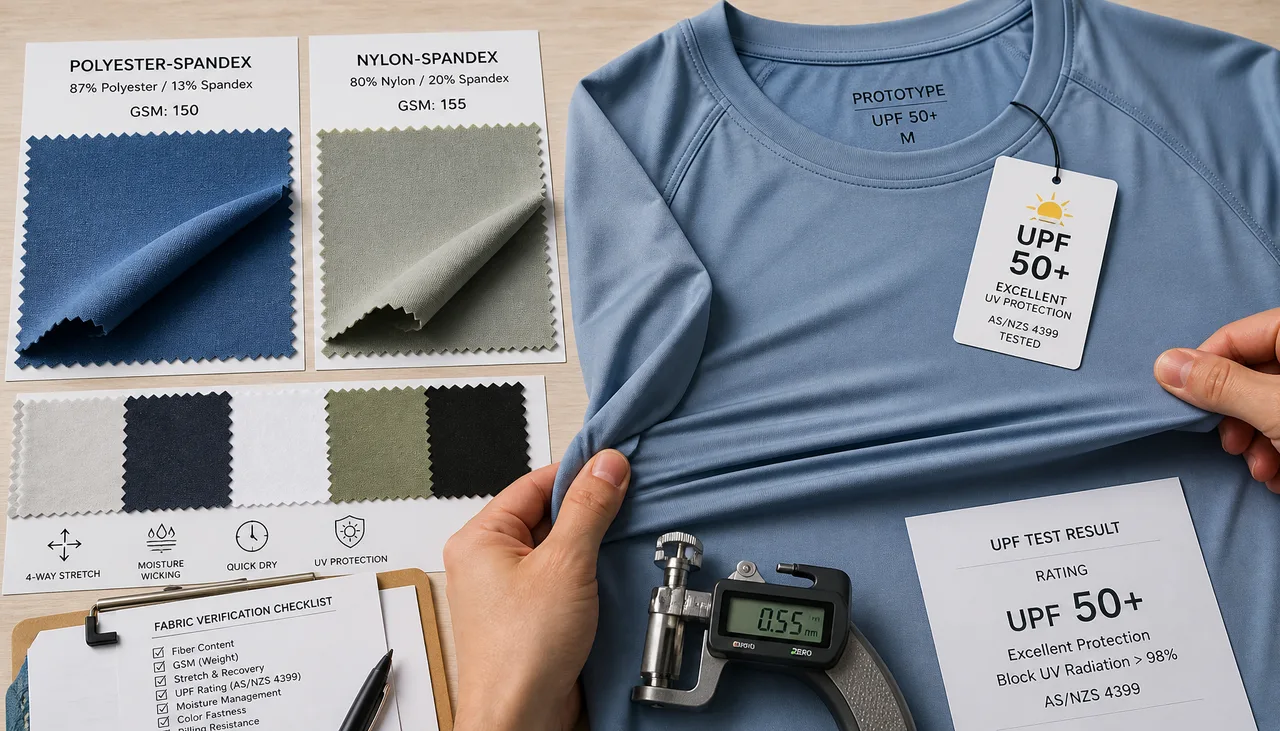
UPF 50+ ratings can be achieved with various fabric compositions, but synthetic knitted fabrics like polyester-spandex or nylon-spandex blends are common in performance apparel due to their stretch and durability. Buyers should:
- Confirm the fiber content and blend ratios to ensure the fabric’s performance aligns with UPF standards and application needs
- Evaluate whether the fabric type supports additional functional properties like stretch and moisture-wicking, if required
The choice between polyester-spandex and nylon-spandex can affect comfort, durability, and cost, so it should be matched to the performance profile needed.
—
3. Assess Fabric Weight (GSM) and Construction
Grams per square meter (GSM) is a critical parameter influencing the fabric’s opacity and therefore its UV protection capability. Buyers should:
- Choose a GSM that balances UPF protection with comfort—higher GSM typically provides better coverage but may reduce breathability
- Consider knitted construction types that enhance stretch and fit while maintaining UV blocking ability
Since fabric weight and knit structure impact hand feel and durability, these must be tested against the shirt’s usage expectations.
—
4. Confirm UPF Testing and Certification
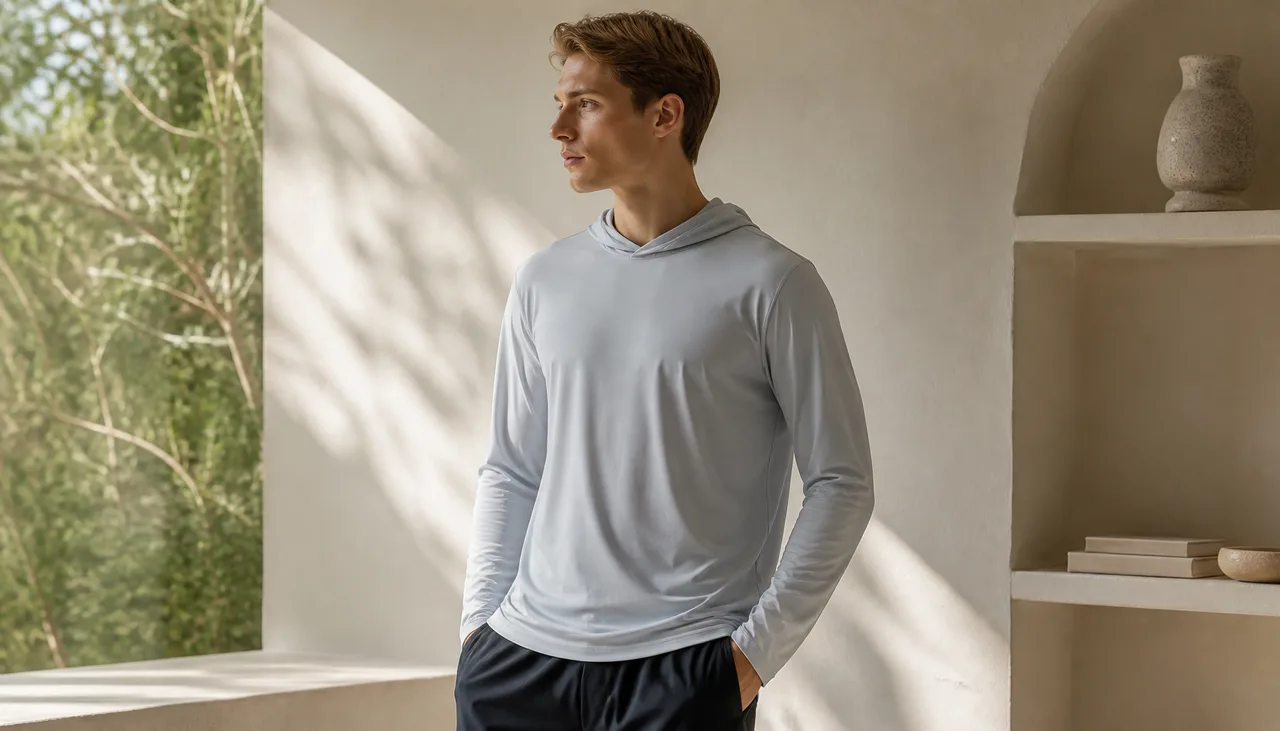
While selecting fabric, it is essential to verify documented UPF ratings from recognized testing protocols. Buyers should:
- Request test certificates showing the fabric meets or exceeds UPF 50+ standards
- Ensure the testing was performed under relevant conditions that simulate real-world wear
This verification guarantees that the fabric’s UV protection claims are substantiated.
—
5. Evaluate Functional Finishes and Durability
UPF fabrics often include special finishes to enhance UV blocking or other properties. Buyers should inquire about:
- The type and durability of UV-protective finishes applied, including how they withstand washing and wear
- Additional finishing processes that affect hand feel, colorfastness, and fabric stability
Durability of the UPF property over the garment’s lifecycle is a key consideration for buyer satisfaction.
—
6. Consider Supplier Capability and Service
Reliable supply and technical support are vital for consistent product quality. Buyers should verify that the supplier:
- Understands the buyer’s application, functional, and aesthetic requirements
- Offers a fabric solution workflow including sampling, testing, and quality control
- Can meet minimum order quantities and provide stable supply with after-sales service
A supplier capable of fabric matching and customization adds value by tailoring the UPF fabric to the buyer’s exact needs.
—
7. Sample and Test Before Bulk Purchase
Finally, buyers should always conduct first sample testing to confirm:
- The fabric’s UPF rating and functional performance under real conditions
- The hand feel, stretch, and fit on prototype shirts
- Compatibility with intended garment construction and finishing processes
This step reduces risk and ensures the chosen fabric aligns with expectations before large-scale production.
—
Summary
Before choosing fabric for UPF 50+ shirts, buyers must verify:
- Application-specific requirements including comfort and function
- Fabric type and composition, focusing on synthetic knits like polyester-spandex or nylon-spandex
- Appropriate fabric weight (GSM) and knit construction for UV protection and wearability
- Certified UPF 50+ testing and durability of protective finishes
- Supplier capability to deliver stable supply, technical support, and fabric customization
- Thorough sampling and testing to validate performance prior to bulk orders
By systematically evaluating these criteria, buyers can confidently select fabrics that deliver effective sun protection while meeting performance and quality expectations for UPF 50+ shirts.