
When placing a purchase order for activewear fabric, especially stretch knitted synthetic fabrics used for yoga wear, sports bras, leggings, and shapewear, specifying precise tolerances for fabric width, roll length, and GSM (grams per square meter) is essential to ensure fabric performance, consistent quality, and production efficiency. Below is a detailed guide to help B2B apparel buyers understand appropriate tolerance expectations to include in purchase orders.
—
Understanding Key Fabric Parameters
1. Fabric Width
– Importance: Fabric width affects how efficiently fabric can be cut and sewn into garments. Consistency in width ensures patterns fit properly and reduces material waste.
– Typical Activewear Fabric Widths: Widths vary by supplier and fabric type but commonly range between 140 cm to 160 cm for stretch knitted fabrics suitable for leggings and sportswear.
– Tolerance Considerations:
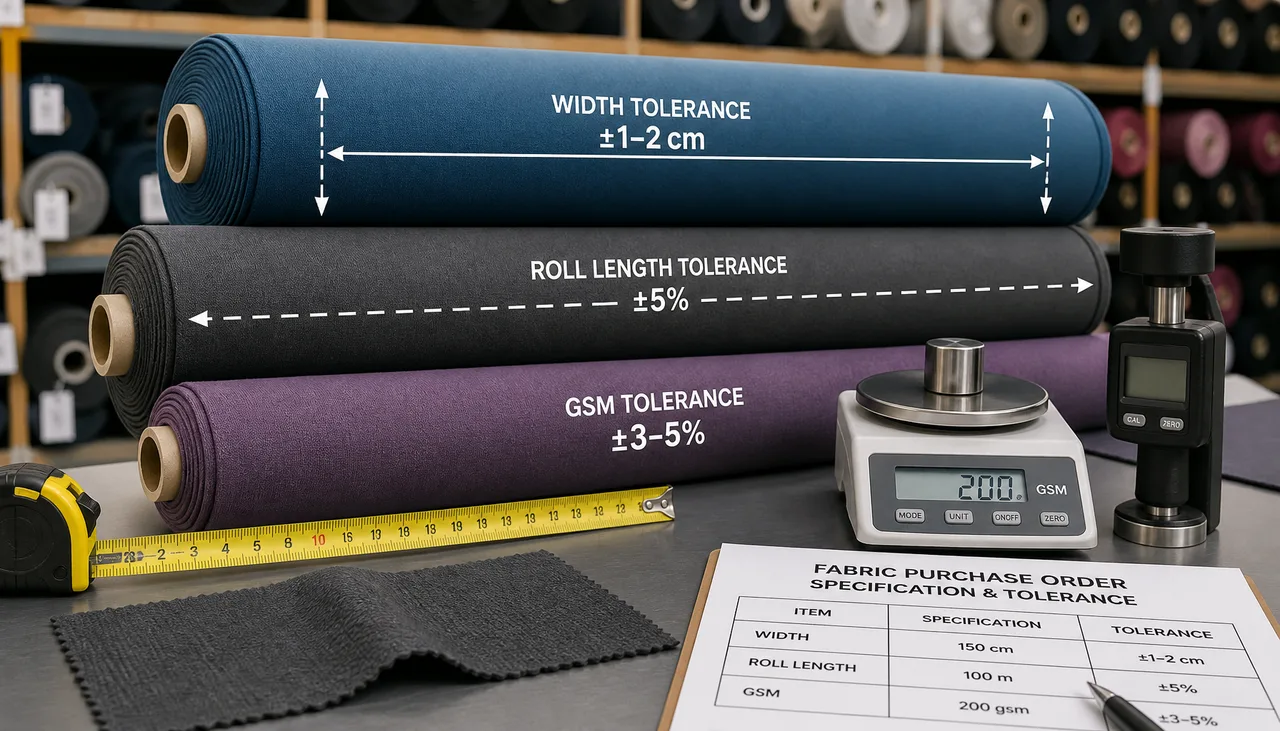
Buyers should specify allowable deviations (e.g., ±1 cm to ±2 cm) from the nominal width to accommodate manufacturing variability while maintaining cutting accuracy.
2. Roll Length
– Importance: Roll length determines how much fabric is delivered per roll, impacting inventory planning and production runs.
– Typical Lengths: For activewear fabrics, rolls often measure around 600 meters per color, correlating with minimum order quantities.
– Tolerance Considerations:
It is reasonable to allow a tolerance of approximately ±5% in roll length to accommodate fabric processing differences, but this should be clearly stated in the order to avoid discrepancies in material availability.
3. GSM (Grams per Square Meter)
– Importance: GSM directly influences the fabric weight, hand feel, stretch, and performance characteristics such as breathability and opacity.
– Typical GSM for Activewear: The suitable GSM varies by application — leggings and yoga wear often require medium-weight fabrics balancing support and flexibility.
– Tolerance Considerations:
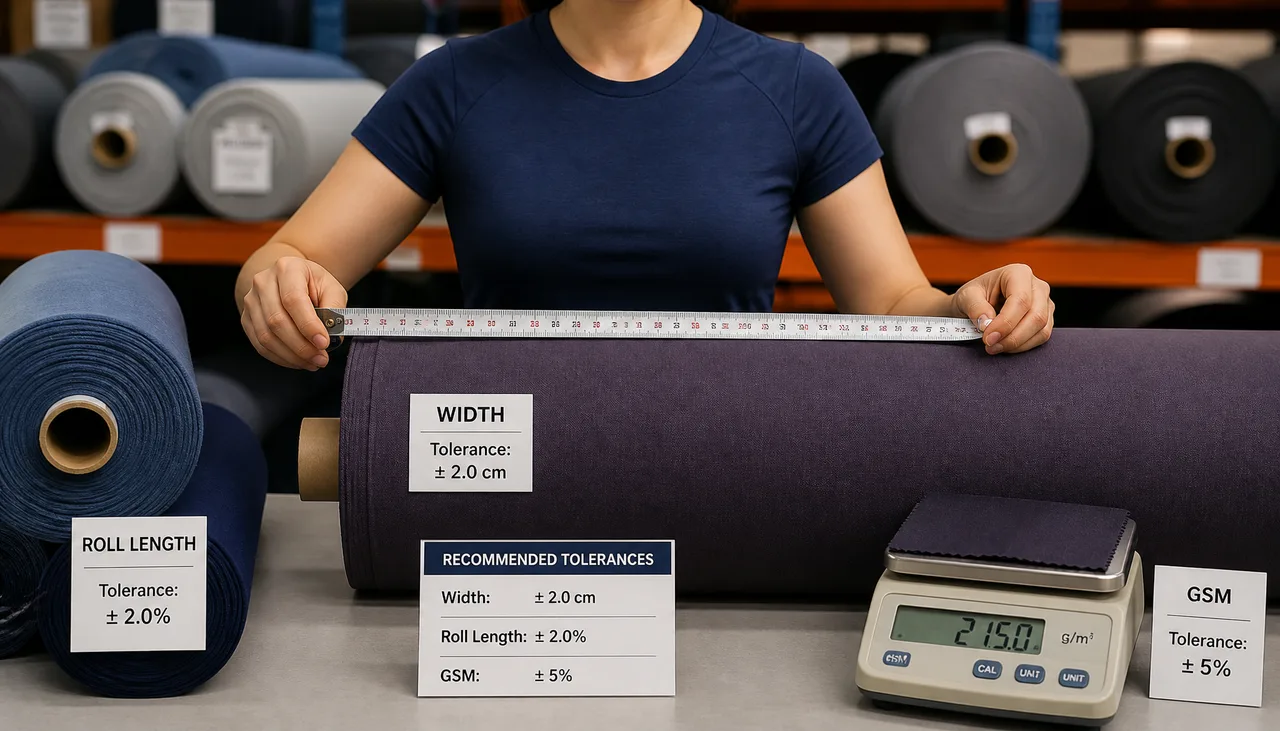
GSM tolerance is critical to ensure consistent garment quality. Buyers should specify a tight acceptable range (for example, ±3% to ±5% of target GSM), as wider variations can affect garment fit and function.
—
Why Specifying Tolerances Matters
- **Production Consistency:** Clear tolerances help suppliers maintain consistent fabric characteristics across production batches, reducing variation that might affect garment quality.
- **Quality Control:** Tolerances provide concrete criteria for acceptance testing, enabling buyers to reject rolls that do not meet agreed specifications.
- **Cost Management:** Properly set tolerances balance quality requirements with manufacturing realities, controlling costs by reducing excessive rejections or over-spec production.
- **Supplier Relationship:** Explicit tolerances reflect professional sourcing standards and help establish trust and clear expectations between buyers and suppliers.
—
Additional Considerations for Activewear Fabric Buyers
- **Minimum Order Quantity (MOQ):** Typically around 150 kg or approximately 600 meters per color; align roll length with MOQ to optimize order size.
- **Fabric Type & Application:** Nylon-spandex and polyester-spandex blends are common; GSM and width tolerances might vary slightly by fabric composition and end use (e.g., yoga wear vs. compression garments).
- **First Article Testing:** Conduct initial testing on a sample roll to confirm tolerances meet performance and quality requirements before full production.
- **Supplier Capabilities:** Work with suppliers who offer stable supply, professional fabric matching services, and after-sales support to manage tolerance issues proactively.
—
Summary
When drafting a purchase order for activewear fabric, clearly specify tolerance limits on:
- **Width:** ±1–2 cm to ensure cutting precision;
- **Roll Length:** ±5% to manage inventory and production planning;
- **GSM:** ±3–5% to maintain fabric performance and garment quality.
These tolerances reflect common industry practices for stretch knitted fabrics used in yoga wear, sports bras, leggings, and shapewear. Including such details supports consistent fabric quality, efficient production, and strong buyer-supplier relationships.
—
*This guidance is based on typical B2B fabric sourcing practices for knitted synthetic fabrics in activewear applications, focusing on real production needs, stable volume orders, and professional sourcing standards.*