
In activewear manufacturing, the decision to use free-cut fabric without hemming hinges on several factors related to fabric type, application, garment design, and performance requirements. This guidance outlines when free-cut fabric can be suitable without hemming, focusing on activewear categories such as sports bras, yoga wear, leggings, and shapewear.
—
Understanding Free-Cut Fabric in Activewear
Free-cut fabric refers to fabric panels cut to size without additional edge finishing such as hemming. This approach can streamline production and reduce bulk, but it requires fabric characteristics and garment design that tolerate raw edges without compromising durability or wearer comfort.
—
Key Factors for Using Free-Cut Fabric Without Hemming
1. Fabric Composition and Stretch Behavior
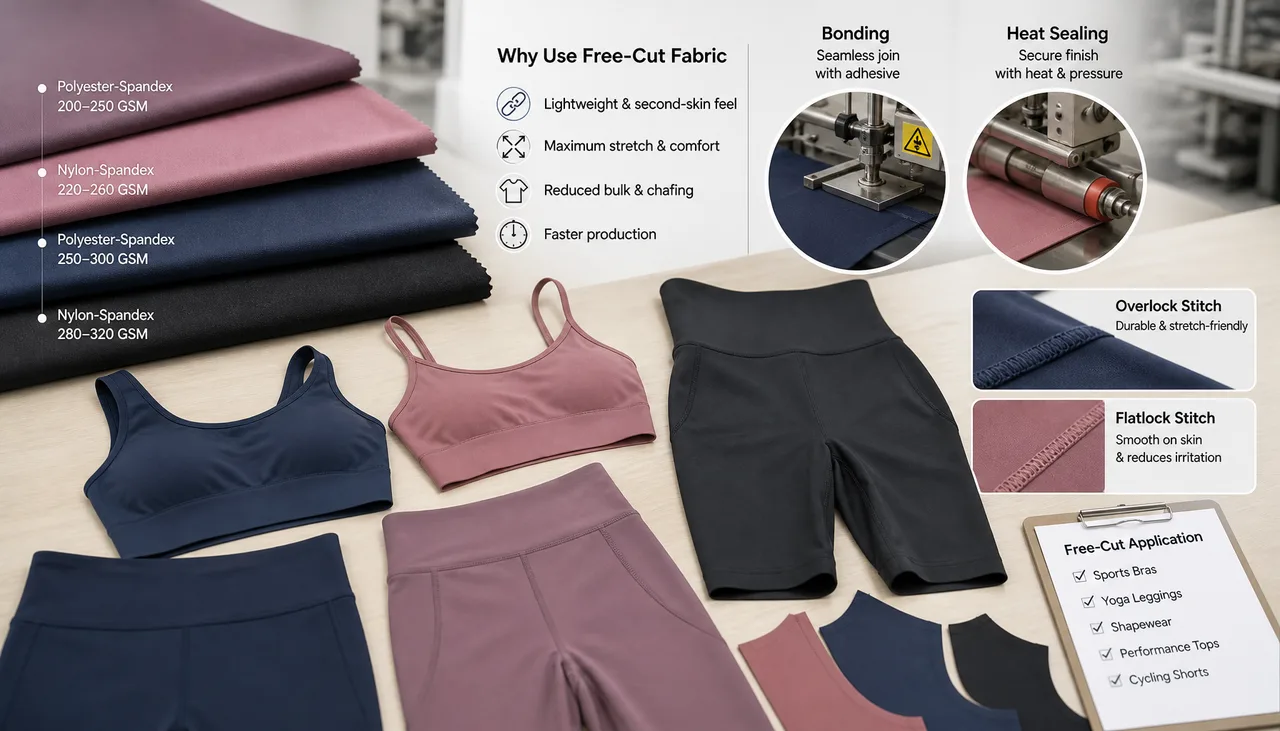
Activewear typically uses stretch knitted fabrics composed of polyester-spandex or nylon-spandex blends. These fabrics have inherent elasticity and recovery properties that allow the raw edges to maintain shape and resist fraying.
- **Nylon-Spandex and Polyester-Spandex Fabrics**: Both are core fabric types for activewear including sports bras and yoga wear. Their stretch and resilience support edge stability without hemming in some cases.
2. Fabric Weight and GSM (Grams per Square Meter)
Fabric weight plays a role in edge stability:
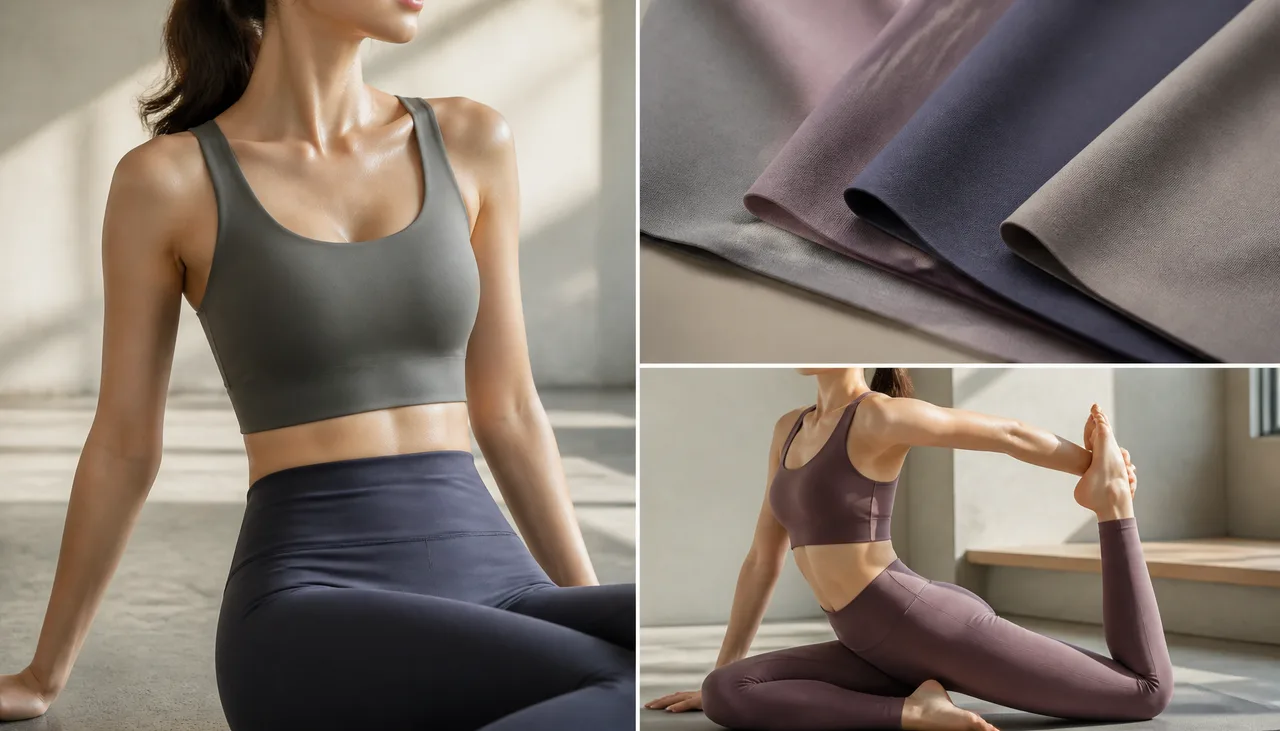
- **Medium to Higher GSM Fabrics**: Heavier stretch fabrics tend to have more structural integrity at the edges, reducing curling or fraying risks when left unhemmed.
- **Lightweight Fabrics**: These may require finishing or reinforcement at edges to maintain shape and durability.
3. Application and Garment Function
Certain activewear types routinely use free-cut edges without hemming due to their design and usage:
- **Sports Bras and Compression Garments**: Often employ seamless or bonded edges that mimic free-cut edges, benefiting from fabric stretch and compression to hold edges securely.
- **Yoga Wear and Leggings**: Panels cut from stable stretch fabrics with proper weight can sometimes be used without hemming, especially if garment design includes bonded seams or overlock stitching that secures edges.
- **Lingerie and Shapewear**: These require close fabric matching and may use free-cut fabric edges when combined with fabric finishing techniques that reduce fraying.
4. Fabric Finishing and Production Techniques
While free-cut fabric may not have a sewn hem, other finishing processes can enhance edge durability:
- **Heat Sealing or Ultrasonic Bonding**: These methods can stabilize edges in stretch fabrics, enabling the use of free-cut panels without traditional hemming.
- **Overlock or Flatlock Stitching**: When seams incorporate these stitches, raw edges are enclosed or secured, allowing for free-cut fabric edges elsewhere.
5. Design Considerations
- **Seam Placement and Stretch Direction**: Strategic panel placement and orientation can minimize stress on raw edges.
- **Elastic Edges or Binding**: Use of elastic trims or bindings at key edges can substitute for hems, stabilizing free-cut fabric.
—
Situations Where Free-Cut Fabric Without Hemming Is Appropriate
- When using **medium to high GSM polyester-spandex or nylon-spandex stretch fabrics** designed for sports bras, yoga wear, or shapewear.
- In garments where **edge finishing is achieved through bonding or heat sealing** rather than sewing.
- When the garment's **design incorporates stretch and compression features** that hold raw edges in place.
- For **knitted synthetic fabrics** intended for seamless or minimal-seam activewear applications.
—
Situations Requiring Hemming or Edge Finishing
- Lightweight or loosely knit fabrics prone to fraying.
- Garments subjected to **high abrasion or stress at edges**.
- Where **aesthetic requirements** demand clean, visible edge finishes.
- When the production process or fabric supplier’s recommendations specify hemming for durability.
—
Summary: How Activewear Buyers Should Decide
Activewear product developers and sourcing teams should consider:
- **Fabric type and weight**: Favor polyester-spandex or nylon-spandex with sufficient GSM for edge stability.
- **Garment application and design**: Assess whether the garment’s function and design support free-cut edges.
- **Finishing techniques available**: Use bonding, heat sealing, or specialized stitching to secure edges without hemming.
- **Supplier expertise**: Collaborate with fabric suppliers offering integrated fabric solutions, including sample testing to confirm edge durability without hemming.
By evaluating these factors, activewear manufacturers can confidently determine when free-cut fabric can be used without hemming, balancing production efficiency with garment performance and quality.
—
*This guidance is based on fabric and application insights from B2B fabric supplier knowledge focused on stretch knitted fabrics for activewear, including lingerie, sports bras, yoga wear, and shapewear.*