
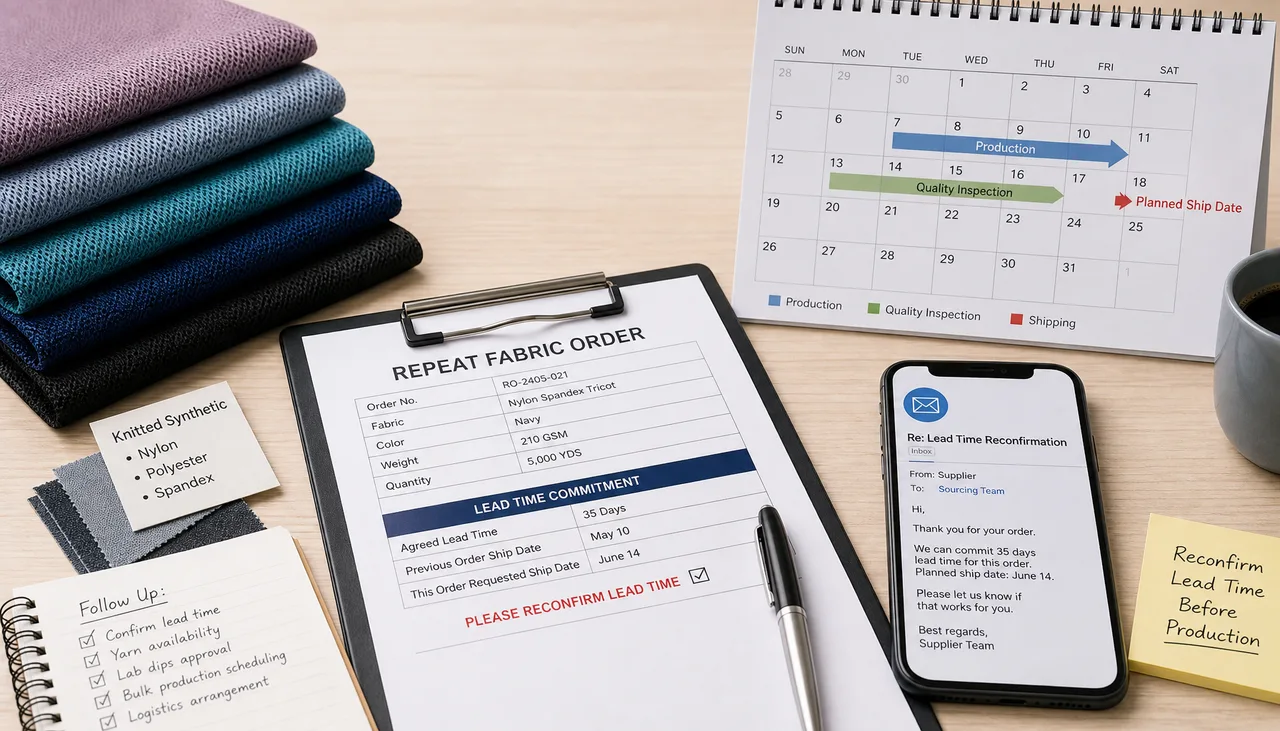
When Should Brands Reconfirm the Lead-Time Commitment During Repeat Fabric Orders?
In the context of B2B fabric sourcing—especially for knitted synthetic fabrics used in apparel like lingerie, sportswear, and yoga wear—reconfirming the lead-time commitment during repeat fabric orders is a critical step for ensuring smooth production and supply chain management.
Key Considerations for Reconfirming Lead Time
-
At the Start of Each New Order Cycle
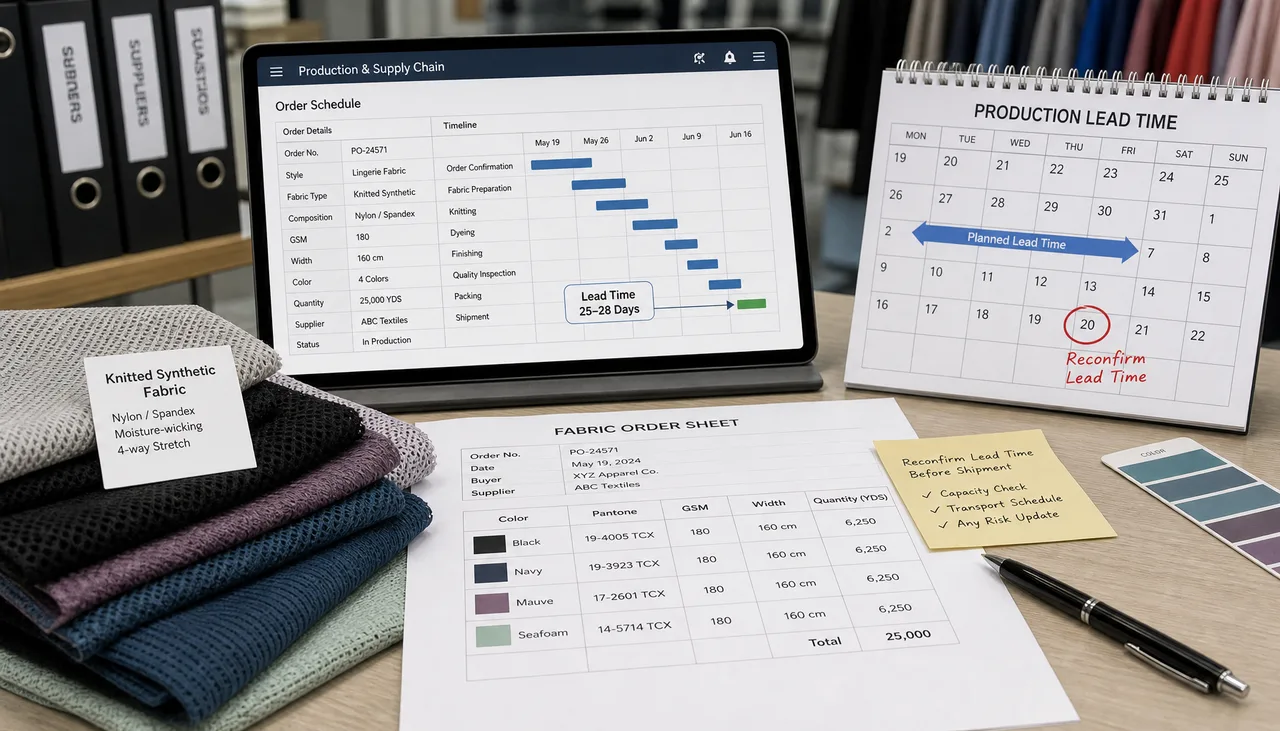
Even when placing repeat orders for a previously sourced fabric, brands should reconfirm lead times at the outset of every new order. This is because production schedules, raw material availability, or factory capacity can change, potentially impacting delivery dates. A fresh confirmation helps avoid unexpected delays. -
After Any Changes in Order Specifications or Volumes
If the repeat order differs in quantity, color, GSM (grams per square meter), or fabric composition, reconfirming lead time is essential. Changes in Minimum Order Quantity (MOQ), which commonly stands around 150 kg per color (approximately 600 meters), can affect production planning and delivery timing. -
When Market or Supply Conditions Fluctuate
External factors such as supply chain disruptions, raw material shortages, or increased demand can influence lead times. Brands should reconfirm lead time commitments if aware of such changes in the market or if advised by the fabric supplier. -
Before Finalizing Bulk Production
Prior to commencing bulk production following sampling and testing phases, reconfirming lead times ensures that production timelines align with the brand’s schedule and market launch plans.
Why Reconfirmation Matters
-
Ensures Alignment Between Brand and Supplier
Reconfirming lead times fosters clear communication and mutual understanding of delivery expectations. -
Supports Stable Supply and After-Sales Service
It aligns with the fabric supplier’s goal of providing stable supply and reliable service to B2B customers with real production needs and stable demand. -
Mitigates Risks of Production Delays
Early awareness of any lead-time changes helps brands adjust their planning or sourcing strategies proactively.
Summary
For repeat fabric orders in the B2B apparel sector, brands should reconfirm lead-time commitments:
- At the initiation of each new order, regardless of past order history.
- Whenever order details such as volume or fabric specifications change.
- In response to known market or supply fluctuations.
- Before bulk production begins to ensure schedule alignment.
This practice supports reliable sourcing, reduces supply chain risks, and helps maintain efficient production workflows.