
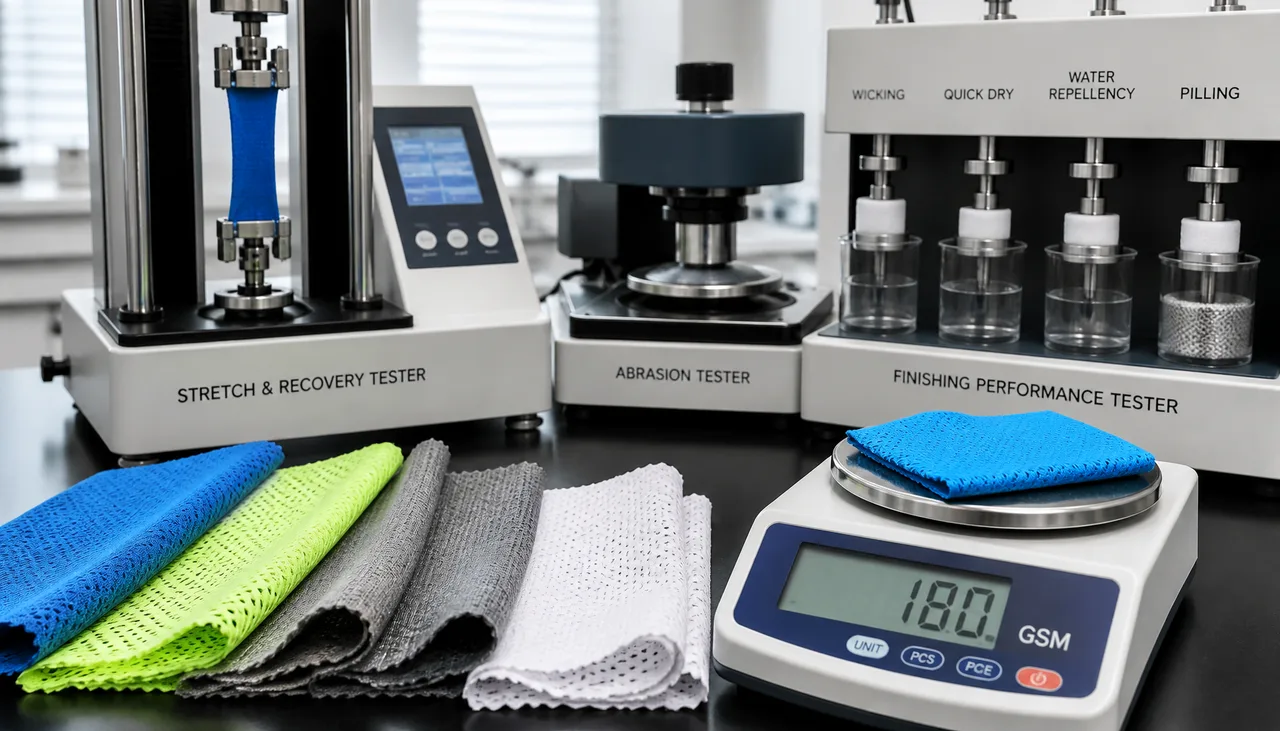
When apparel brands evaluate fabric materials for running shirts, requesting specific fabric tests before approval is essential to ensure the material meets the application’s functional and quality requirements. Based on fabric sourcing insights from a B2B knitted synthetic fabric supplier specializing in activewear applications such as sportswear and yoga wear, brands should focus on tests that reflect key performance factors including stretch, hand feel, durability, finishing, and quality control.
Key Fabric Tests Brands Should Request:
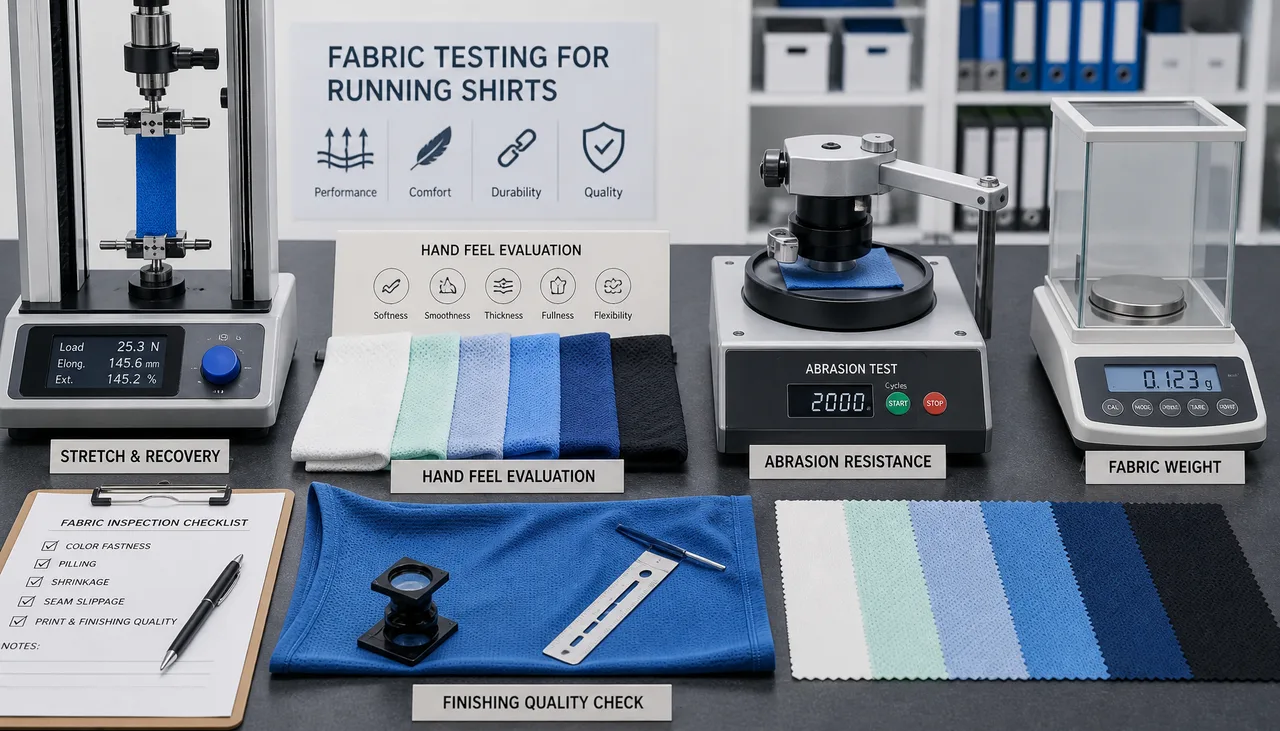
- Stretch and Recovery Testing
Since running shirts require good elasticity for comfort and freedom of movement, testing the fabric’s stretch capacity and its ability to recover after stretching is important. This ensures the shirt will maintain shape and fit during physical activity.
-
Hand Feel Evaluation
The tactile quality of the fabric affects wearer comfort. Testing for hand feel assesses softness, smoothness, and flexibility, helping brands confirm the fabric will feel pleasant against the skin during running. -
Durability and Abrasion Resistance Tests
Running apparel undergoes frequent use and washing, so durability tests measure resistance to abrasion, pilling, and wear. These tests help predict the shirt’s longevity and appearance retention. -
Fabric Weight and GSM Verification
GSM (grams per square meter) indicates fabric density and weight, influencing breathability and moisture management. Brands should verify GSM to match the desired balance of lightweight feel and performance. -
Finishing Quality Checks
Finishing processes affect fabric properties like moisture wicking, anti-microbial performance, and colorfastness. Testing the effectiveness and stability of finishes ensures the fabric meets functional claims and maintains quality over time. -
Quality Control Assessments
General quality control tests include dimensional stability (shrinkage), color fastness to washing and rubbing, and seam strength. These confirm the fabric’s consistency and suitability for production scale.
Rationale and Workflow Context
A fabric supplier focused on knitted synthetic fabrics for activewear typically follows a connected workflow starting from understanding buyer needs—application type, hand feel, function, GSM, and fabric type—through fabric matching, sampling, testing, and buyer confirmation before bulk production. Approving fabric after these key tests aligns with this approach, ensuring the material fits the specific requirements of running shirts and related sports apparel.
Summary
To approve fabric for running shirts, brands should request tests that verify stretch and recovery, hand feel, durability, GSM, finishing quality, and overall quality control. These tests collectively confirm the fabric’s performance and comfort attributes critical for activewear applications. This selection process helps brands confidently match fabric materials to the functional and aesthetic demands of running apparel.