
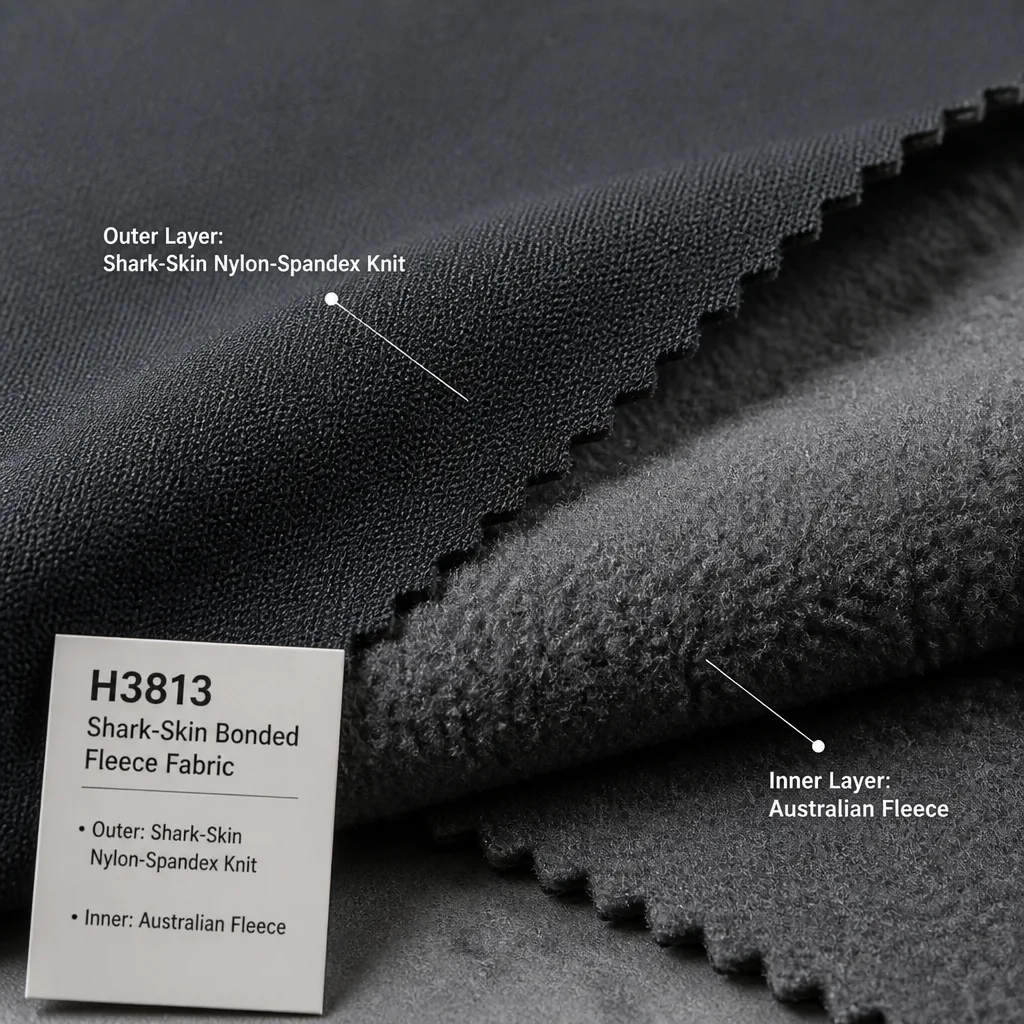
H3813 is presented as a 430 GSM bonded fabric with an 80% nylon and 20% spandex outer layer and a fleece inner surface. It may suit winter leggings and fitted cold-weather activewear that need a substantial two-layer construction, but “extreme cold,” wind resistance, warmth, recovery, and durability must be defined and verified against the finished garment's actual use conditions.
Start with the winter use case
A buyer should first define whether the garment is intended for low-intensity commuting, outdoor training, a ski base layer, or casual winter wear. These scenarios place different demands on insulation, air permeability, moisture transfer, wind exposure, and freedom of movement.
Fabric weight alone cannot establish a safe operating temperature. Perceived warmth also depends on air movement, humidity, activity level, garment fit, layering, coverage, and wearer physiology. Use a target temperature only when it is supported by an agreed garment test or controlled wear trial.
Understand the bonded construction
The supplied description identifies a dense nylon-spandex outer layer bonded to a fleece inner layer. This construction can combine a smoother exterior with a warmer next-to-skin surface, while the bond adds variables that do not exist in a single-layer knit.
Before approval, buyers should inspect:
- bond uniformity across the usable width;
- local bubbling, delamination, or hard adhesive areas;
- change in hand and flexibility after laundering;
- edge behavior after cutting;
- stretch and recovery of the complete bonded assembly;
- compatibility between the outer layer, fleece, adhesive, and care cycle.
Treat composition and weight as starting data
The stated 20% spandex content does not prove a specific compression level, four-way stretch, or recovery performance. Bonding can restrict the extension of the outer knit, and the weaker or less extensible layer may control the behavior of the complete fabric.
Request stretch and recovery data for the bonded material—not only the outer face—and require the test direction, load or extension, hold time, recovery interval, and cycle count. If compression is part of the product brief, validate pressure and comfort on the finished garment across the intended size range.
At 430 GSM, fabric mass should be considered early in product development:
estimated fabric mass = garment fabric area × GSM
Illustrative calculation, not ClothFactory production data: if a winter legging uses 1.20 m² of finished fabric before cutting loss, the fabric contribution is approximately 1.20 × 430 = 516 g. Actual consumption varies with usable width, marker efficiency, size ratio, direction requirements, and waste. This estimate helps the buyer evaluate garment weight and freight impact; it does not predict thermal performance.
Verify warmth and wind claims separately
A fleece surface can trap air within its raised structure, but the amount of insulation depends on pile geometry, compression, moisture, and the complete garment system. Ask for a defined thermal test or conduct controlled wear trials using the intended base layers and activity conditions.
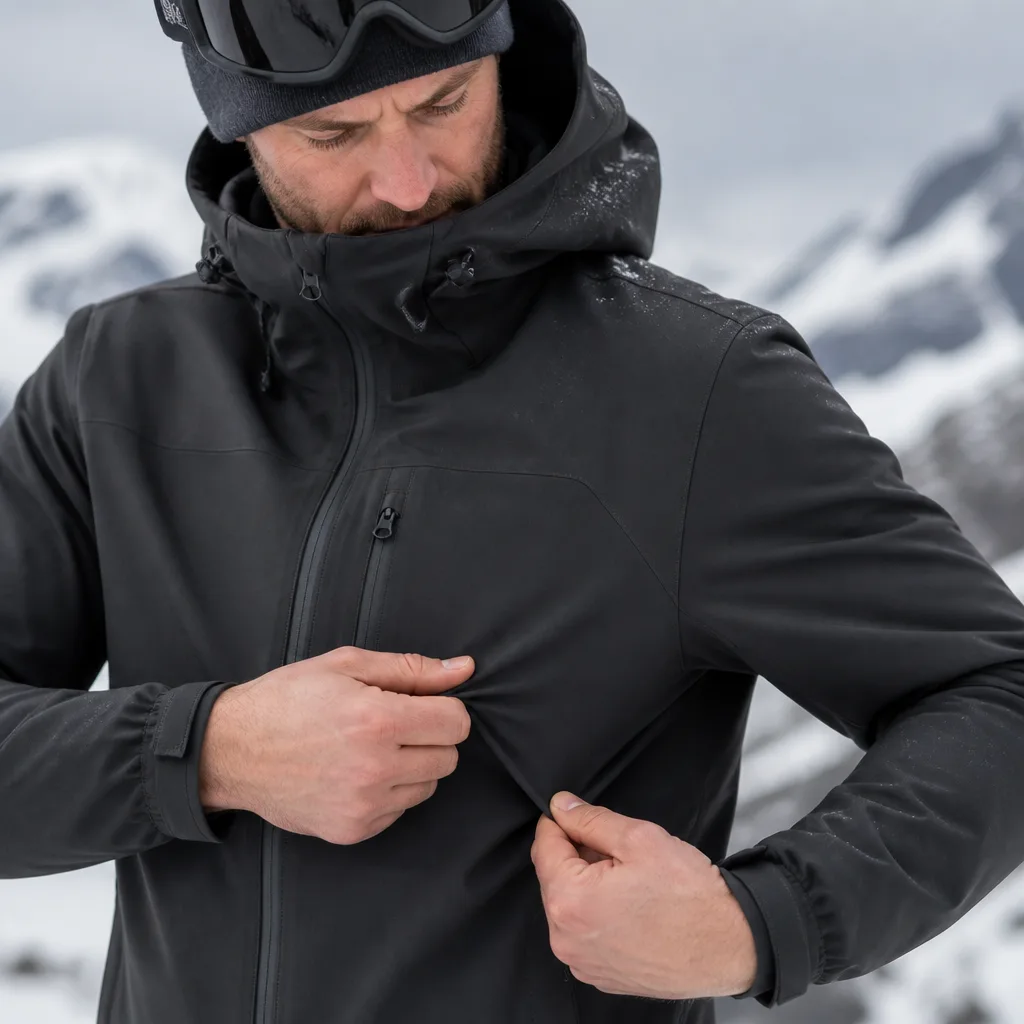
Likewise, a dense surface may reduce air movement without being windproof. If wind resistance matters, set an air-permeability requirement under a named method. If the product must resist rain or snow, specify water-related performance separately; wind resistance does not establish water resistance.
Plan garment engineering around bulk and stretch
Bonded 430 GSM fabric creates more seam bulk than a light single-layer knit. Production trials should determine the appropriate cutting method, needle, thread, stitch type, stitch density, seam allowance, and differential feed. Inspect the cut edge and seam after extension and laundering for separation, broken yarns, skipped stitches, tunnelling, and uncomfortable ridges.
Flatlock construction may reduce a raised seam in some designs, but it is not automatically the correct solution. Seam strength, extension, bulk, machinery, and product appearance must be reviewed together.
Set acceptance conditions before sampling
A useful H3813 development brief should state:
- garment type, activity level, and expected weather exposure;
- intended layering system and fit;
- finished composition, GSM tolerance, and usable width;
- required stretch and recovery conditions;
- dimensional stability after the agreed care cycle;
- bond durability and appearance requirements;
- pilling, abrasion, colorfastness, and air-permeability methods where relevant;
- production color and any shade-specific approval requirements.
Test the production-intent color because dyeing and finishing can affect hand and appearance. A result from one shade should not be applied automatically to every color.
Common sourcing mistakes
- Assigning an “extreme cold” temperature rating from GSM alone.
- Calling the fabric windproof without an agreed air-permeability criterion.
- Testing only the outer knit instead of the finished bonded structure.
- Assuming high spandex content guarantees recovery or compression.
- Approving a small swatch without sewing and laundering a complete garment.
- Ignoring bond durability when setting the care label.
Procurement next step
Send the supplier a written end-use brief and request full finished-fabric data plus enough yardage for a production-representative prototype. Compare warmth, mobility, seam comfort, bond stability, drying behavior, and appearance under the same test and wear conditions. H3813 should move to bulk approval only when those results meet the garment's defined winter-use requirements.