
H3268 is a 78% nylon, 22% spandex fabric specified at 240 GSM with a one-side brushed surface, making it a candidate for winter yoga leggings and close-fitting cold-weather activewear. Buyers should approve warmth, recovery, opacity, surface durability, and wash stability on the finished color; composition, GSM, and brushing alone do not prove thermal performance or garment coverage.
What the brushed construction can change
Brushing raises fibers on one face of the fabric and can create a softer contact surface with more entrapped air than the same construction before brushing. That may improve perceived warmth, but the result depends on pile height, knit density, wind exposure, moisture, garment fit, and the surrounding clothing system.
The supplied description identifies a one-side fine brushed surface. It does not provide thermal-resistance test data, so terms such as “constant temperature” or a guaranteed temperature range should not be used without a defined method and report.
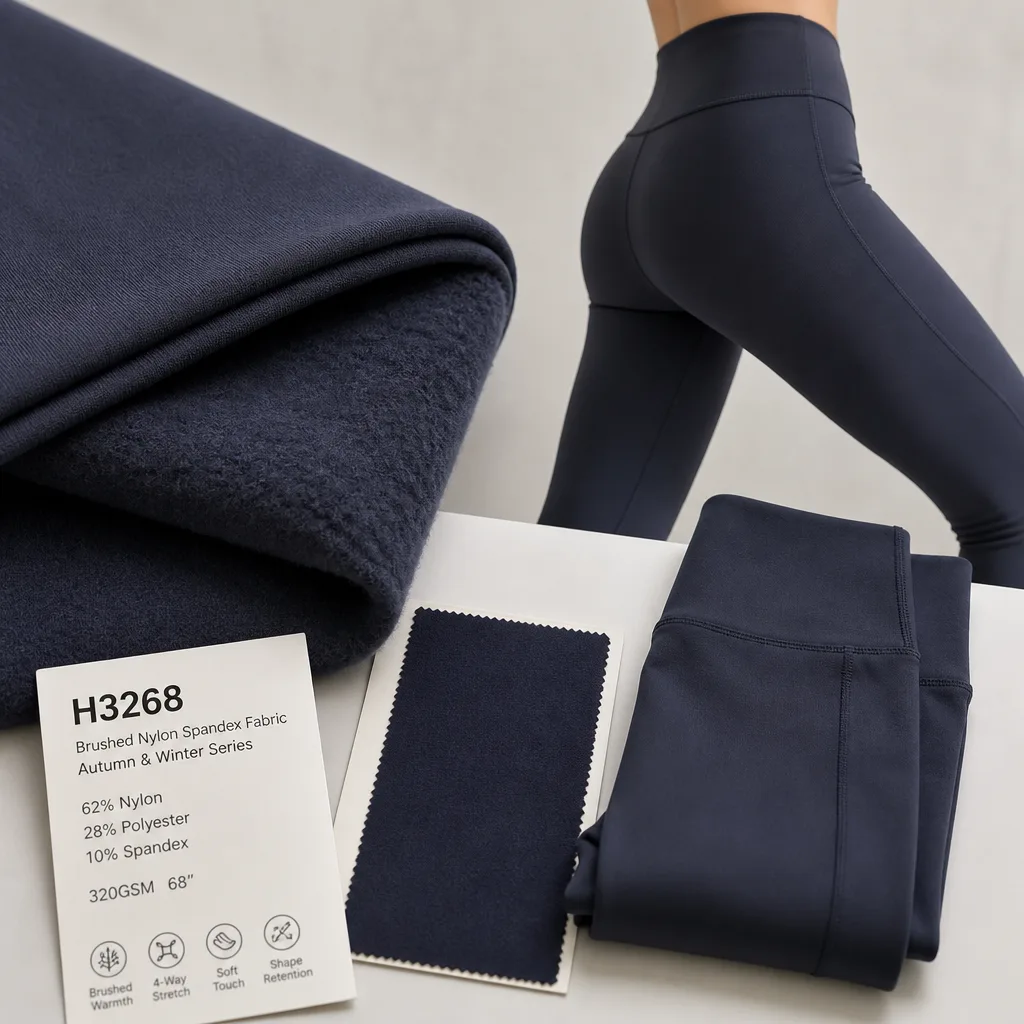
Evaluate the 78/22 composition and 240 GSM together
The 22% spandex content indicates a high-elastane blend, but it does not by itself define stretch percentage, recovery, compression, or low-temperature behavior. Request results in both fabric directions under one agreed method, and test the intended garment at its actual pattern reduction.
At 240 GSM, H3268 carries more fabric mass than a lightweight activewear knit. More mass may support coverage and a warmer hand, but warmth cannot be ranked by GSM alone. Knit construction, thickness, brushing, air permeability, moisture condition, and garment layering all affect the wear result.
Garment-level checks for winter leggings
Approve the fabric in the selected color and in a representative prototype. The evaluation should include:
- coverage at the hip, seat, knee, and other high-extension zones;
- stretch recovery after movement and after the agreed wash cycle;
- surface pilling and abrasion on both the smooth and brushed faces;
- dimensional change in length and width;
- colorfastness under the relevant wash, perspiration, and rubbing conditions;
- comfort of the brushed face during extended skin contact;
- drying behavior after exercise or washing if moisture management is part of the brief.
The original material description refers to a colorfastness grade of 4–5, but a grade is not a complete acceptance record without the test method, tested color, exposure condition, staining scale, color-change scale, and report. Buyers should request that evidence before repeating the claim in a product specification.
Control nap direction during production
A one-side brushed fabric has a directional surface. Pattern markers should keep the nap orientation consistent across garment panels unless the design intentionally calls for contrast. Mixed direction can produce visible shade or texture differences even when panels are cut from the same roll.
Allow the fabric to relax before measuring and cutting, and record the spreading tension. Cutting quality should be assessed on the actual bulk finish; laser cutting is not automatically preferable, and its suitability depends on edge response, discoloration risk, equipment settings, and garment design.
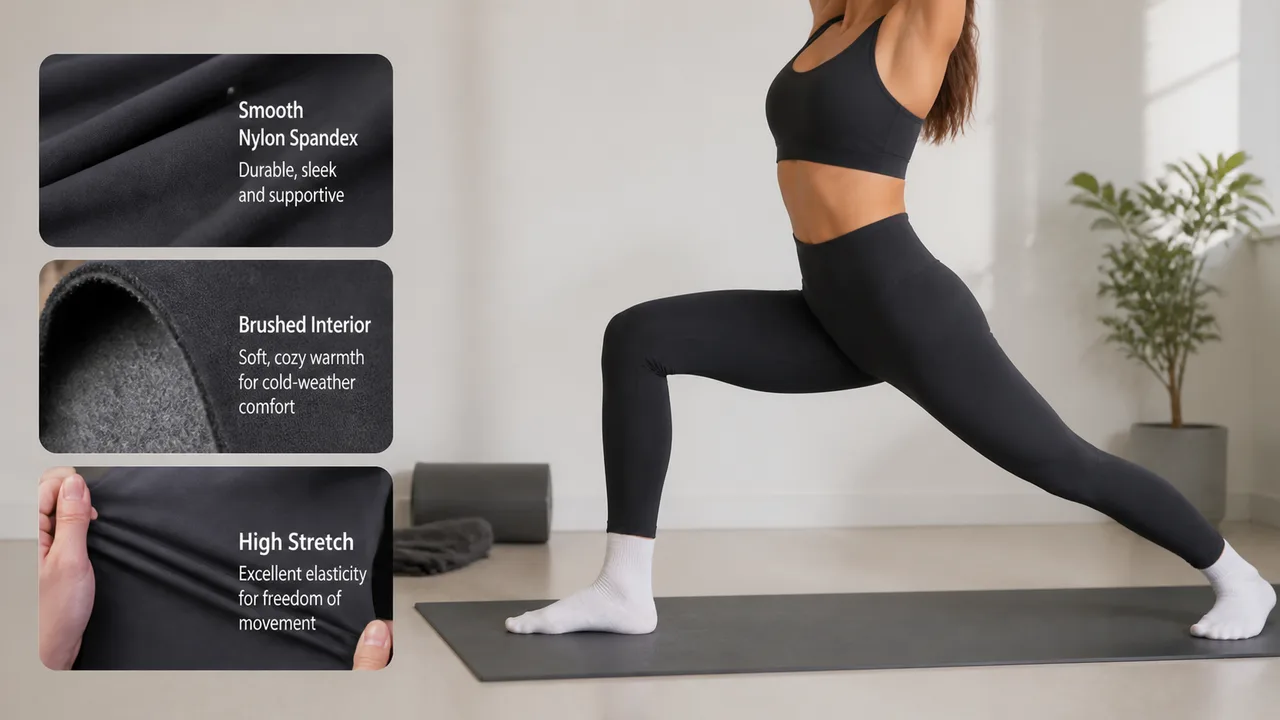
Sewing and bulk-approval requirements
Use a production sewing trial to select the needle, thread, stitch type, stitch density, seam allowance, and differential-feed settings. Inspect seams under representative extension for skipped stitches, thread breakage, seam grin, tunneling, and permanent deformation. Repeat the assessment after the specified wash and drying cycle.
For bulk approval, define roll-to-roll limits for GSM, usable width, shade, surface appearance, and brushing consistency. A single approved swatch cannot represent every roll unless the lot is checked against the same standards.
Buyer request checklist
When requesting H3268 samples, provide:
- Garment type and intended cold-weather use.
- Target fit and pattern reduction, if established.
- Required finished width and GSM tolerance.
- Color and opacity requirement at garment extension.
- Stretch, recovery, dimensional-stability, pilling, abrasion, and colorfastness criteria.
- Intended care cycle and required number of validation washes.
- Any warmth or moisture-management requirement expressed as a defined test, not a marketing term.
ClothFactory can then compare the submitted requirement with the available H3268 specification and prepare a sample for garment-level validation. Bulk approval should follow only after the fabric, color, construction, and test conditions match the buyer's written specification.