
When sourcing winter activewear fabrics, it is often helpful to split the process into three distinct garment profiles. For flexible close-to-body garments like yoga leggings, you may want to choose single- or double-sided brushed nylon-spandex knits in the 220-320 GSM range with high elastane to provide strong stretch and next-to-skin softness. For extreme-cold outdoor gear, consider selecting heavyweight bonded composite fleeces over 400 GSM that pair a durable outer shell with a thermal fleece back for windproof insulation. For looser mid-layers like hoodies, it is useful to prioritize warmth-to-weight ratios by specifying non-stretch or low-stretch anti-pill polar fleece in the 250-350 GSM range.
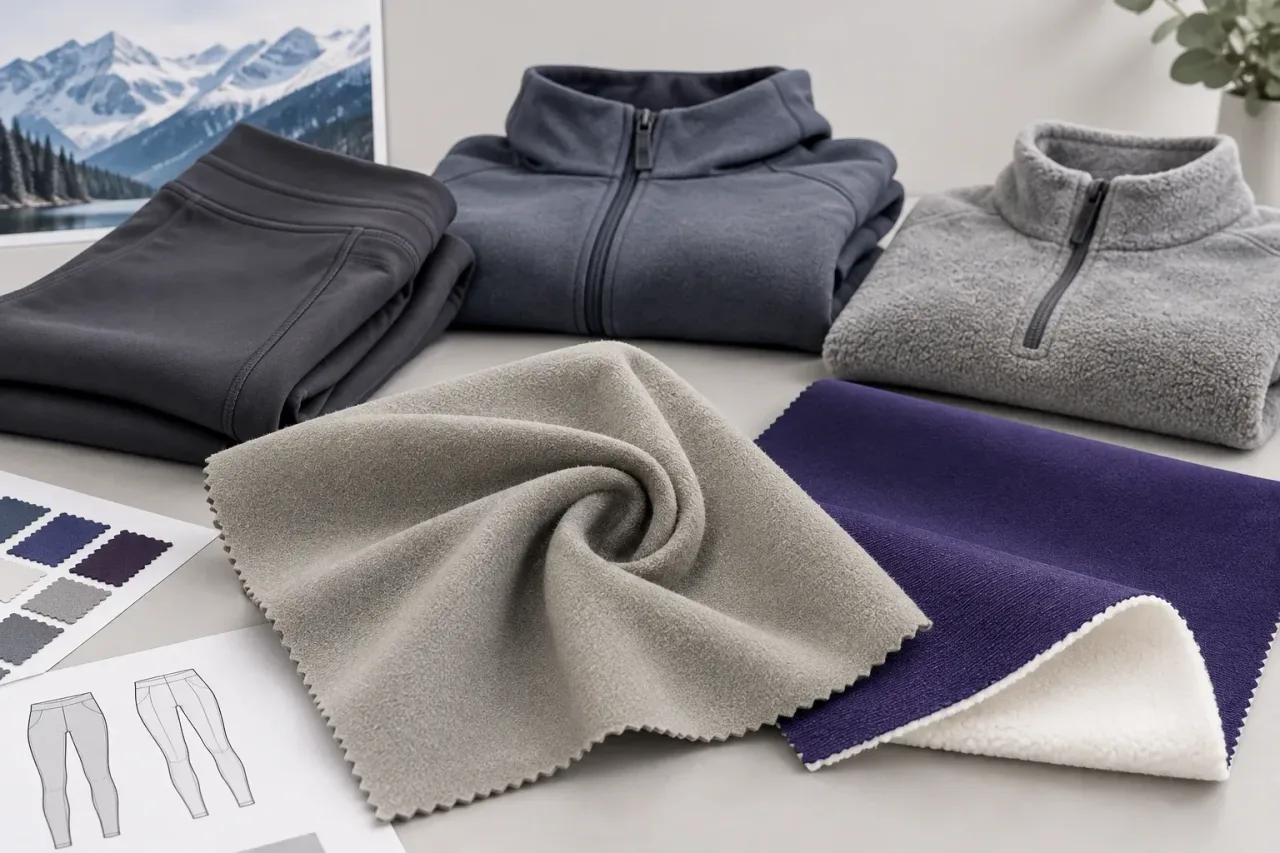
Specifying Brushed-Back Knits for Skin-Tight Leggings
You may want to specify brushed-back or double-sided brushed knits in the supplier reference range of 220 to 320 GSM for fitted winter bottoms and base layers. It is generally effective to focus on constructions with 8% to 25% elastane to maintain compression, opacity, and shape recovery during movement. This single-ply construction provides a soft, breathable thermal interior without the restrictive bulk of heavier outerwear fleeces, balancing thermal retention with high stretch for close-to-body activewear.
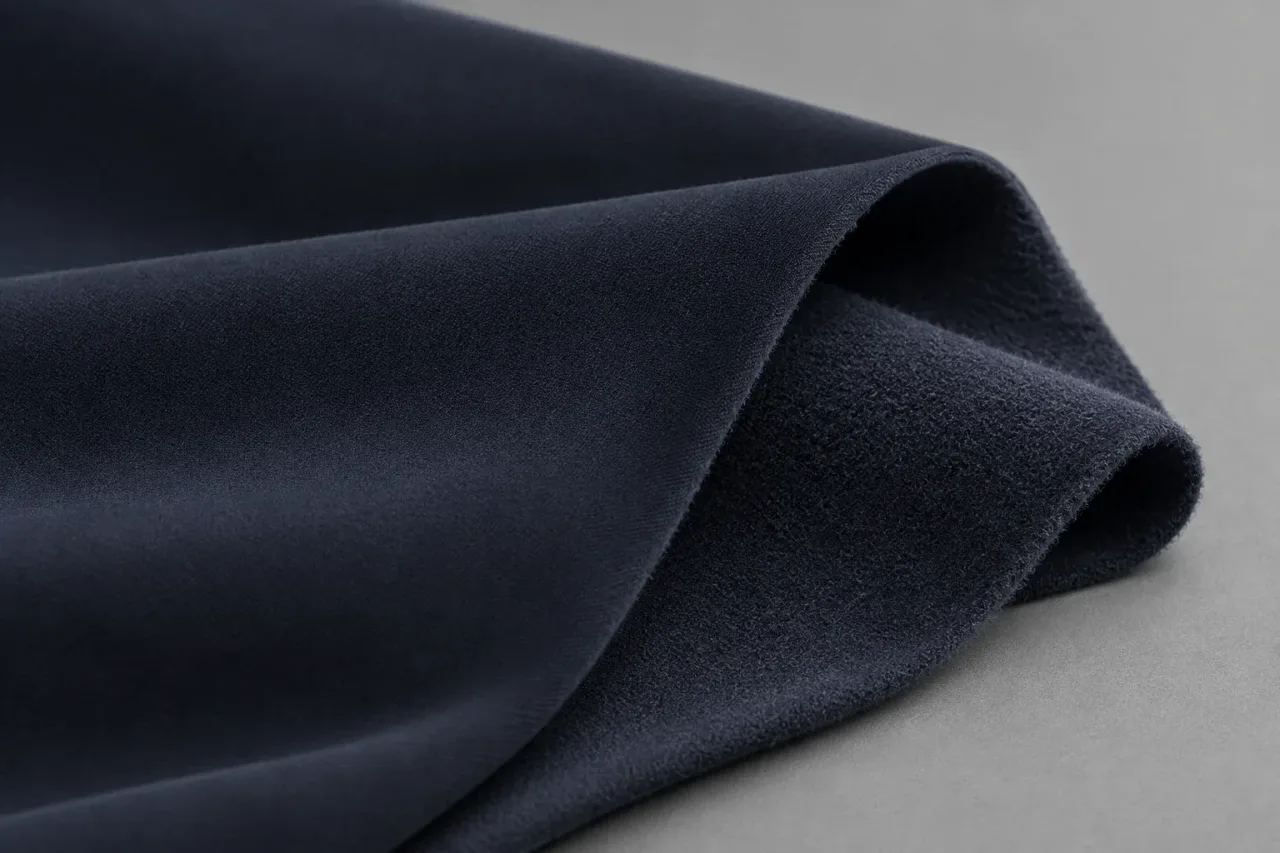
For a standard thermal legging application, the catalogue specification for H3268 250 GSM Brushed Nylon Spandex Double-Knit Fabric provides a 250 GSM single-sided brushed double-knit with 22% spandex. When the design prioritizes next-to-skin softness alongside maximum flexibility, consider a higher-elastane option. The catalogue reference CF-NS-0004 230 GSM Double-Sided Brushed Nylon Spandex Fabric demonstrates this approach with a 230 GSM double-sided brushed fabric utilizing 25% spandex for high stretch and strong shape recovery.
Selecting Bonded Composite Fabrics for Extreme Cold
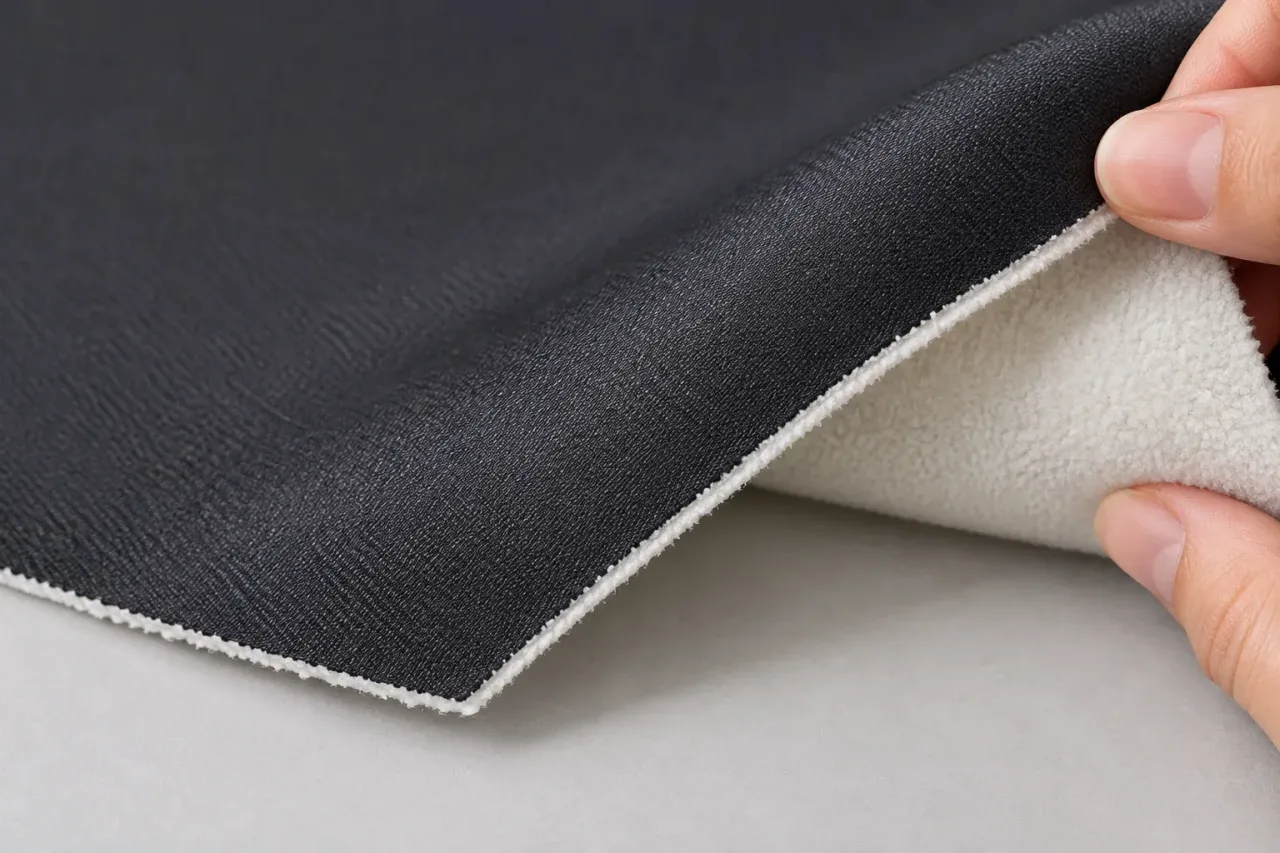
You might consider upgrading to bonded composite fabrics exceeding 400 GSM for extreme-cold outdoor gear where windproof performance is required. These fabrics fuse a smooth stretch face with a dense fleece back, offering exceptional insulation and weather defense that single-ply knits usually cannot match.
Because bonding increases structural rigidity and garment weight, it is often helpful to adjust garment patterns to accommodate reduced overall stretch compared to lighter activewear. You may want to update the pattern sizing before approving the bulk production sample. A typical specification for this application is H3231 430 GSM Shark-Skin Composite Polar Fleece Fabric, a catalogue 430 GSM bonded composite fleece that pairs a durable nylon-spandex outer face with a thermal fleece back for heavy winter protection.
Matching Polar Fleece to Looser Mid-Layers
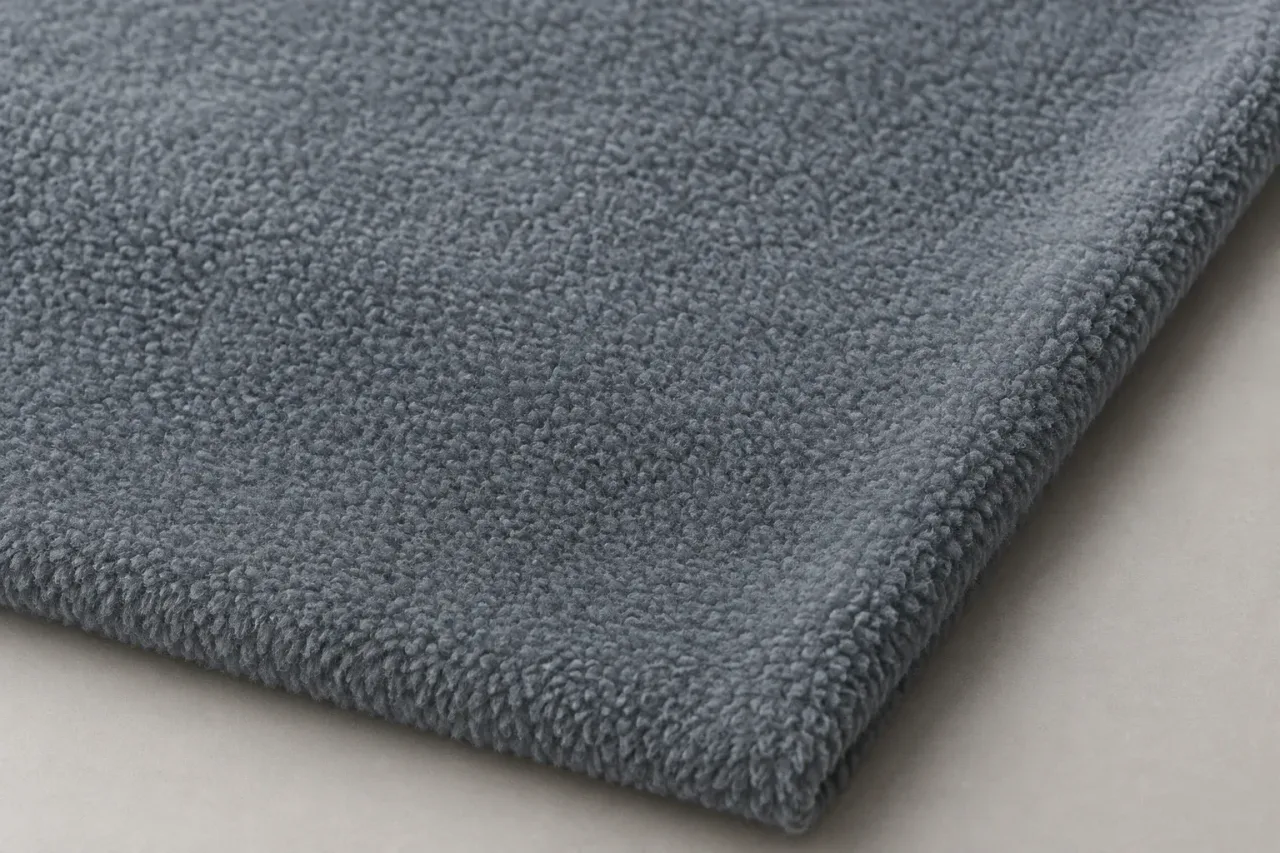
It is generally advisable to select traditional polar or anti-pill fleece between 250 and 350 GSM for looser hoodies, sweatshirts, and mid-layers. In these outer applications, maximizing the warmth-to-weight ratio is more important than compression or high stretch. Standard activewear stretch requirements generally do not apply here; breathability, thermal volume, and surface durability typically take priority.
To ensure the raised insulating pile remains durable through repeated friction and washing, consider specifying a measured result of Grade 4 pilling resistance under the standard ISO 12945-2 test method. This step helps prevent the bulky knit surface from degrading over the life of the mid-layer garment.
|
Garment Scenario |
Recommended Fabric Type |
Target GSM Range |
Typical Elastane Content |
Primary Sourcing Focus |
|---|---|---|---|---|
|
Skin-Tight Leggings |
Brushed or double-brushed knit |
220–320 |
8–25% |
Stretch, compression, and softness |
|
Extreme-Cold Gear |
Bonded composite fleece |
400+ |
Varies by face layer |
Windproof insulation and defense |
|
Looser Mid-Layers |
Polar or anti-pill fleece |
250–350 |
0–5% |
Warmth-to-weight and durability |