
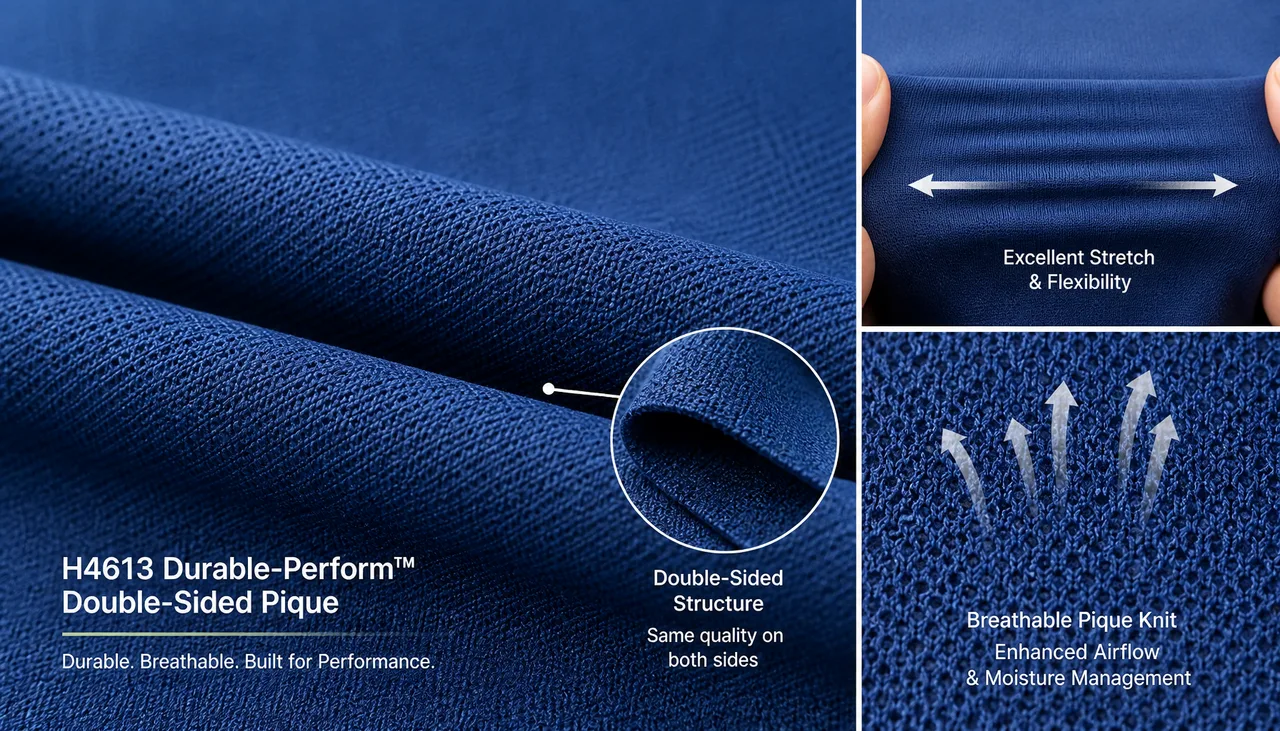
Double-Sided Cooling Pique is an 84% nylon/16% spandex fabric specified at 170 GSM and 165 cm finished width. It can be a useful teamwear candidate when the programme requires a clean outer face and controlled inner surface, but abrasion, pilling, stretch recovery, shade consistency, dimensional stability and any cooling claim still require approval.
Build the specification around the uniform programme
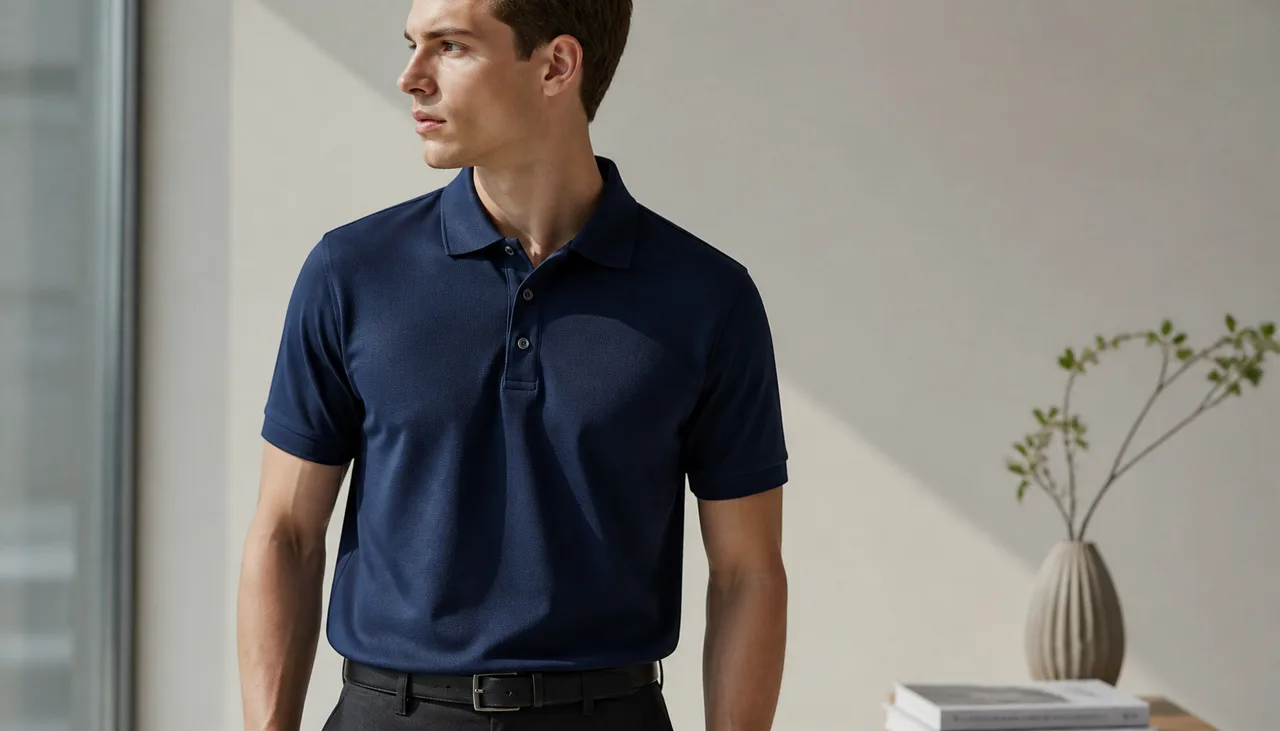
Teamwear may be used for competition, training, staff uniforms, or travel. The fabric decision changes with contact risk, activity level, climate, fit, decoration method, and laundering frequency. A match jersey may prioritize low bulk and moisture release, while a staff polo may require greater shape stability and a more formal surface.
State which garment panels will use the pique, whether the fabric contacts skin, and which areas receive printing, heat transfer, embroidery, or badges. Decoration can change local stiffness, stretch, and heat exposure, so it must be included in sampling.
Verify both fabric surfaces
Record the approved face and reverse. Compare texture, hand, pilling, and moisture spreading on each side; do not assume both sides have the same function because they come from one construction.
Inspect panel orientation and surface reflection before bulk cutting. If either side can be mistaken during spreading, define face marking and roll identification requirements. A reversal error may not be visible until garments are assembled under production lighting.
Set durability conditions that reflect use
“Repeated laundering” is not a complete test condition. The purchase specification should state wash and drying route, number of cycles, conditioning time, and acceptance points for shrinkage, spirality, shade, pilling, surface abrasion, and stretch recovery.
For contact sports or equipment-heavy training, consider snagging and abrasion at shoulders, hips, and side panels. For uniforms, examine collar, placket, hem, and side-seam appearance after the intended industrial or domestic care route.
Compare samples on the same basis
| Item | Required record | Procurement purpose |
|---|---|---|
| Fabric identity | Composition, construction, finished GSM, width, face and finish | Connects the swatch to the bulk order. |
| Mechanical response | Stretch and recovery by direction and after washing | Protects fit and seam appearance. |
| Surface durability | Pilling, abrasion and snagging conditions | Reflects wear and equipment contact. |
| Color control | Shade standard, lot grouping and colorfastness | Supports team-wide visual consistency. |
| Decoration trial | Method, temperature, pressure and dwell time | Confirms compatibility with logos and numbers. |
Do not compare results produced with different conditioning, wash, or loading methods. A lower fabric price has little value if shade sorting, decoration failure, or panel rejection reduces usable garment yield.
Procurement next step
Send the supplier the teamwear category, activity, garment panels, fit, decoration method, care route, color range, and required durability tests. Request identified finished samples and enough material for decoration, sewing, laundering, and wear-relevant trials. Use a sealed approval sample and written tolerances as the bulk reference.