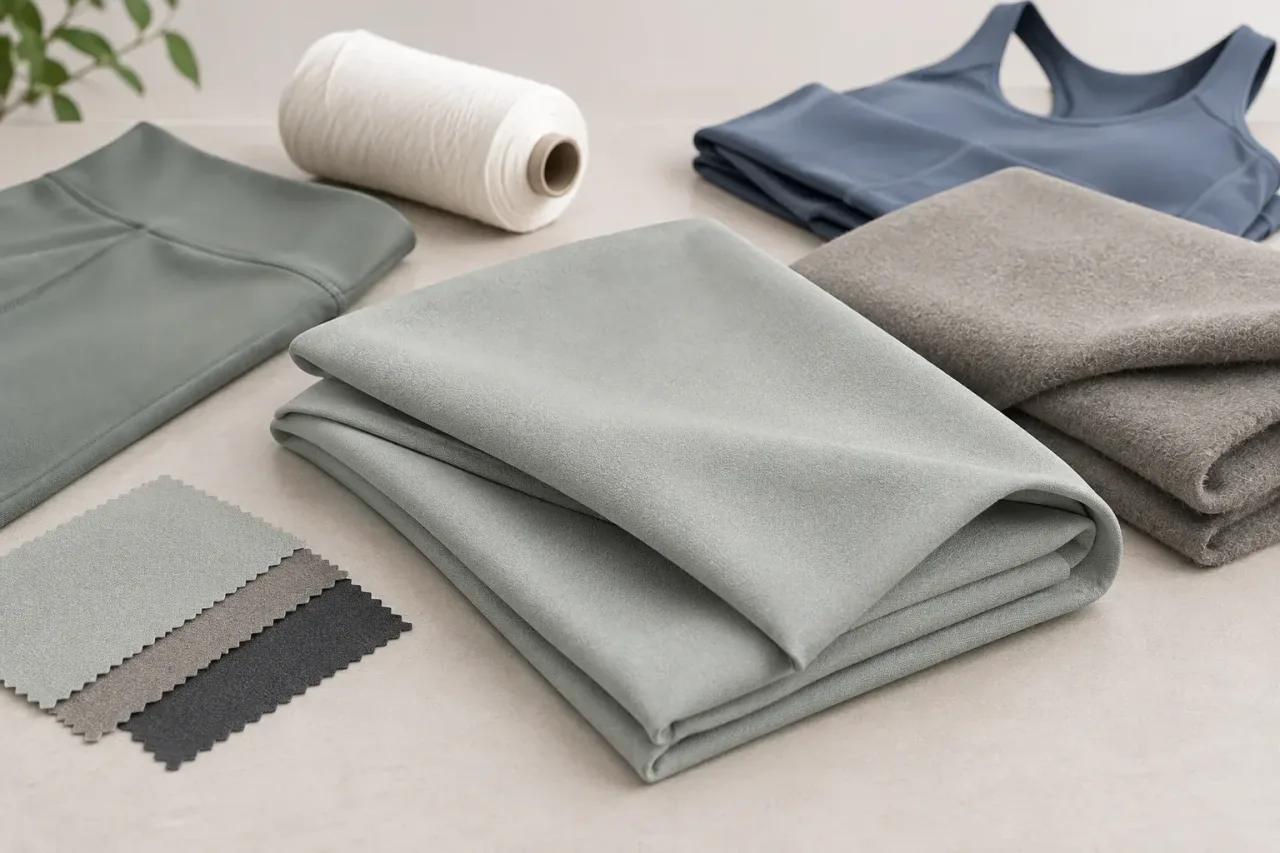
Elastane is a synthetic elastomeric fiber—chemically identical to spandex and the brand name Lycra—engineered to provide high reversible stretch. When sourcing stretch fabrics for activewear like leggings and sports bras, choosing the right base fiber to blend with elastane helps achieve the desired performance. Nylon-elastane blends prioritize a soft, second-skin hand feel for premium comfort, whereas polyester-elastane blends offer durability and hydrophobic moisture management. Typical elastane percentages range from 10% to 25%. To achieve the best garment compression and performance, evaluate the yarn quality and knit construction alongside the blend percentage, as these structural elements dictate final support and recovery.
Is There a Difference Between Elastane and Spandex?
Fabric specifications often list spandex, elastane, or Lycra interchangeably, which can sometimes cause confusion during sourcing. Elastane and spandex are generic names for the exact same synthetic elastic fiber. There is no difference in chemistry, performance, or hand feel between them. The distinction is purely geographic and commercial: spandex is the term required on US garment labels, elastane is the global ISO standard, and Lycra is a trademarked brand. Sourcing teams can treat these terms identically when reviewing fabric compositions.
|
Term |
Where It Is Used |
What It Means |
|---|---|---|
|
Spandex |
United States and Canada |
Generic name required on US labels by federal law. |
|
Elastane |
Europe, Asia, and global |
The ISO-standardized international name for the fiber. |
|
Lycra |
Global |
A trademarked brand of spandex or elastane. |
Choosing the Base Fiber: Nylon vs. Polyester
After establishing the elastic component, the next step involves selecting the base synthetic fiber. Nylon and polyester each bring distinct characteristics to activewear suited for different environments. Nylon blended with spandex serves as an excellent standard for premium close-fitting garments. It yields a smooth, soft fabric with reliable comfort and stretch recovery.
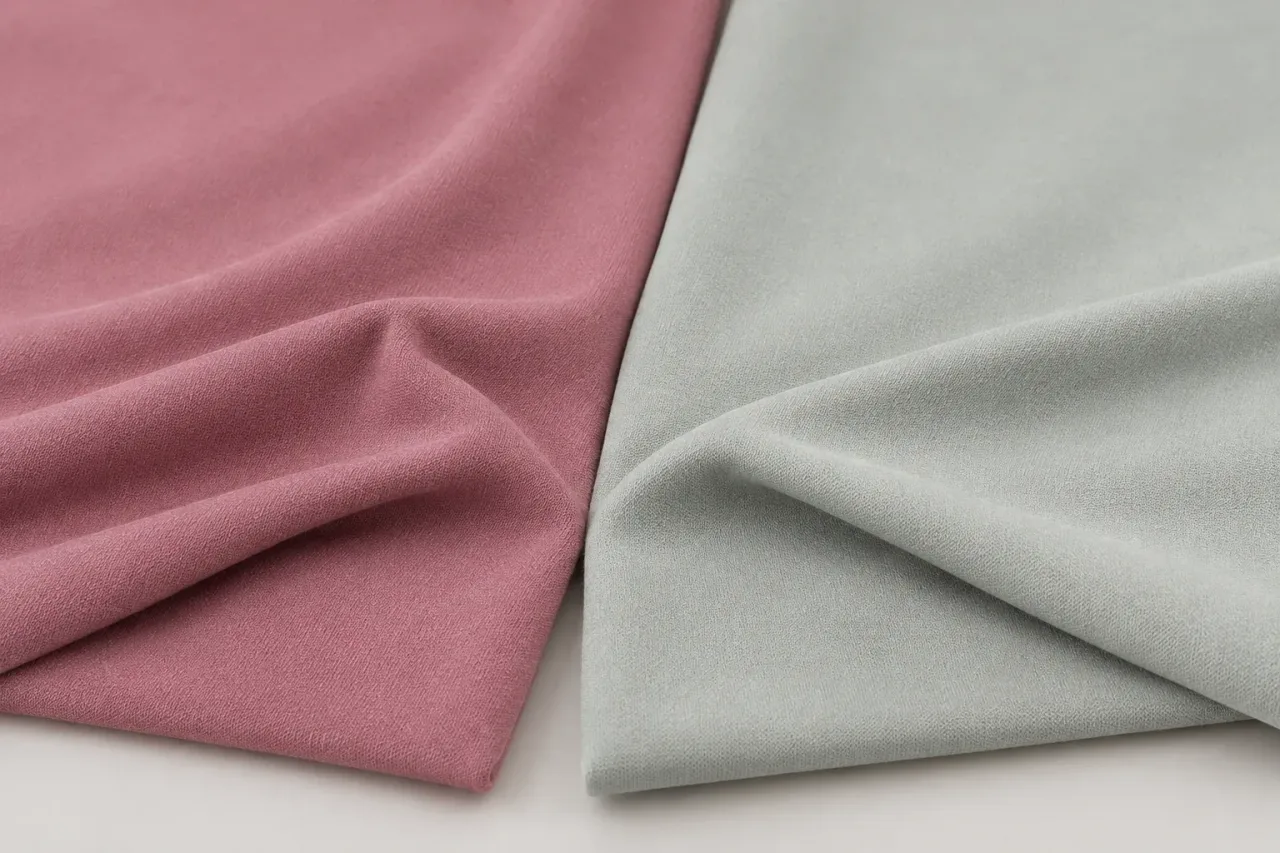
In contrast, polyester offers hydrophobic properties, meaning it naturally resists water absorption. When blended with spandex, polyester allows sweat to sit on the fiber surface and spread out. This characteristic makes it highly effective for high-sweat training apparel where durability and moisture management are the main priorities.
Evaluating Elastane Percentage and Yarn Quality
Activewear categories like leggings and sports bras typically use 10% to 25% elastane to achieve the necessary body-hugging flexibility. To accurately gauge the final stretch and compression, consider the overall yarn quality and knit structure in addition to the elastane percentage. A premium 10% elastane yarn paired with a supportive double-knit structure often provides better shape retention and recovery than a 25% blend made with lower-quality yarn. The fabric's physical construction plays a central role in the garment's behavior, meaning a lower percentage of superior yarn in a well-structured knit can optimize both fit and longevity.
Matching Stretch Fabrics to Activewear Applications
Aligning the fabric specification with the intended garment application helps ensure the design performs well in its target environment. Evaluating catalogue parameters allows buyers to pair specific blends with popular activewear categories:
- Premium Leggings and Sports Bras: For garments requiring a second-skin feel and high shape recovery, a matte nylon-spandex double-knit works well. For example, CF-NS-0009 230 GSM Matte Second-Skin Nylon Spandex Double-Knit uses a 75% nylon and 25% spandex composition at 230 GSM, providing the smooth silhouette suited for close-fitting activewear.
- Versatile Training Tops: High-sweat environments benefit from a 250 GSM polyester-spandex blend, typically containing around 90% polyester and 10% spandex. This provides durability and moisture management while maintaining comfortable support.
- Cold-Weather Performance Gear: Winter yoga leggings and outdoor gear benefit from thermal retention alongside high stretch. A brushed interior construction, such as the supplier reference H3268 250 GSM Brushed Nylon Spandex Double-Knit Fabric, features a 250 GSM, 78% nylon, and 22% spandex blend that maintains shape retention while providing a soft, insulating hand feel.