
Colorfastness sample quantity must follow the selected laboratory methods and a sampling plan covering the relevant colors and production lots. MOQ does not determine the number of specimens, and several cuttings from one swatch do not demonstrate consistency across a shipment.
What does “one sample” mean?
A submitted fabric piece can provide specimens for several tests, but each test may consume material or require separate preparation. Ask the laboratory for dimensions and quantities for the complete test package, including repeats and retained material. Label every submitted piece with construction, finish, color, dye lot, roll, and cutting position.
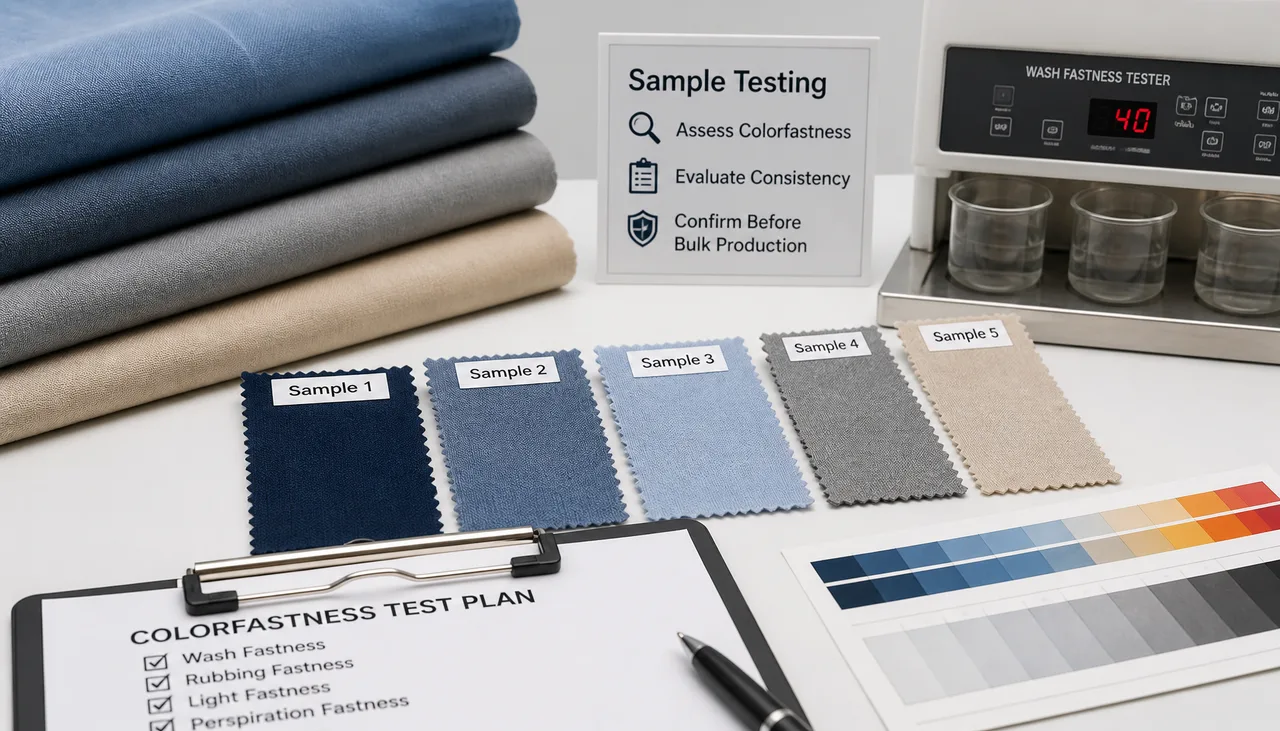
Build the plan from exposure
For dark activewear worn against a light lining, staining deserves attention alongside color change. Washing, perspiration, dry rubbing, wet rubbing, and light exposure are separate evaluations; a satisfactory washing result does not establish the others. Select exposures from the garment’s use and care instructions, then agree on methods and acceptance limits before submitting material.
Cover variation before adding repetitions
Hypothetical planning example: an order contains three colors, each produced in two dye lots. That creates six color-lot groups to consider, not three interchangeable samples. If the buyer elects to submit material from every group, the laboratory must still specify the specimen count for each test. This example illustrates coverage; it is not a statistical sampling rule or a mandatory six-sample requirement.
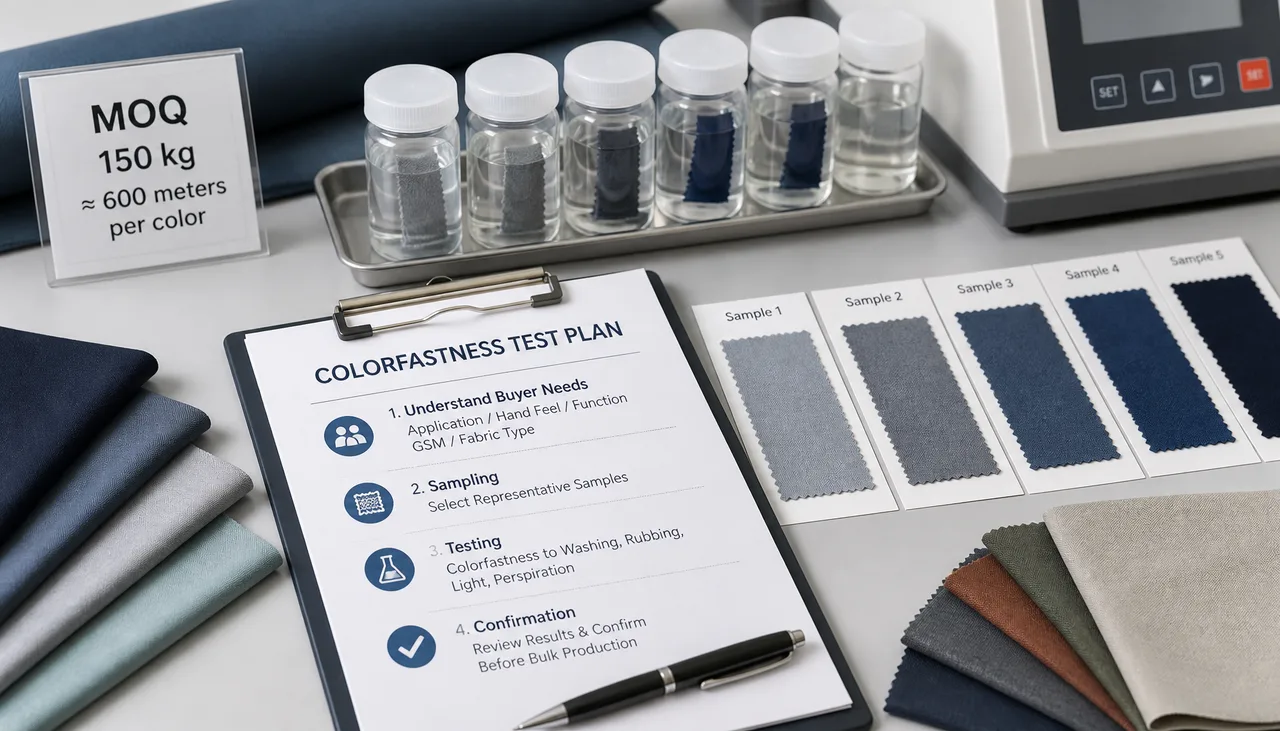
Sampling only the darkest color can miss a different dye recipe or finish problem in another shade. Any decision to group colors should be documented with its rationale and limitations. Keep results separated by color and lot so an acceptable average cannot conceal a failed group.
What belongs in the report?
- The exact method and test conditions, including the relevant washing or exposure procedure.
- Sample identity and whether the fabric was tested as received or after specified processing.
- Color change and staining results separately where applicable.
- Individual results, deviations and the stated acceptance criteria.
Handle a failure before shipment
Identify the affected lot and hold its release while investigating dyeing, wash-off, finishing, or sample identification. Additional passing cuttings do not automatically cancel an initial failure. Agree on the retest procedure, whether corrected material requires new testing, and who authorizes release. For color-blocked garments, also check the actual materials together under the intended care conditions.
Send the laboratory the color-lot map and exposure requirements first. Use its specimen request to instruct the supplier where to cut and how to label the submission; retain matching material for confirmation.