Before paying a fabric deposit, verify the written first-lot approval procedure, sample references, inspection access, and release responsibilities. If production has not started, the bulk lot cannot yet be approved; the decision at this stage is whether the proposed controls are sufficiently clear to place the order.
Distinguish the three approvals
- Development approval: the proposed fabric and garment trial meet the brief.
- Production authorization: the buyer confirms specifications, quantities and agreed commercial conditions.
- Bulk release: identified production material meets the agreed inspection and test criteria.
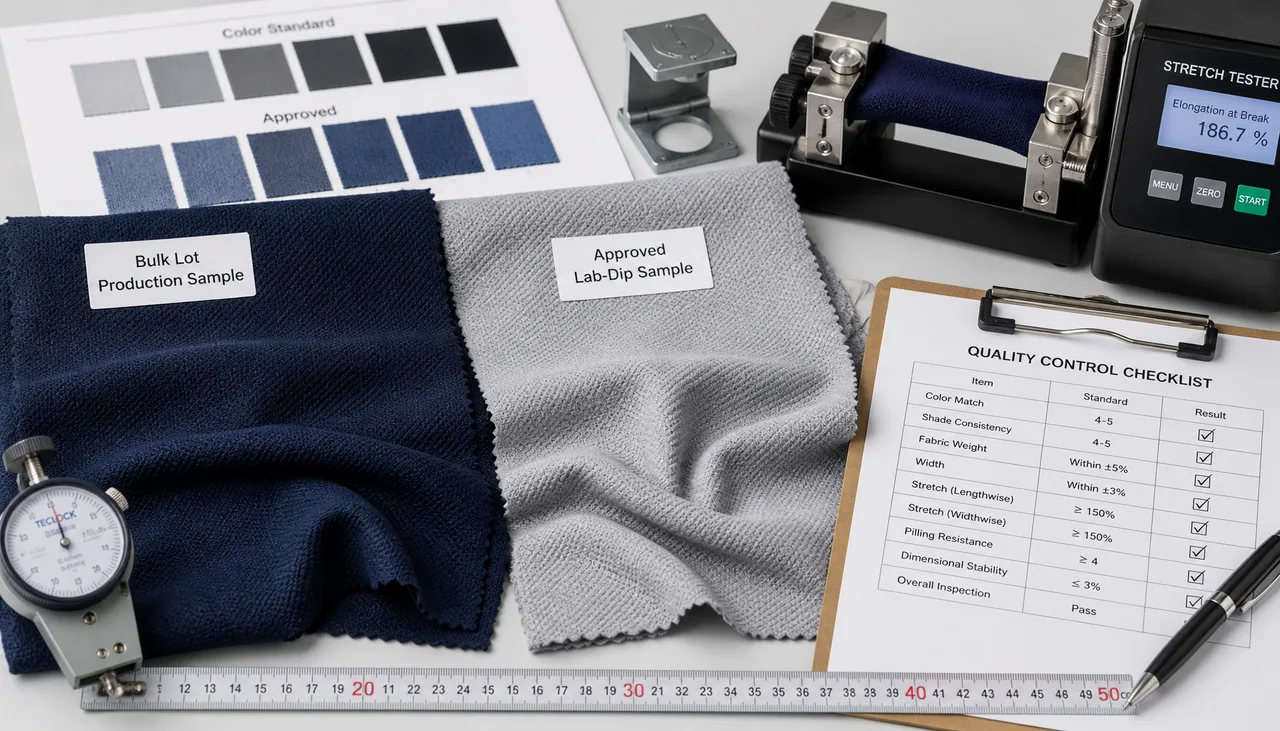
A lab dip approves a color-development reference within its stated scope. It does not establish bulk width, recovery, defects, or garment behavior. Each approval record should state what it covers and what remains open.
Ask the supplier to demonstrate the record flow
Request a blank inspection form or an anonymized example showing how roll numbers connect to dye lots, measurement records, test samples, and packing lists. An example demonstrates documentation capability, not the quality of the future order. Confirm who selects bulk samples and whether the buyer or its inspector can access the rolls before release.
Define the first-lot hold point
For a new stretch-knit construction, specify whether the first production lot is held before later lots proceed. This can limit the amount requiring correction if the finish changes hand or recovery, but it also adds time to the schedule. Agree on what evidence must be available, who reviews it, and how quickly an approval or rejection is expected.
Make “approved” measurable
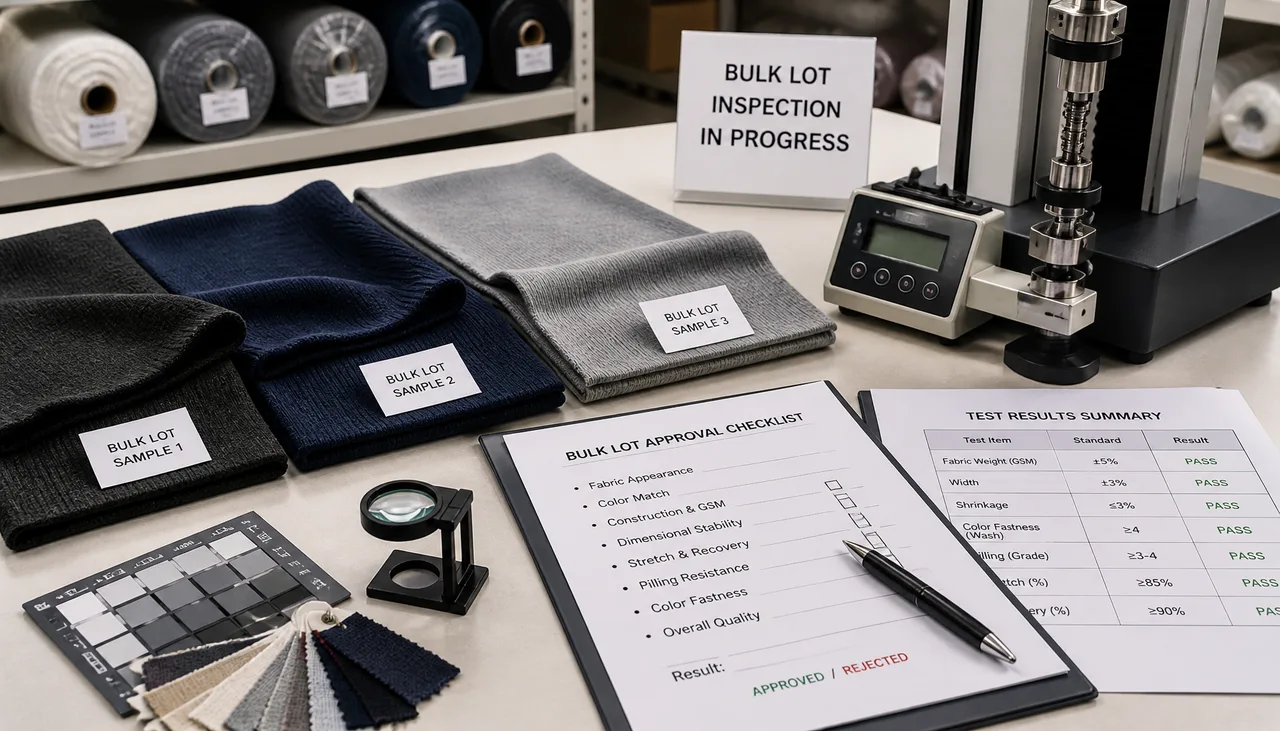
- Identify the signed construction and color references and the specification revision.
- Set finished GSM, usable-width and other critical tolerances.
- Define inspection coverage, test methods, specimen conditions and acceptance limits.
- Assign responsibility for investigating, correcting and retesting nonconforming material.
- Document authorization for any deviation or process change.
Hypothetical example: the cutting marker requires at least 150 cm usable width, but a finished roll measures 148 cm at an inspected section. A passing lot-average width does not resolve that cutting problem. The agreed procedure must identify whether the affected roll is held, re-planned with buyer approval, or replaced.
Confirm commercial milestones explicitly
Ask the supplier to acknowledge how inspection and approval dates relate to the agreed payment and shipment milestones. Do not assume a deposit includes all testing, that an inspection automatically postpones payment, or that sample approval authorizes shipment. These arrangements must be confirmed for the order.
Before proceeding, obtain one acknowledged approval pack containing the specification, sample register, first-lot hold point, responsible contacts, inspection schedule, and unresolved exceptions. Keep that version with the order so later decisions refer to the same requirements.