
Before requesting a fabric quote, specify roll format, packing protection, net billing quantity, destination, transport assumptions, and delivery scope. Ask suppliers to separate fabric-ready dates from arrival estimates and identify every packing or transport charge excluded from the price.
Describe what the receiving factory can handle
A garment factory with limited lifting capacity may not accept the same roll weight as a mechanized warehouse. State maximum roll dimensions and weight, core requirements, whether fabric must remain open width, and how joins or short pieces are handled. For stretch knits, request a winding arrangement that avoids visible distortion and verify relaxation needs with the cutting team.
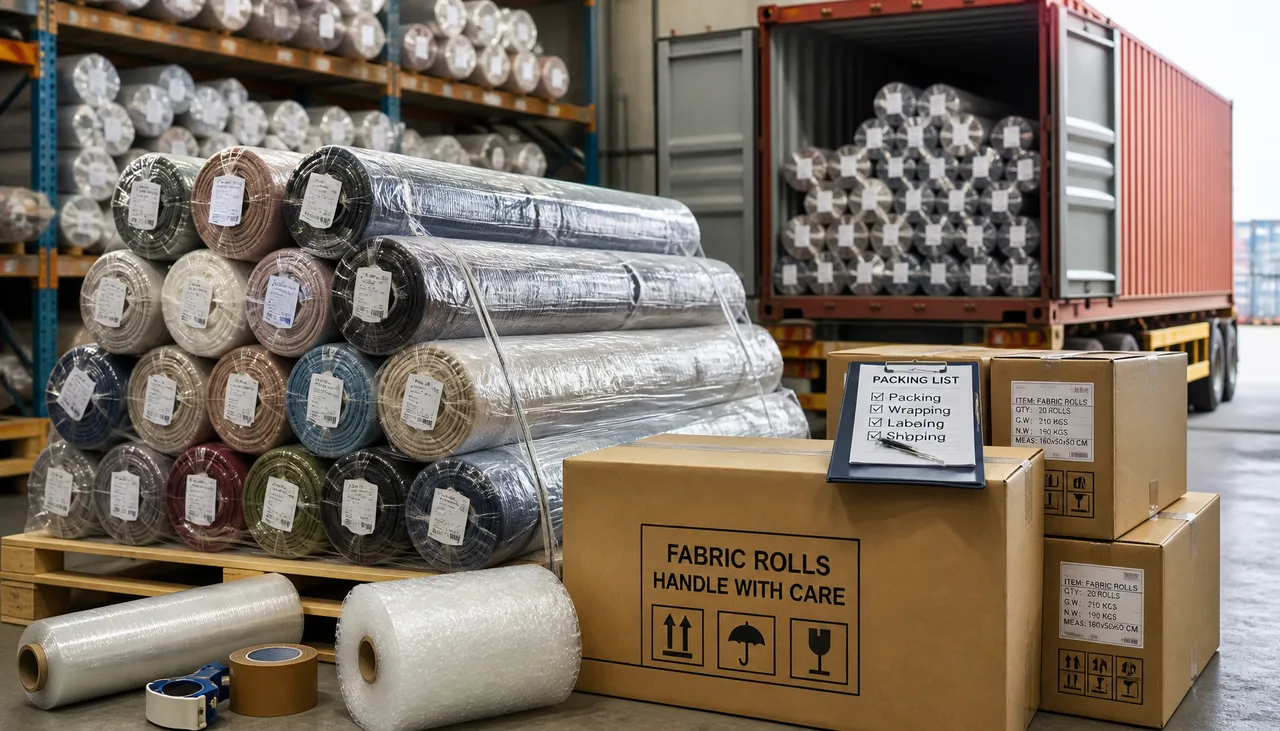
Separate paid fabric from shipment weight
Illustrative calculation: 20 rolls containing 25 kg net fabric each equal 500 kg of fabric. If cores and wrapping add 1.2 kg per roll, gross shipment weight is 524 kg before any pallet. At a fabric price of USD 8/kg, confusing gross with net would add USD 192 to the fabric charge. These are hypothetical figures; confirm the actual tare and billing convention.
Freight quotations can also depend on package dimensions and the carrier’s charging basis. Request gross weight and dimensions alongside net fabric weight so the forwarder can quote against the intended packing rather than a guessed shipment size.
Put the delivery scope in writing
| Item | Information required in the quote |
|---|---|
| Delivery basis | Agreed trade term, applicable version and precise named place |
| Included charges | Packing, collection, transport and handling included in the offer |
| Excluded charges | Costs the buyer must obtain or budget separately |
| Schedule | Production completion, inspection release, dispatch and estimated arrival |
| Insurance | Whether coverage is included and its documented scope |
Preserve identity through receiving
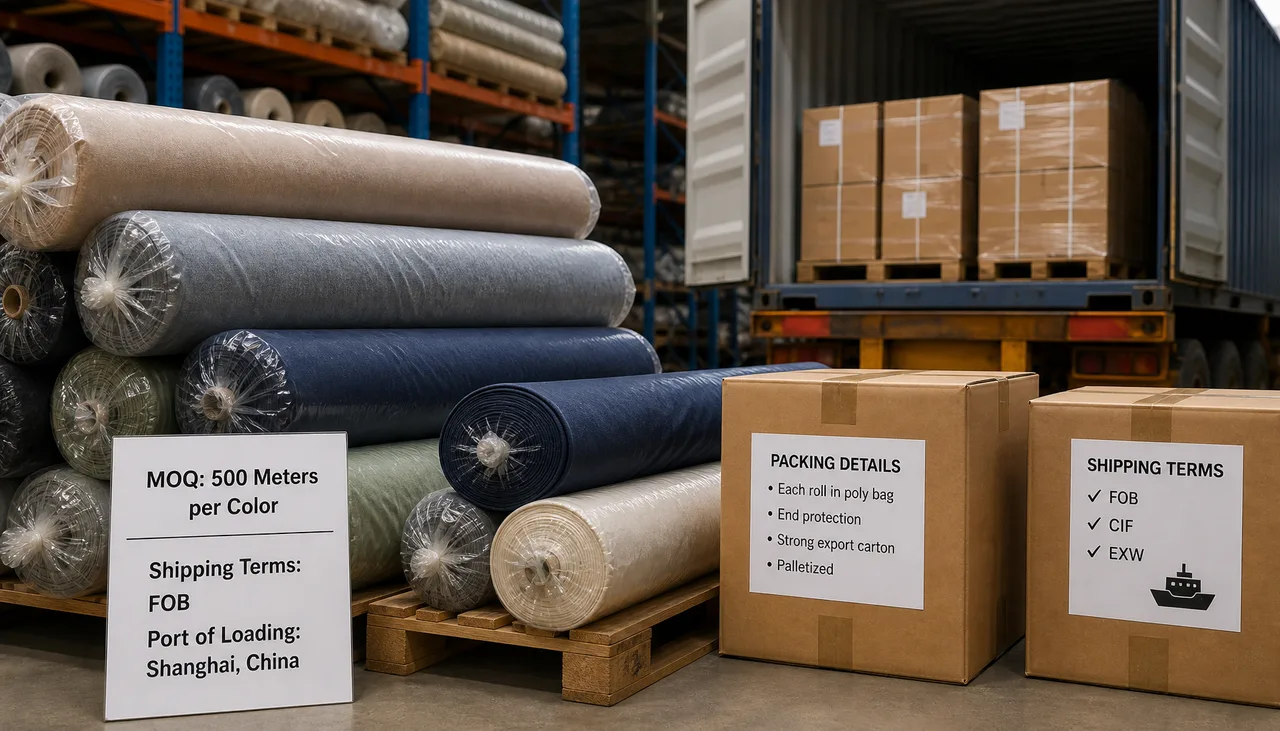
Require each roll label to show the fabric reference, color, dye lot, roll number, net quantity, and any agreed defect or join markings. The packing list should reconcile these identifiers. Mixing unmarked lots can create shade problems at cutting even when individual rolls were acceptable at dispatch. Confirm whether shade groups need separate packing and spreading instructions.
Plan protection and the receiving check
Agree on wrapping, end protection, handling and moisture precautions appropriate to the route. Record package condition at dispatch and receipt. Set a receiving procedure for damaged wrapping, wet material, missing rolls, or quantity discrepancies, including who is notified and what records are retained before material enters production.
Send the RFQ with destination and receiving constraints, then obtain a proposed packing list and package dimensions before booking transport. Keep sample-courier charges separate from bulk freight, since sample delivery experience does not establish the cost or timing of the production shipment.