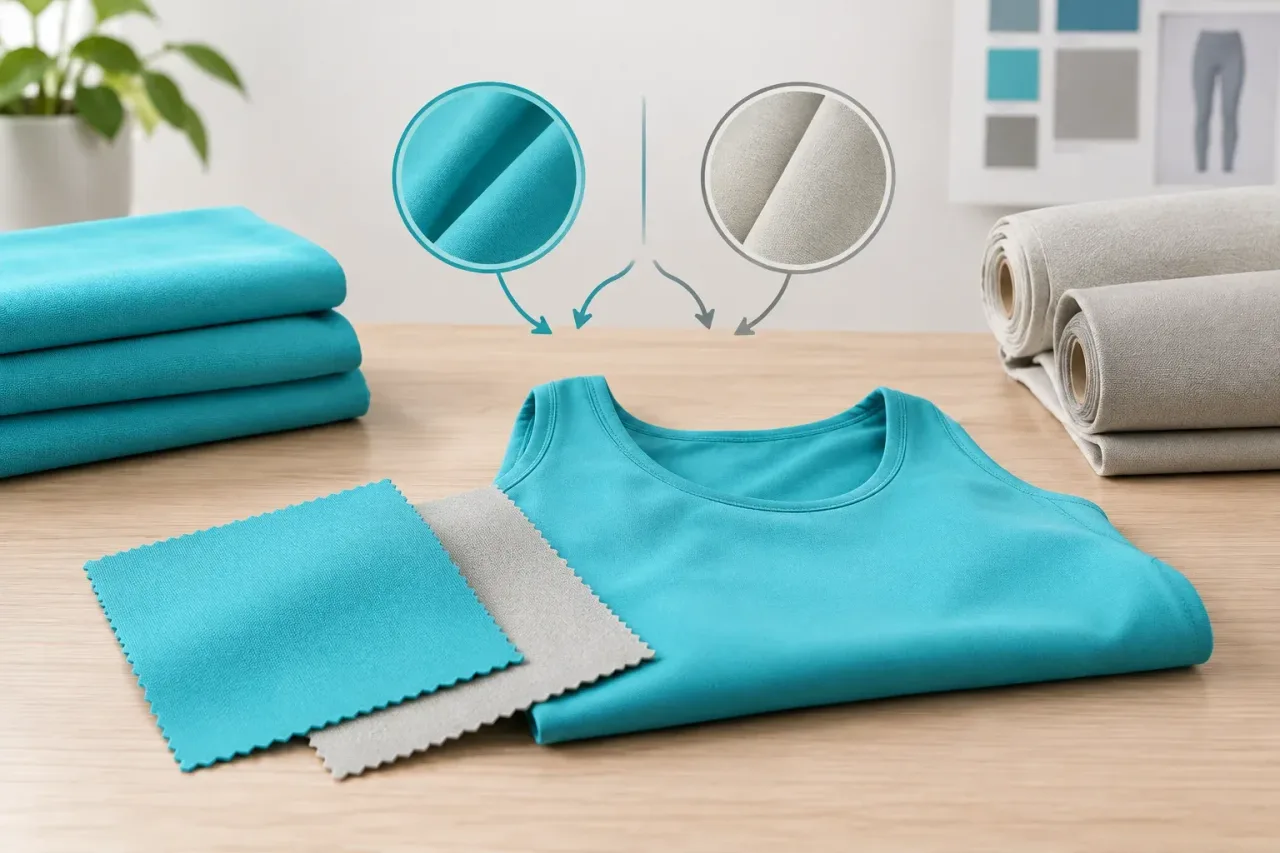
Let your garment manufacturer source the fabric under Full Package Production (FPP) if you prioritize consolidated per-piece pricing, single-source accountability, and protection against cutting waste or textile defects. Supply your own fabric under a Cut, Make, Trim (CMT) arrangement when developing proprietary knits or custom dye batches directly with textile mills, provided your brand has the cash flow and operational bandwidth to absorb mill minimums, scrap allowances, and fabric quality risks.
CMT vs. Full Package: Where Do Risk and Balance Sheet Burdens Fall?
Choosing between CMT and FPP determines where financial liability and production administration sit. Under an FPP model, the garment factory handles fabric purchasing, inspection, pattern grading, cutting, assembly, and packaging into one quoted FOB unit price. If the fabric displays knitting barre, shading variation, or excessive dimensional shrinkage after washing, the manufacturer carries the commercial burden to replace yardage or rectify the run.
Under CMT manufacturing, you purchase fabric directly from a mill or converter and consign it to the sewing floor. While CMT unit prices appear lower on a factory labor quotation, supplying material shifts four distinct operational burdens onto your balance sheet:
- Working capital timing: You must pay mill invoices weeks or months before garment cutting begins, tying up startup cash flow.
- Defect liability: The sewing factory assumes no responsibility for pre-existing fabric flaws, uneven roll width, or skewing. Defective yardage identified during spreading halts production and becomes your financial loss.
- Cutting scrap and yield buffers: The brand must calculate marker consumption and purchase an additional cutting waste allowance—typically calculated as a 3% to 5% buffer above net garment yardage.
- Customs valuation (assists): For international supply chains, buyer-supplied raw materials constitute a customs "assist," requiring the value of the consigned fabric to be declared and taxed on import alongside sewing labor.
|
Operational Parameter |
Cut, Make, Trim (CMT) |
Full Package Production (FPP) |
|---|---|---|
|
Fabric Sourcing & Purchasing |
Brand buys and ships directly |
Factory procures from partner mills |
|
Upfront Capital Timing |
100% fabric cost committed weeks prior |
Consolidated factory deposit schedule |
|
Material Defect & Flaw Risk |
Brand absorbs scrap and flawed rolls |
Factory manages vendor claims and replacements |
|
Yield & Shrinkage Variance |
Brand funds extra yardage buffers |
Factory guarantees agreed garment yield |
|
Typical Workshop Garment MOQ |
50 to 200 units per style (supplier reference) |
200 to 1,000 units per style (supplier reference) |
Navigating Mill Minimums, Garment MOQs, and Cash Flow
Direct mill sourcing creates inventory exposure when garment production targets do not align with textile minimum order quantities (MOQs). While garment workshops may accept CMT orders as low as 50 to 200 units per style, commercial fabric mills rarely knit or dye custom orders in cut-length quantities.
For example, specialized synthetic double-knits such as CF-TS-0013 250 GSM 82/18 Polyester Spandex Double-Knit Fabric carry a mill catalogue parameter of a 200 kg minimum order quantity, while standard custom-dyed synthetic rolls at ClothFactory generally require a supplier reference threshold of 6 rolls per color. If your startup plans a trial run of 150 leggings requiring roughly 45 kg of fabric, ordering custom mill production leaves 155 kg of paid, surplus material sitting in storage. Unless you can amortize mill minimums across multiple silhouettes or repeat runs, sourcing factory-held stock textiles through an FPP partner preserves working capital.
Practical Decision Rules: When to Choose CMT vs. FPP
Select Factory-Sourced Full Package Production (FPP) when:
- You are launching core silhouettes using common activewear or apparel bases, such as accessible nylon-spandex or polyester-spandex knits.
- Your production scale meets standard factory cut-and-sew thresholds of 200 to 300+ units per style.
- Your team lacks in-house quality control personnel to conduct four-point fabric roll inspections or manage lab-dip approval cycles.
- Preserving predictable per-garment landed margins is more critical than owning proprietary textile specifications.
Select Brand-Supplied Fabric (CMT) when:
- Your core brand value relies on a proprietary knitted structure, custom functional finish, or exclusive yarn blend sourced from a certified mill.
- You require short-run cut-and-sew production (under 200 units) and have already negotiated stock yardage or deadstock rolls from an approved converter.
- You operate an established supply chain where you negotiate raw material pricing directly at mill scale, using garment factories solely for assembly labor.
- Your team maintains the operational discipline to approve lab dips, review roll inspection sheets, and manage shrinkage data before fabric reaches the cutting table.