
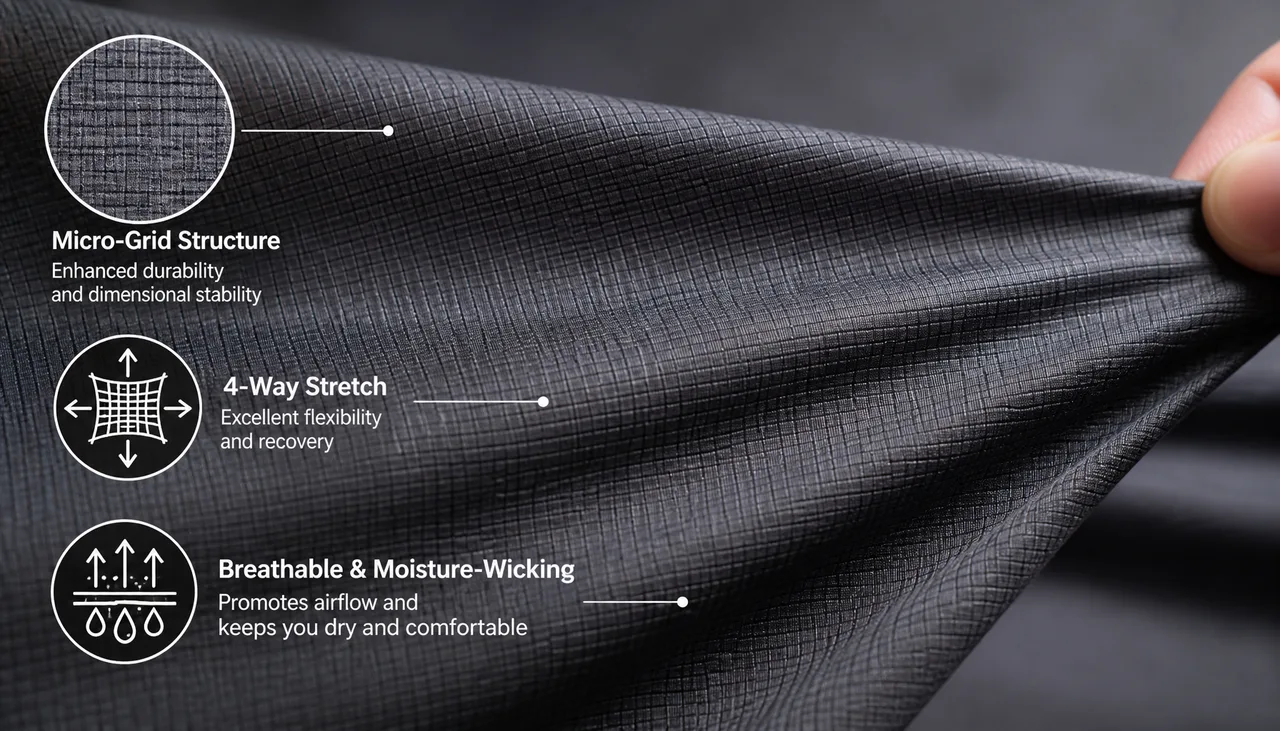
Fortune-Rib Technical Interlock is a micro-grid interlock candidate for performance sportswear. The current product specification lists 80% nylon/20% spandex, 170 GSM and 170 cm finished width; buyers should still verify stretch recovery, moisture behavior, abrasion resistance and wash stability on the sampled color before approval.
Start with the garment zone and movement pattern
The same fabric can perform differently in leggings, sports bras, fitted tops, and compression panels. Leggings place repeated extension around the seat and knees; a sports-bra panel combines stretch with seam and elastic loads; a training top may prioritize lower bulk and faster moisture release.
Before comparing samples, define the garment zone, expected extension, target fit, care cycle, and whether the grid texture will be used as an exterior design feature or a hidden technical surface. This prevents a visually suitable sample from being approved for the wrong mechanical requirement.
Understand what the micro-grid structure can change
A grid texture changes surface geometry and may affect visual depth, contact area, drape, and how moisture spreads across the face. Its actual air permeability and drying behavior depend on yarn size, loop density, thickness, finishing, and the openness of the construction.
Interlock structures are generally more stable than lightweight single knits, but the word “interlock” does not specify recovery, compression, or resistance to pilling. Buyers should compare finished measurements rather than treating the construction name as a performance grade.
Build a comparable sample review
| Decision area | What to record | Buyer risk if omitted |
|---|---|---|
| Fabric identity | Composition, construction, finished GSM, usable width, finish and color | Samples cannot be matched reliably to bulk fabric. |
| Stretch response | Direction, extension, force or load, hold time, recovery time and post-wash result | A flexible sample may bag or feel restrictive in the garment. |
| Surface durability | Abrasion, pilling and snagging conditions relevant to the end use | Raised grid areas may change appearance during wear. |
| Moisture behavior | Defined wicking, drying or air-permeability method | A visible grid may be mistaken for proven ventilation. |
| Dimensional stability | Wash procedure, shrinkage and spirality by direction | Panels may twist or change fit after laundering. |
Hand stretching and water-drop demonstrations can screen candidates, but they do not create comparable acceptance data. Use the same conditioning and test method for every sample under review.
Check texture alignment during garment sampling
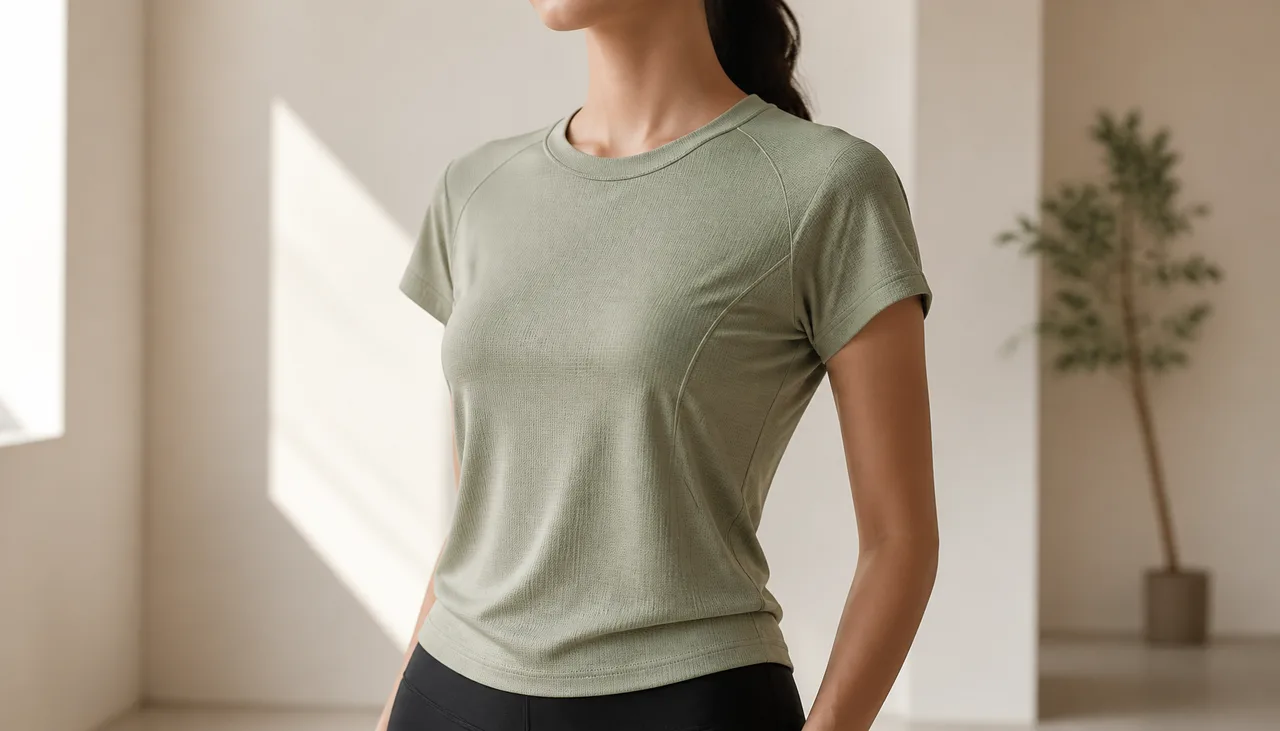
Grid direction and panel rotation can create visible differences even when pieces come from the same roll. Mark the approved face and direction, then inspect adjoining panels under the intended lighting. If the marker rotates pieces to improve yield, confirm that the visual result remains acceptable before bulk cutting.
Sewing trials should examine needle cutting, skipped stitches, seam grin, puckering, and recovery after extension. The correct needle, thread, stitch, and feed settings depend on the actual fabric and seam design; they should not be fixed from the fabric name alone.
Connect fabric price to usable garment yield
The lowest price per kilogram may not produce the lowest cost per accepted garment. Usable width, edge loss, shrinkage, shade grouping, grid alignment, and defect allowance affect marker yield. Request finished width and relaxation conditions with the quotation so suppliers are compared on the same basis.
Procurement next step
Send the supplier the garment type, panel location, fit intent, expected extension, target GSM and width, color, care cycle, and required durability or moisture tests. Request identified swatches and enough material for garment, washing, and sewing trials. Approve bulk only after the specification and test conditions are linked to a sealed reference sample.