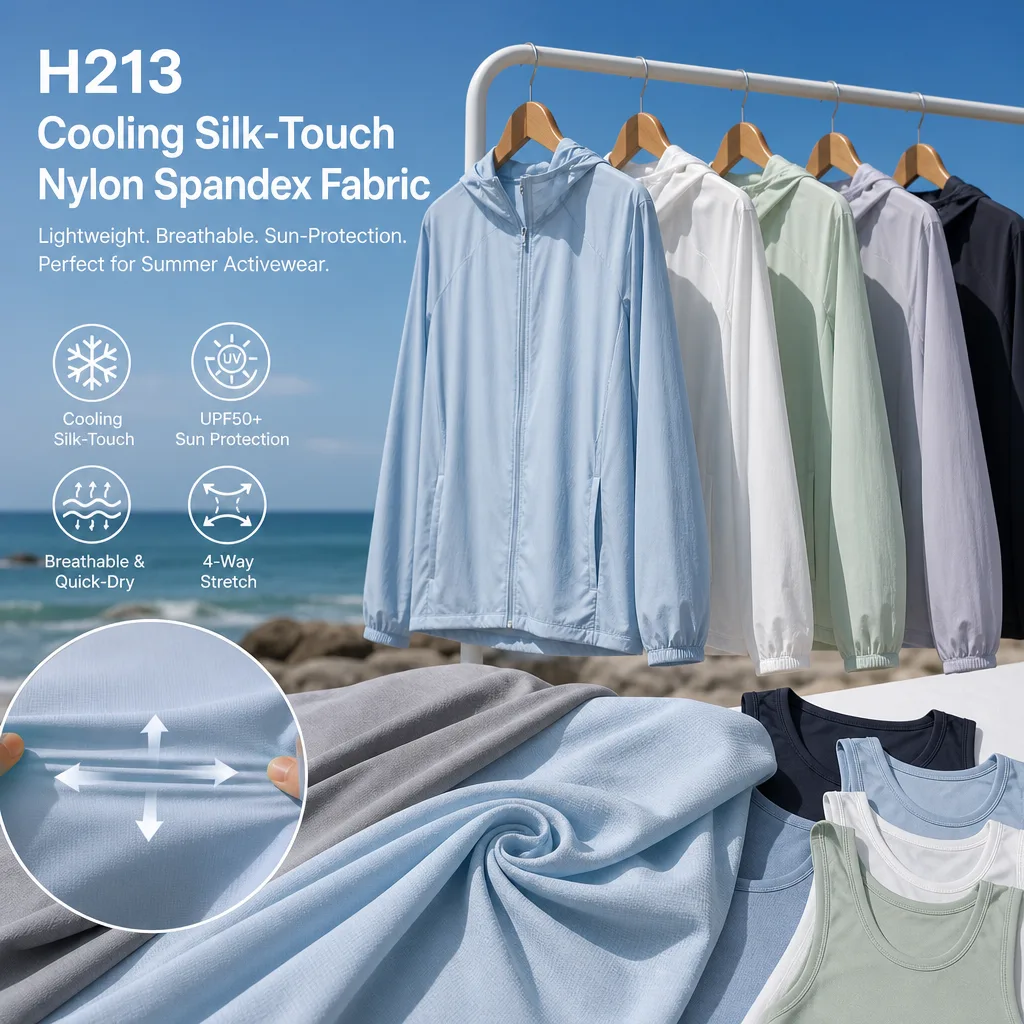
H213 is positioned as a lightweight, silk-touch nylon-spandex knit. ClothFactory’s catalogue lists 85% nylon, 15% spandex, 120 g/m² and 165 cm width. “Silk-touch” describes a proposed hand feel, not silk fibre content. Buyers should confirm the finished specification and evaluate cooling, drying and sun-protection claims separately before using them in a garment brief or product listing.
Define what the summer garment must do
A loose sun-protection top, a fitted sleeve and a running base layer do not share one acceptance standard. The loose top may prioritise drape and coverage. The sleeve needs recovery at the wrist and elbow. The base layer may prioritise sweat handling and low wet cling. Establish the end use before selecting a laboratory test or comparing swatches.
For a pale, close-fitting garment, assess the material at the strain created by the pattern and inspect it when damp as well as dry. A relaxed swatch can conceal show-through that becomes obvious on a moving body. Low mass can be useful for summer styling, but reducing weight is not a valid improvement if it forces the brand to add lining or abandon the intended colour.
Separate four commonly confused performance claims
- Contact coolness
- The initial thermal sensation when the material touches skin. It does not establish sustained cooling during exercise.
- Moisture transport
- How liquid spreads or moves through the material under the selected method. A spreading result is not a drying-time result.
- Drying
- Removal of moisture under defined temperature, airflow and water-loading conditions. Compare candidates under the same conditions.
- Air permeability
- Air passing through fabric at a specified pressure difference and test area. It is distinct from water-vapour resistance and ultraviolet transmission.
Request a named method, sample preparation and measured result for the property supporting the claim. The AATCC moisture-management testing programme distinguishes TM195 liquid-moisture management from TM201 heated-plate drying. ISO 9237 addresses air permeability. None of those results, by itself, certifies UPF.
Require evidence before releasing a UV claim
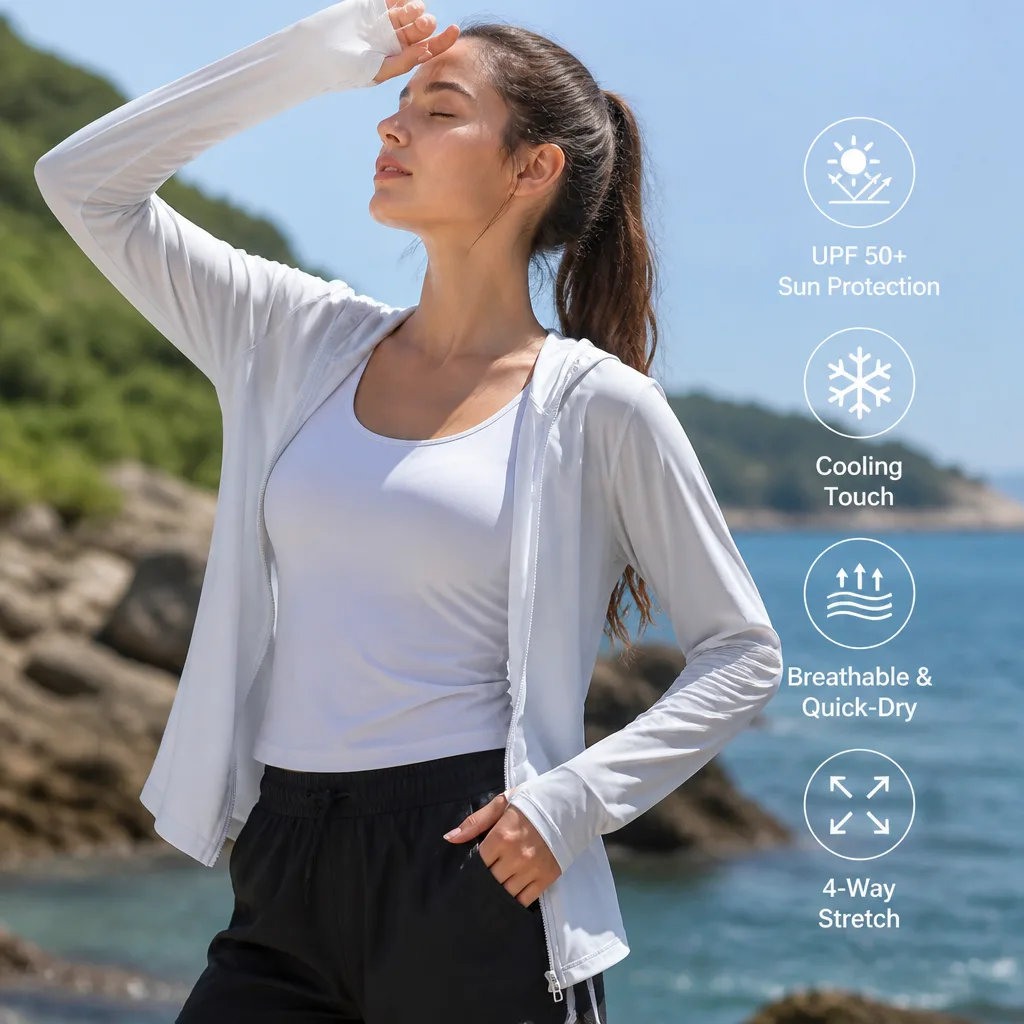
The nylon-spandex composition and a lightweight hand feel do not establish UPF 50+. Obtain a relevant ultraviolet-transmission report tied to the actual colour, construction and finish. Check whether specimen preparation covers the stretch, moisture and care conditions relevant to the garment and the intended market’s requirements.
A fitted sleeve can place more strain on the fabric than a loose jacket panel. If the proposed fit or finish differs from the tested sample, resolve that gap before labelling. Do not infer UV additives, skin-safety certification or durable protection from the article name or an illustration.
Use weight and width to check the quotation
At nominal values, 120 × 1.65 ÷ 1,000 = 0.198 kg per linear metre. Theoretical yield is therefore approximately 5.05 m/kg, before cutting losses and width exclusions. This explains why a rough “5 m/kg” estimate may appear plausible, but it does not guarantee delivered yield.
For example, 100 linear metres at those dimensions represents 19.8 kg of fabric, excluding packaging. A buyer comparing a kilogram quote with a metre quote should use the same weight and full-width basis. Use minimum usable width for marker planning, and confirm whether the purchased edges are included in the invoiced mass.
Resolve sewing and decoration risks on samples
Lightweight stretch fabrics can expose seam puckering, feed imbalance and heat-related surface changes. Trial the intended seam, thread, needle system and machine settings on the actual article. Inspect under normal garment tension and after the care sequence. A needle-size recommendation without the needle system, seam construction and trial result is not a production specification.
Test logos, transfers and bonded details using the decorator’s intended process. Check adhesion, shade change, local stiffness and stretch mismatch. The decoration may become the least flexible area of an otherwise comfortable sleeve or chest panel.
Approve one controlled specification
The release file should connect the approved colour and finish to the agreed weight, usable width, dimensional behaviour, garment fit and any claimed performance. Separate required pass criteria from desirable hand-feel preferences. Retain the approved sample and record changes that require another review.
H213 is worth sampling when a lightweight nylon-spandex knit matches the design brief. Buy it on demonstrated garment performance and repeatable bulk specifications, not on the assumption that a cool first touch guarantees comfort, UV protection and fast drying at the same time.