
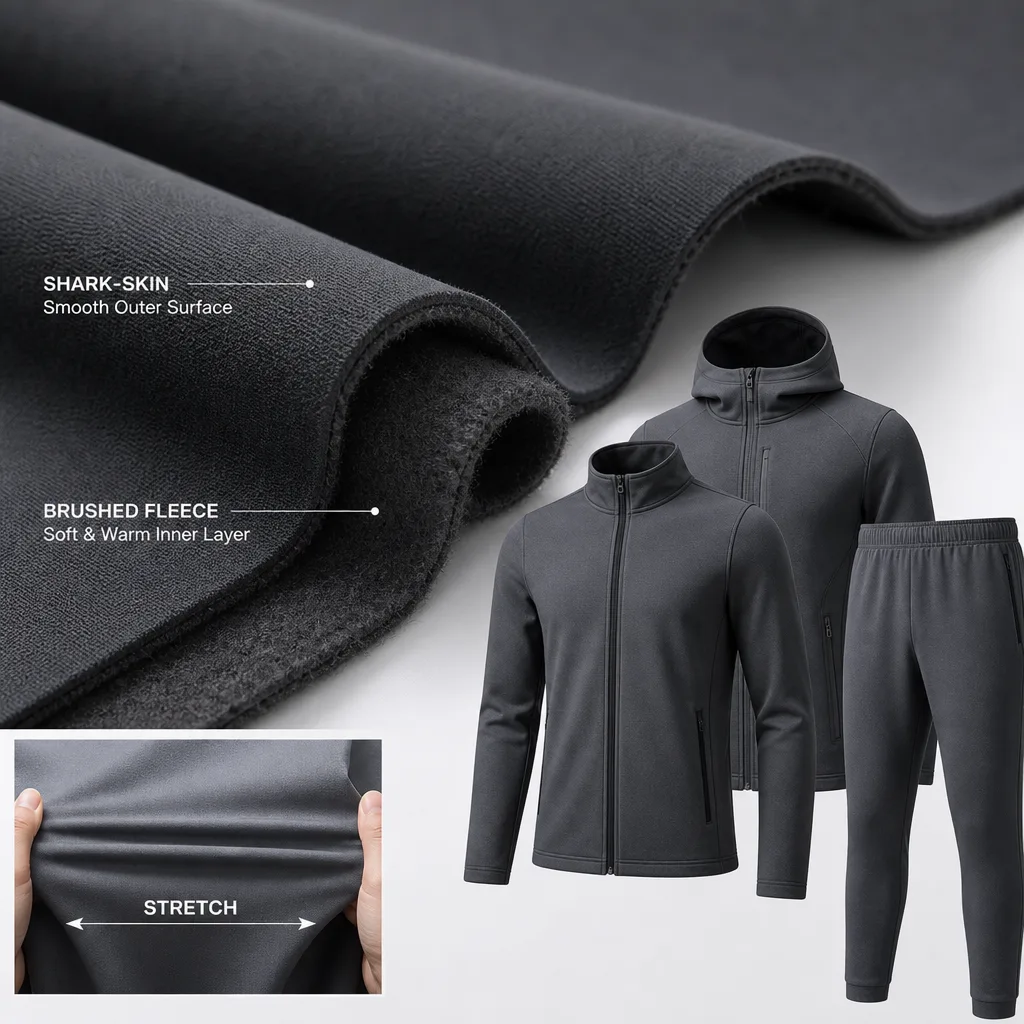
H2872 should be evaluated as a layered material, not as a generic high-spandex fleece. ClothFactory’s catalogue lists a shark-skin composite brushed fabric at 370 g/m² and 165 cm width, with a face composition of 80% nylon and 20% spandex and a back composition of 95% polyester and 5% spandex. These are nominal catalogue figures. Confirm the actual layer construction, bonding system and finished specification before comparing quotations.
Read the composition by layer
Reporting this article simply as “20% spandex” would describe the face but misrepresent the entire composite. An overall composition requires the mass contribution of each relevant component and the applicable labelling basis. Without layer weights, the two percentages cannot be averaged into a defensible whole-fabric claim.
Ask the supplier to identify the face, backing and joining process on the technical sheet. A swatch can show which surface contacts the skin, but it cannot establish adhesive chemistry, bond coverage or fibre content. Keep the approved construction revision with the sample so a later change in backing or bonding does not pass unnoticed under the same commercial article name.
Choose the thermal system for the activity
A winter commuter waiting outdoors and a runner generating heat continuously need different balances of insulation and moisture escape. A substantial brushed backing may suit the first brief while becoming excessive for the second. Garment openings, wind exposure, layering and activity level affect the outcome; fabric weight alone cannot justify a temperature rating such as “suitable for 0–10°C.”
ISO 11092 measures thermal and water-vapour resistance under controlled steady-state conditions and can address layered assemblies. Use comparable results to screen materials, then assess the intended garment system. A laboratory resistance value is not a promise of comfort at a particular outdoor temperature.
Treat the bond as a performance component
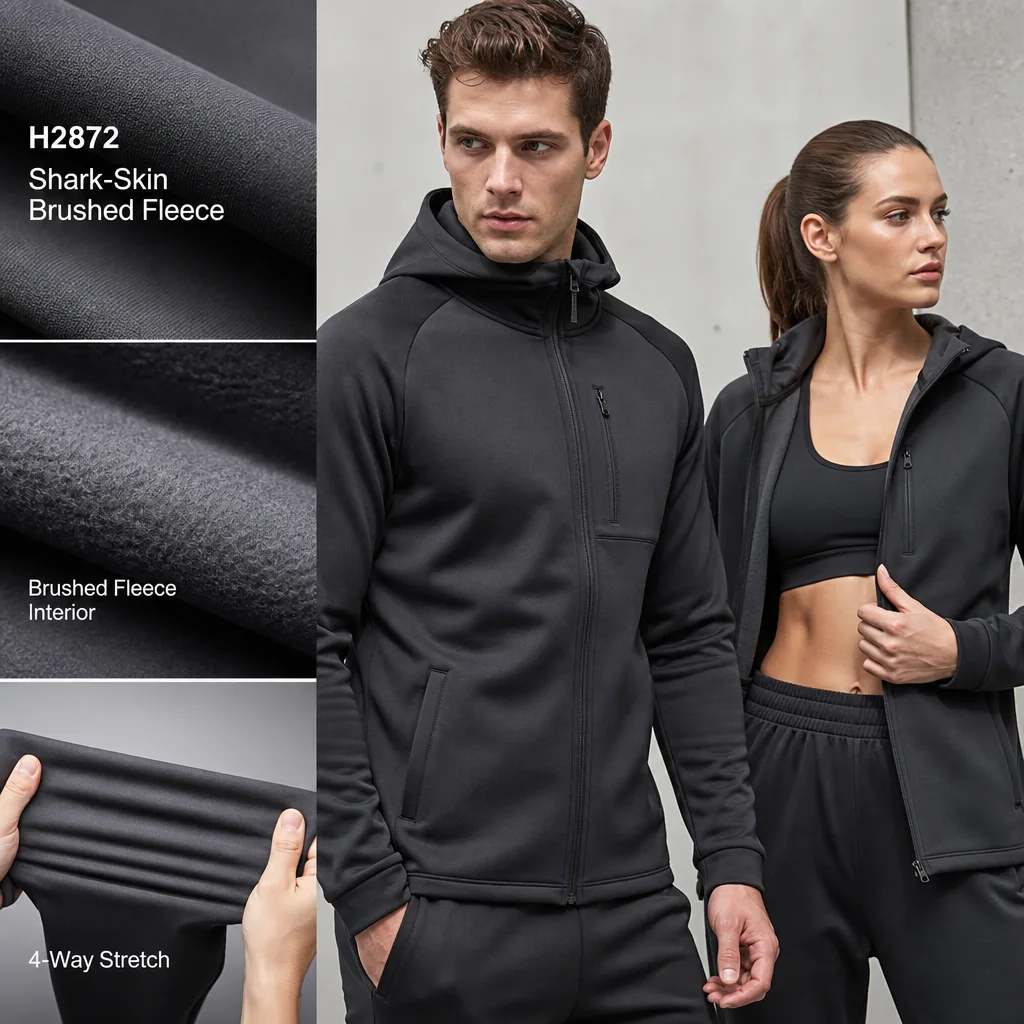
The face and backing can stretch and recover differently. If the joining system restricts one layer, a fabric that feels elastic by hand may resist movement, wrinkle or develop separation in use. Evaluate both directions and inspect the composite after repeated extension and the specified laundering sequence.
Request an agreed bond-integrity assessment appropriate to the construction. Record visible bubbling, edge separation, local stiffness and any change in hand feel, alongside quantitative bond results where applicable. Specify specimen preparation and care history rather than accepting a single unexplained “peel strength” number. Passing an initial test does not establish durability after washing.
Build a pilot garment before approving the roll
At 370 g/m², seam bulk deserves attention around zipper ends, pocket entries, cuffs and intersecting seams. Trial the proposed seam allowance and trimming method on the actual assembly. Inspect whether stitches damage the surface, whether the zipper waves and whether several folded layers create pressure points.
Check nap direction before marker approval. Reversing panels can change perceived shade or surface appearance even when the colour measurement is acceptable. Review abrasion and pilling at likely contact zones, including underarms and backpack contact areas. Do not claim anti-static performance from a brushed hand feel; that requires separate evidence if it is part of the product brief.
Price the approved construction, not just the kilogram
Using nominal dimensions, one linear metre weighs 370 × 1.65 ÷ 1,000 = 0.6105 kg, giving approximately 1.64 m/kg. Usable width, one-way nap layouts and defects determine actual cutting yield. A low kilogram price can be offset by directional cutting restrictions or extra sewing time at bulky intersections.
For an illustrative material comparison, a marker requiring 1.2 linear metres would contain about 0.733 kg at the nominal full-width mass. That calculation estimates purchased fabric mass, including the marker’s unused area; it is not the finished jacket weight. Use the approved marker and measured roll data for the production budget.
Define the bulk approval boundary
Release production only against an identified face-and-back specification, agreed usable width, dimensional-change limits, appearance standard and bond durability requirements. Retain a washed garment as well as an unwashed swatch. If the backing, bonding process or finish changes, review whether the original elasticity, thermal and care approvals still apply.
H2872 merits consideration where a substantial composite structure supports the garment brief. It should not be selected solely because “shark-skin,” “winter” or “brushed” appears in the name. The relevant purchase is a reproducible material system that survives the intended assembly and care conditions.