For high-performance training shirts, define moisture management, cooling, mesh design and odour-control requirements before choosing a fabric. Treat these as separate development options, then select a base construction that meets the shirt’s fit, coverage and cost requirements.
Four customisation options to define first
- Moisture wicking: specify how the fabric should absorb and spread sweat, with a separate drying requirement if needed. Evaluate the selected finish after the agreed laundering sequence, not only on an unwashed swatch.
- Cooling: clarify whether the brief calls for a cool initial touch or comfort during sustained exercise. Approve the yarn or finishing proposal against that objective rather than treating “cooling” as a single guaranteed effect.
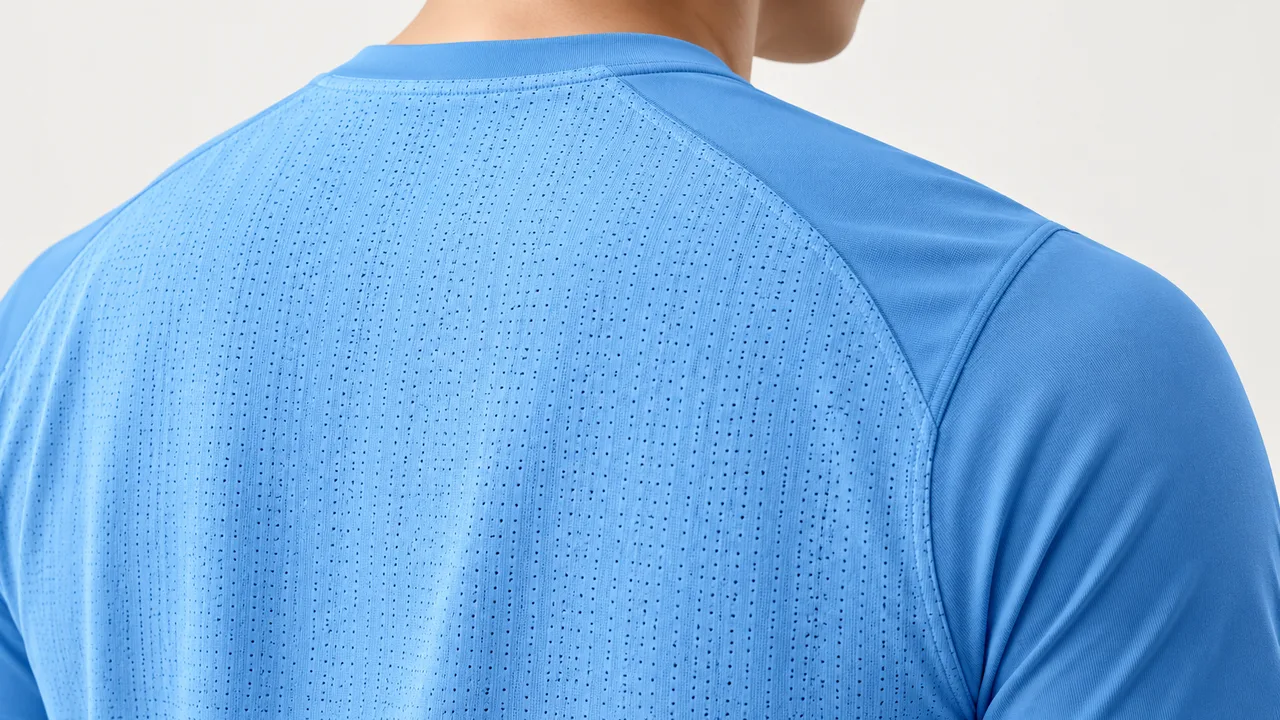
- Jacquard mesh: define the pattern, opening size and placement to balance visual identity, ventilation and coverage. Body-mapped designs require the mesh layout to align with the garment panels; a repeating pattern alone does not provide that alignment.
- Antibacterial and odour control: agree the intended claim and wash-durability requirement. Do not treat antibacterial activity as proof of odour reduction; AATCC TM211 specifically evaluates bacterial odour reduction on antibacterial-treated textiles.
For a fitted team-training shirt, prioritise moisture handling and coverage first. Add cooling or odour-control treatments where the brief justifies the extra cost, and approve the combined finish rather than assuming individually approved treatments will perform identically together.
Why consider CF-NS-0005 as the base fabric?
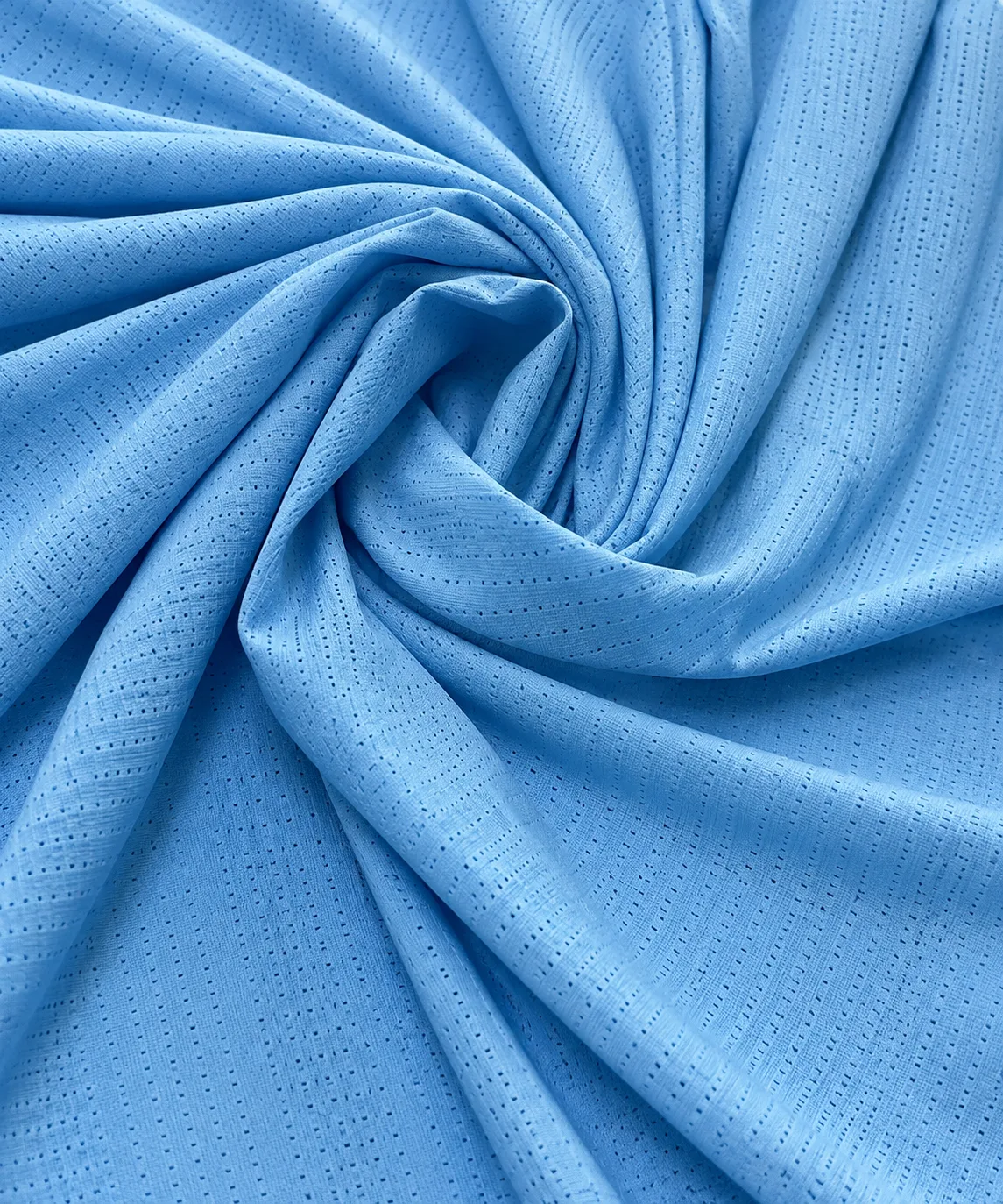
CF-NS-0005 Future-Mesh™ Jersey is a candidate for this development route. ClothFactory’s catalogue lists its gradient pinhole construction at 90% nylon / 10% spandex, 180 GSM and 163 cm nominal width.
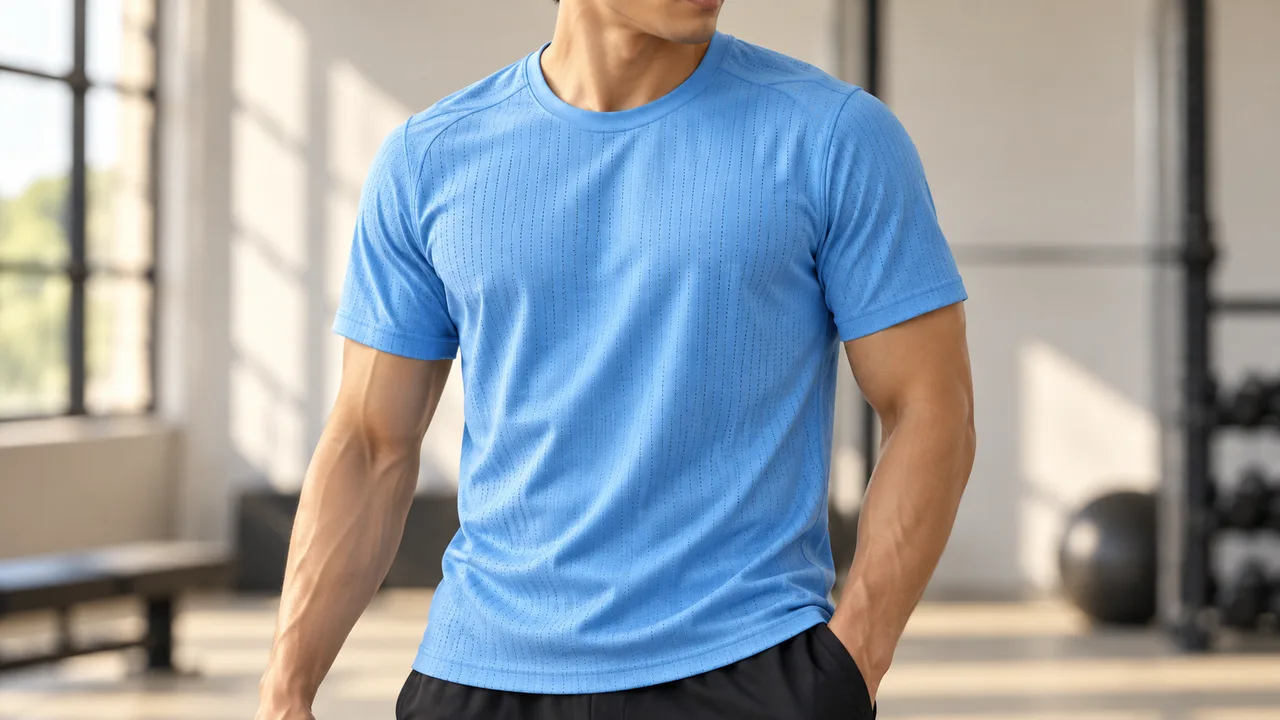
Its distinguishing feature is the patterned mesh structure: an option for an all-over textured training shirt or selected ventilation panels. The nylon-spandex knit provides a stretch-fabric starting point for movement-oriented designs, while the 180 GSM specification gives buyers a clear basis for garment-weight planning. Neither the mesh appearance nor the spandex percentage establishes a measured airflow or recovery result.
The catalogue lists cooling, antibacterial, anti-odour and quick-dry finishes as available options. Confirm the required combination for the selected colour and order; these are customisation choices, not evidence that every CF-NS-0005 stock lot includes all four. A bespoke jacquard pattern also needs a separate construction review.
Move from a fabric option to an approved sample
Send ClothFactory the shirt sketch, target fit and weight, colourways, quantity by colour and required functions. Request CF-NS-0005 sampling yardage with the proposed finish, then approve moisture handling, stretch recovery and appearance after washing. Include a coverage check in the intended fit before choosing all-over mesh over a panelled design.