
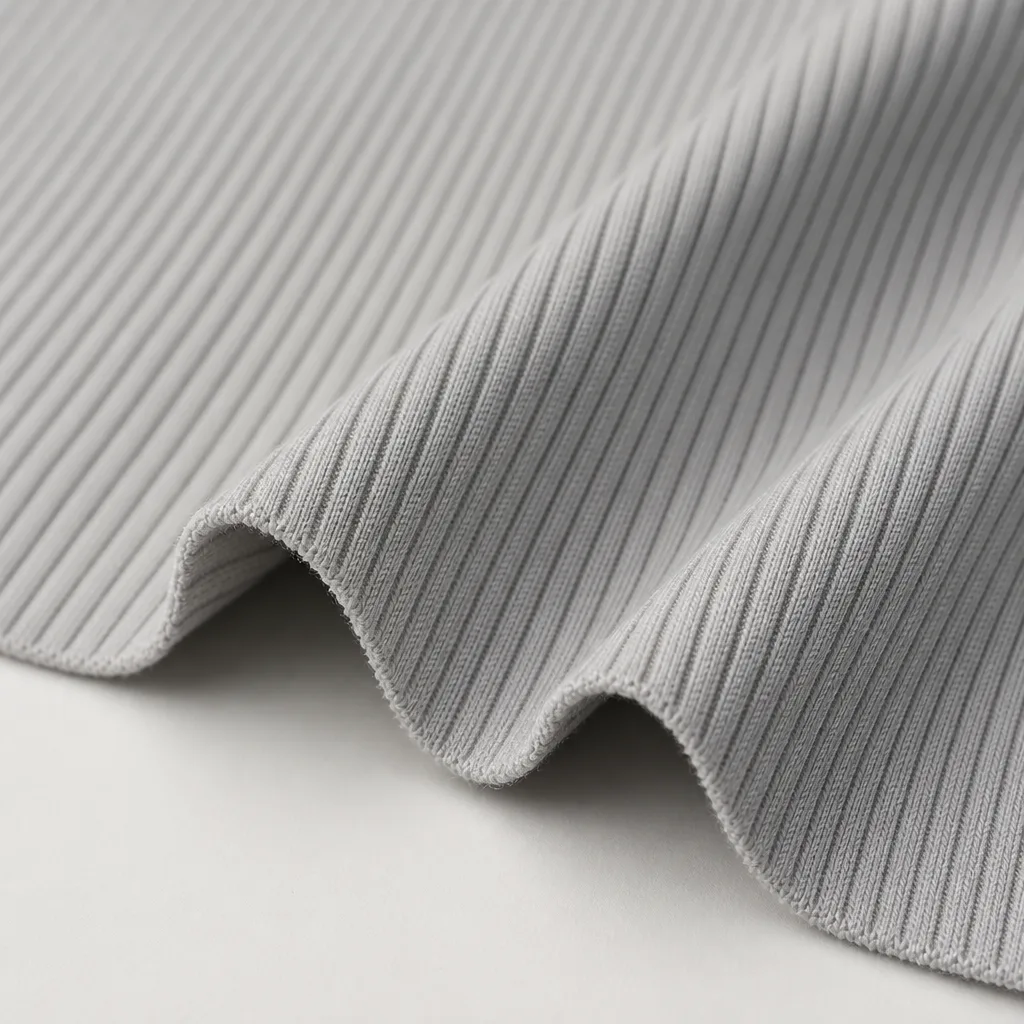
H3827 should be evaluated as a lightweight nylon-spandex rib candidate for fitted activewear, not approved from fiber type or surface appearance alone. The supplied specification describes an approximately 160 GSM fabric with vertical ribs, but the exact fiber percentages, finished width, stretch data, recovery data, and tested performance must be confirmed before sampling or quotation comparison.
What the available specification establishes
| Item | Information currently available | What the buyer still needs |
|---|---|---|
| Fiber family | Nylon-spandex | Exact composition by mass |
| Construction | Rib knit with vertical surface texture | Rib repeat, course direction, and finished construction reference |
| Nominal weight | Approximately 160 GSM | Agreed tolerance and conditioned test result |
| Finished width | Not stated | Usable width and width tolerance |
| Stretch | Described as high stretch | Extension and recovery by direction under one agreed test method |
| Functional finishes | Not stated | Any required moisture-management or other finish, including durability conditions |
The distinction matters because “nylon-spandex rib” is not a complete purchasing specification. Two fabrics with the same fiber family and nominal GSM can differ in rib geometry, elastane percentage, usable width, recovery, opacity, hand feel, and sewing behavior.
How the rib structure affects garment development
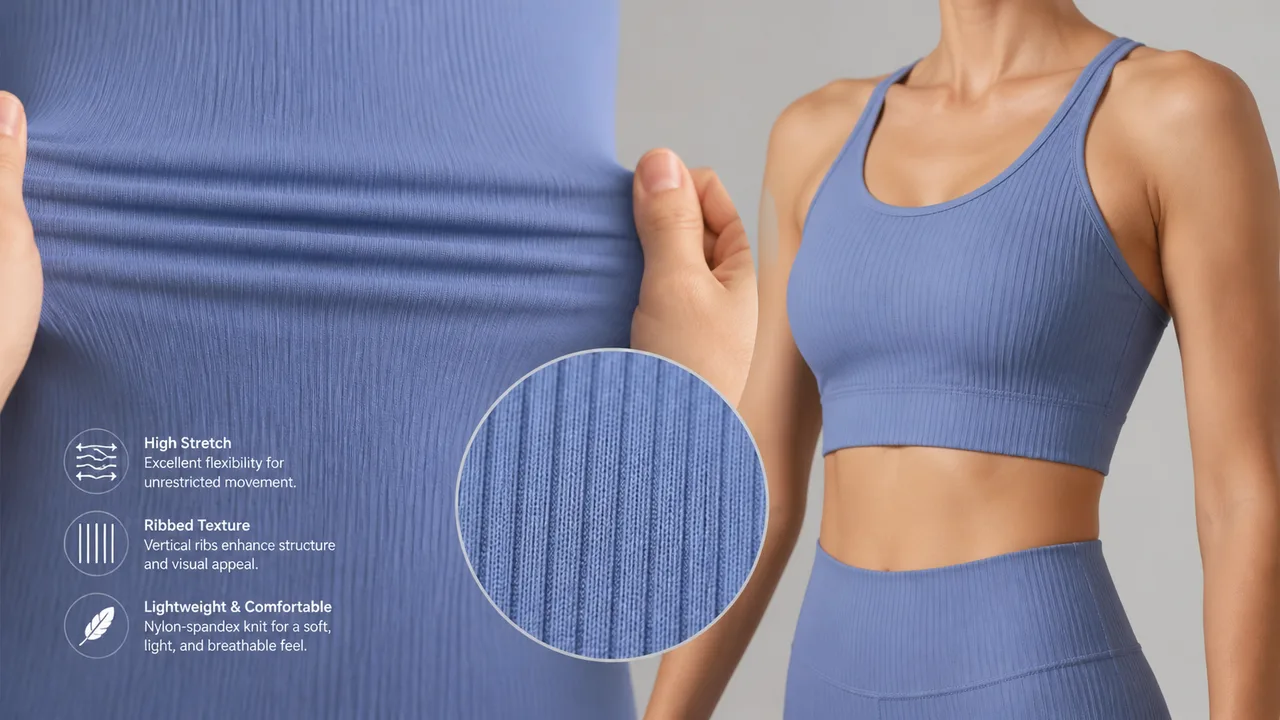
Vertical ribs create alternating raised and recessed lines that give the surface visible depth. The structure can also change how the fabric extends and recovers in each direction, so stretch should be measured in both wale and course directions rather than described only as “four-way stretch.”
At approximately 160 GSM, H3827 is positioned as a lightweight option. Low fabric mass may reduce garment weight, but it does not prove breathability, moisture transport, opacity, or durability. Those outcomes also depend on stitch density, yarn selection, dyeing and finishing, color, and the amount of extension imposed by the garment pattern.
Where H3827 may fit
H3827 may be considered for:
- lightweight leggings or fitted shorts where a visible rib surface is part of the design;
- close-fitting tops and coordinated activewear sets;
- lightweight layering pieces that require stretch without a heavy hand;
- athleisure styles in which texture is a design feature rather than a printed effect.
For leggings, assess coverage on the finished color at the intended garment extension. A relaxed swatch can appear opaque while the same fabric becomes visibly more open when stretched over the hip, seat, or knee. Light colors and dark colors should not be assumed to perform identically.
Sampling and production checks
Rib direction should be marked during pattern placement so corresponding garment panels have a consistent appearance. Before approving raw edges, laser-cut details, or reduced hemming, test the actual dyed and finished fabric: a knit that resists visible fraying can still curl, distort, ladder, or lose stability at a cut edge.
Sewing trials should reproduce the intended seam type, stitch density, needle, thread, and garment extension. Seam appearance at rest is not enough; inspect the seam while stretched and after the agreed wash cycle for skipped stitches, tunneling, thread breakage, and permanent growth.
Buyer approval checklist
Request the following on the sample submission or technical data sheet:
- Exact nylon and spandex percentages.
- Finished GSM and acceptable tolerance.
- Usable width and width tolerance.
- Stretch and recovery results in both directions, with the test method and conditions.
- Dimensional stability after the intended care cycle.
- Opacity assessment in the selected color at the garment's expected extension.
- Pilling, abrasion, and colorfastness requirements appropriate to the end use.
- A sewing trial using the intended seam construction.
For a comparable ClothFactory development request, provide the garment type, target fit, preferred color, required usable width, target weight range, care instructions, and acceptance tests. This allows H3827 to be assessed against the finished garment requirement rather than approved from a generic “high-stretch rib” description.