
Ice-Silk Sun-Protection Jersey is an 86% nylon/14% spandex fabric specified at 175 GSM and 160 cm finished width. It should be described as UPF 50+ or cooling only when reports identify the exact finished construction, color, method and result; neither claim can be inferred from composition, jersey structure or product name.
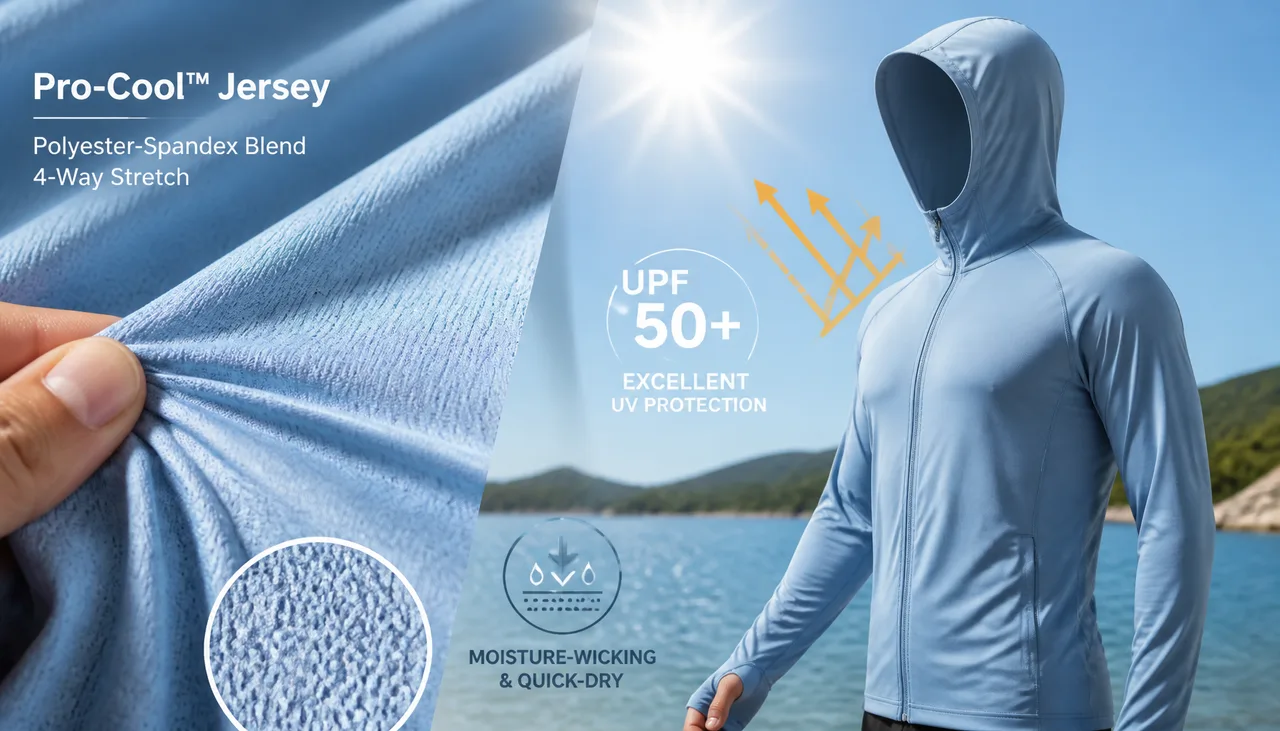
Verify the UPF claim at fabric and garment level
Request the complete test report rather than a certificate image or summary statement. Confirm the laboratory, method, specimen identity, color, condition, and whether the reported value applies before or after washing. The fabric code and construction on the report should match the sample and quotation.
Coverage can change when a knit is stretched. A result on relaxed fabric does not automatically represent a fitted sleeve, shoulder, or torso panel. Define the extension expected in the garment and decide whether testing or visual coverage assessment is required under that condition.
Garment design also matters. Seams, mesh inserts, openings, and uncovered areas affect the protection delivered by the finished shirt even when the main fabric has a valid UPF result.
Define what “cooling” means
Cooling may describe initial contact sensation, moisture spreading, drying, air permeability, thermal resistance, or solar reflectance. These mechanisms are not interchangeable. Ask the supplier to connect the claim to a named measurement, test conditions, and an agreed acceptance criterion.
If cooling depends on a finish, confirm whether the quoted result applies after the intended care cycle. If it depends on construction, compare thickness, density, air permeability, and coverage. A more open fabric may improve airflow while reducing UV protection under stretch, creating a tradeoff that must be resolved through testing.
Evaluate structured-garment requirements
For structured sun shirts, inspect plackets, collars, cuffs, pocket openings, and seams after washing. The body fabric may need reinforcement or a separate collar material. Stretch recovery, dimensional stability, seam puckering, and shade consistency should be approved alongside UV and cooling claims.
Dark and light colors can produce different UV and thermal results. Do not extend a single-color report to every colorway without evidence or a color-validation plan. Dyeing and finishing can also alter hand and moisture behavior.
Evidence buyers should request
| Claim or risk | Required evidence |
|---|---|
| UPF 50+ | Full report identifying method, fabric, color, condition and result |
| Cooling | Defined property, method, conditioning and acceptance criterion |
| Stretch coverage | Result or assessment at the garment-relevant extension |
| Wash durability | Post-care-cycle UPF, cooling and dimensional results where claimed |
| Production identity | Composition, construction, finished GSM, width, finish and lot traceability |
Procurement next step
Send the supplier the garment design, coverage zones, expected extension, color range, care label, target fabric weight and width, and exact claims planned for marketing. Request matched reports and identified finished samples, then produce and wash a garment sample. Do not approve the UPF 50+ or cooling wording until the evidence matches the fabric and use condition that will be sold.