
H2231 is worth sampling for close-fitting yoga leggings and athleisure styles when a soft, matte surface is part of the design brief. The supplied specification identifies a 230 GSM nylon-spandex fabric with 25% spandex and a double-sided micro-brushed finish, but buyers should approve coverage, stretch recovery, surface durability and shade consistency on the finished garment rather than infer them from composition or weight alone.
Start with the intended garment and fit
A fabric for soft-touch leggings must satisfy more than a hand-feel target. The sourcing brief should state whether the garment is intended for yoga, low-impact studio wear, travel or everyday athleisure; whether the fit is compressive or relaxed; and whether the design includes high-stress zones such as a deep squat position or a tightly stretched seat panel.
The same fabric can behave differently in leggings and tops because the extension applied in wear is different. A swatch that appears opaque while relaxed may lose coverage when stretched, while a finish that feels smooth on a flat sample may show direction-dependent shading after panels are cut and sewn.
Interpret the H2231 specification as a sampling target
| Supplied detail | Procurement relevance | What still requires approval |
|---|---|---|
| 230 GSM finished weight | Establishes the target fabric mass for lot comparison | Finished thickness, drape, garment weight and tolerance by lot |
| 25% spandex | Indicates a high elastane share in the stated composition | Stretch percentage, recovery, residual growth and performance after laundering |
| Double-sided micro-brushed finish | Targets a soft surface on both sides | Pilling, abrasion, shedding, snagging and finish consistency |
| Matte appearance | Supports a low-sheen visual direction | Reflectivity and shade appearance under agreed lighting and at garment extension |
These items should appear on the sample request and bulk approval sheet. They should not be treated as proof of comfort, breathability, opacity or long-term shape retention.
Approve the brushed surface before approving color
Micro-brushing changes both touch and the way light reflects from the fabric surface. Directional fibers can make adjacent panels appear lighter or darker even when they come from the same dye lot. The cutting marker should therefore keep the surface direction consistent across visible garment panels, and the approval sample should be examined under the lighting conditions used by the brand for color evaluation.
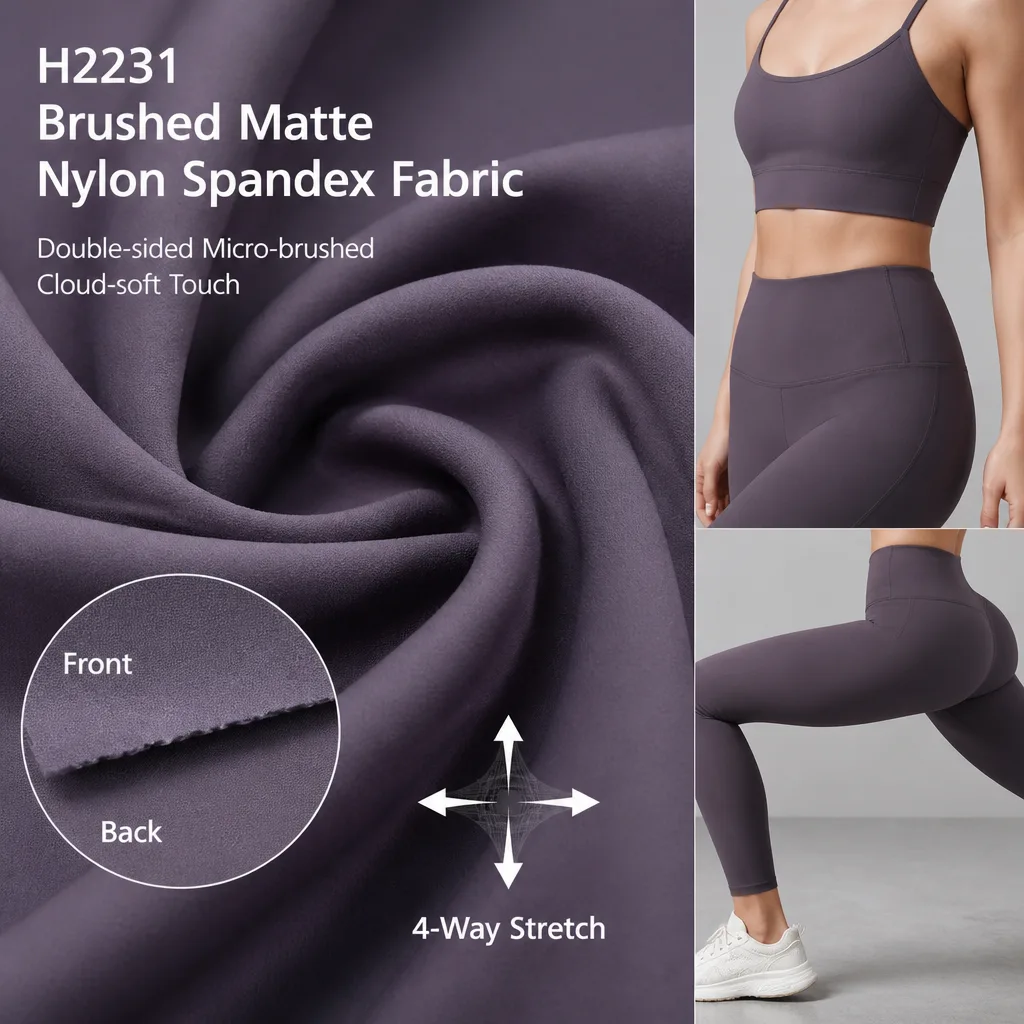
The finish also needs a durability check. Compare the unwashed sample with the garment after the agreed care cycles for changes in hand feel, surface fuzz, pilling and visible pressure marks. If the collection includes dark and light shades, assess both: surface contrast and visible fiber disturbance can differ by color.
Separate fabric mass from thermal comfort and garment weight
At 230 GSM, H2231 has a defined mass per square metre, but GSM alone does not establish warmth. Knit construction, thickness, trapped air, brushing, garment fit and layering conditions all influence the wearer’s thermal experience.
An illustrative calculation, not ClothFactory test data, shows how GSM affects material mass. If a finished garment uses 1.10 m² of fabric before production waste, the estimated fabric mass is:
1.10 m² × 230 g/m² = 253 g
This estimate can help compare garment weight targets, but it does not include thread, elastic, trims, cutting loss or the effect of fabric relaxation. Buyers should calculate consumption from the actual marker and confirmed usable width.
Validate coverage, stretch and recovery on the garment
For leggings, request stretch and recovery results in both fabric directions using the same method, extension level, conditioning and recovery time for every candidate. A high spandex percentage does not by itself establish four-way stretch, compression level or recovery after repeated wear.
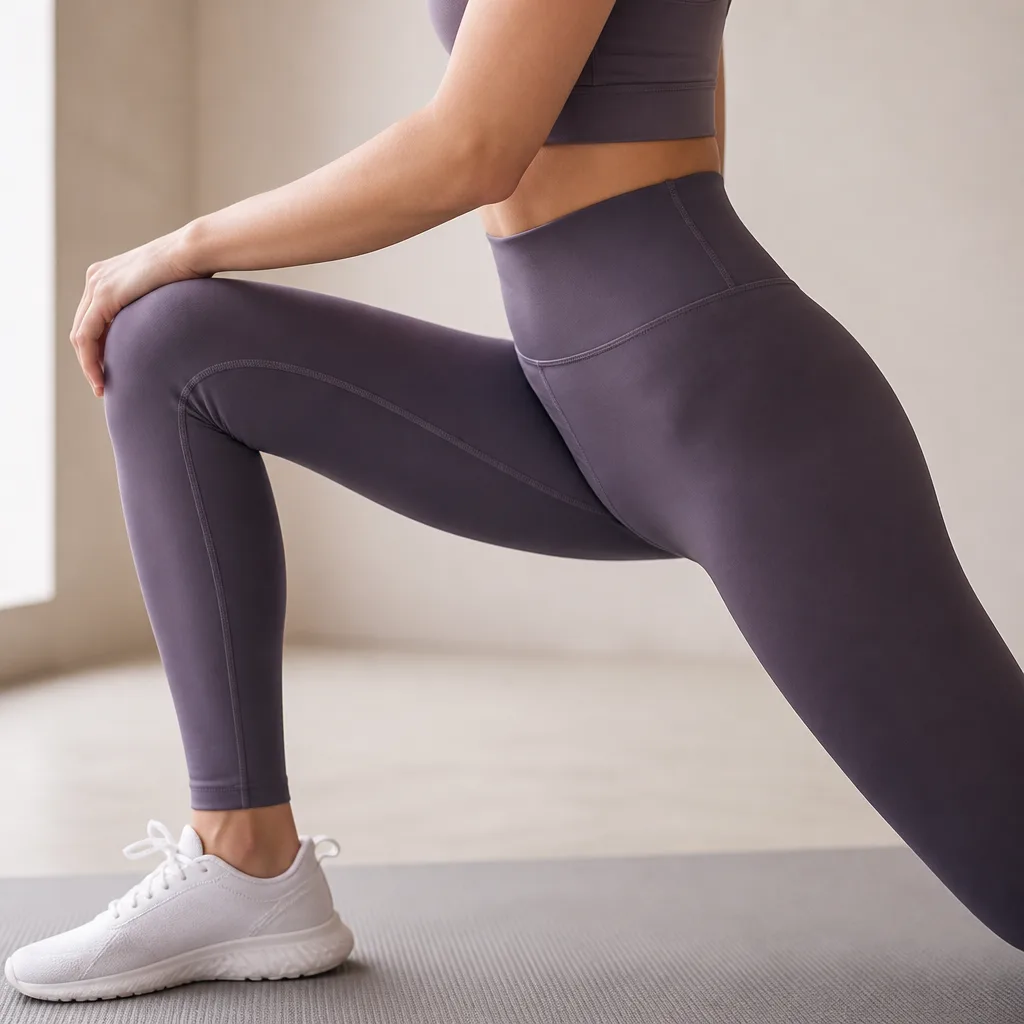
Coverage should also be checked at the intended garment extension, especially for pale colors and printed or heathered variants. Approve a fitted prototype on the target size range and inspect high-extension areas under consistent lighting. A passing result for one color cannot be applied automatically to every shade because dyeing and visual contrast can change perceived opacity.
Run production trials around the surface finish
Before bulk cutting, the garment factory should confirm nap direction, spreading tension and panel orientation. A short cutting and sewing trial can reveal edge curling, needle marks, seam grin, skipped stitches or visible compression of the brushed surface. Needle, thread, stitch type and machine pressure should be selected from trial results rather than prescribed from fabric composition alone.
Bulk inspection should compare approved and production rolls for finished weight, usable width, shade, surface direction, brushing uniformity and visible defects. Rolls with noticeable shade or surface variation should be segregated before marker planning.
What to include in an H2231 sample request
Send the supplier a brief that records:
- garment type, intended activity and target fit;
- stated composition, 230 GSM target and required tolerance;
- finished usable width and the method used to measure it;
- color standard and evaluation lighting;
- required stretch, recovery and dimensional-stability methods;
- coverage approval conditions at garment extension;
- care cycle used for hand-feel, pilling and surface-retention review;
- cutting and sewing observations from the first prototype.
Ask for enough fabric to make a complete fit sample in the intended color, then compare the tested prototype with the retained approval swatch. ClothFactory can use that documented brief to determine whether H2231 should proceed to color approval and bulk review or whether a different construction is needed.