
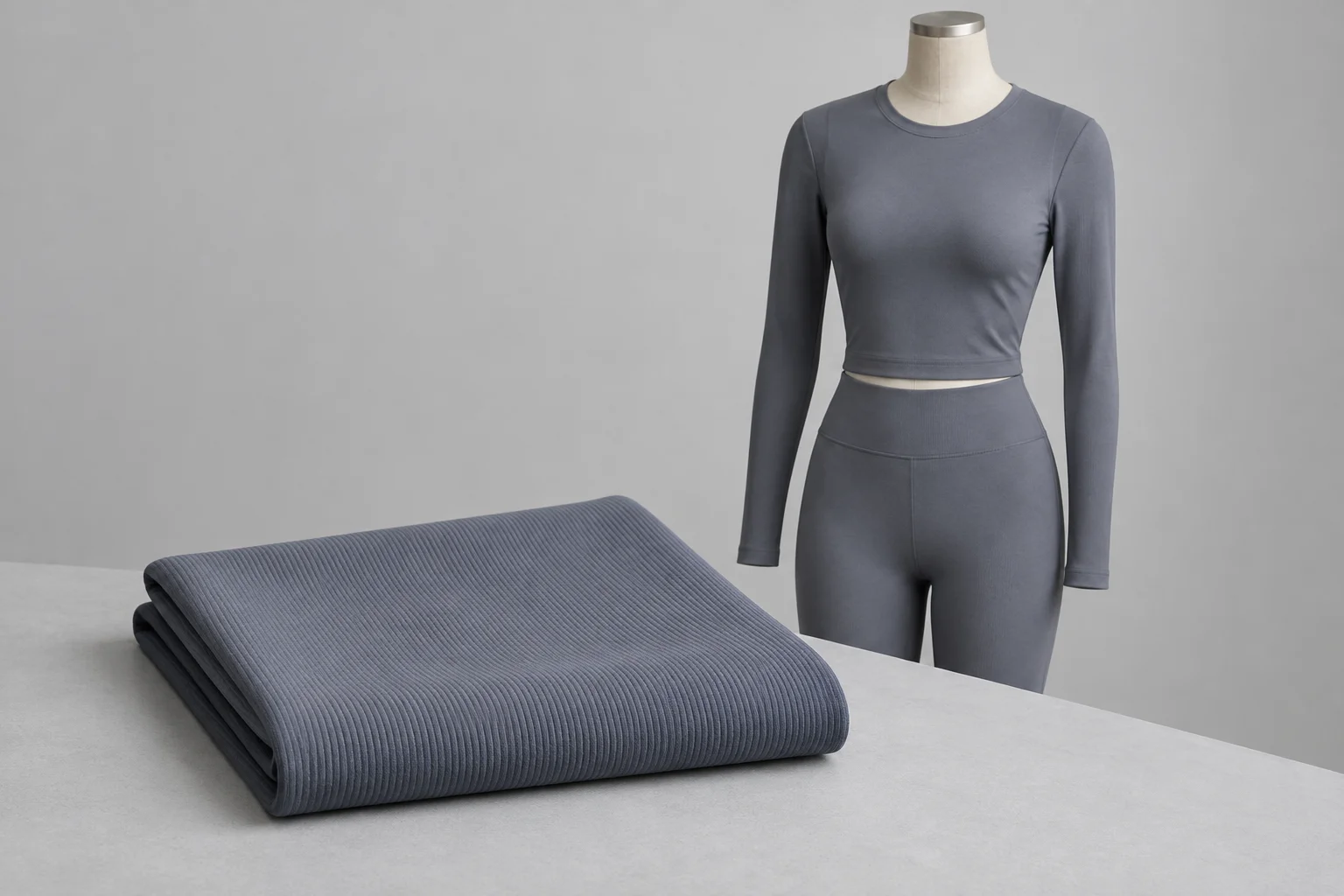
Modal is a rayon-family cellulosic fibre known for a soft, breathable handle, but for activewear sets requiring stretch, elastic recovery, quick drying, and body-hugging coverage, a synthetic knit such as a nylon and spandex performance double-knit is the more dependable specification. Modal suits low-intensity lifestyle pieces where softness and airflow outweigh elastic recovery. Keep in mind that fibre-level characteristics always require physical confirmation on the actual garment pattern.
Modal’s Advantages and Drawbacks for Activewear Sets
When evaluating modal for activewear sets, buyers must weigh its natural comfort against mechanical limitations. Modal offers superior heat management and breathability compared to standard polyester. As a cellulosic option, it is stronger and lighter than viscose, making it better suited for garments requiring durability alongside softness. However, modal provides limited elastic recovery on its own and dries slower than engineered synthetic performance knits. Without blending, it cannot support high-movement fit retention.
Modal’s Advantages and Drawbacks for Activewear Sets
| Feature Category | Modal Advantage | Modal Drawback |
|---|---|---|
| Fibre Comfort | Superior breathability and heat management | Slower drying than synthetic performance knits |
| Durability | Stronger and lighter than viscose | Requires blending to add stretch and strength |
How Modal and Synthetic Knits Compare on Stretch, Recovery, and Fit
High-performance activewear sets rely heavily on elongation and fit retention. Synthetic options deliver superior 4-way elastic recovery and compression architecture. For example, a catalogue parameter of 75% nylon and 25% spandex at a 230 GSM weight provides opaque, second-skin coverage and high recovery compression. While blended modal fabrics may add some stretch, they do not inherently match the permanent vertical structure of synthetic double-knits or rib constructions.
Comparing Modal Fibre Profiles to Synthetic Performance Knits
| Comparison Criteria | Modal Fibre Profile | Synthetic Performance Knit |
|---|---|---|
| Composition & Weight | Cellulosic rayon family; weight varies heavily by blend | Commonly 75% Nylon / 25% Spandex at 220-230 GSM |
| Stretch & Recovery | Provides softness but limited standalone elastic recovery | Engineered for 4-way stretch and high recovery compression |
| Best-Fit Scenario | Low-intensity lifestyle pieces prioritizing airflow | High-movement sets requiring second-skin fit retention |
Applying the Choice to Leggings, Tops, and Matching Sets
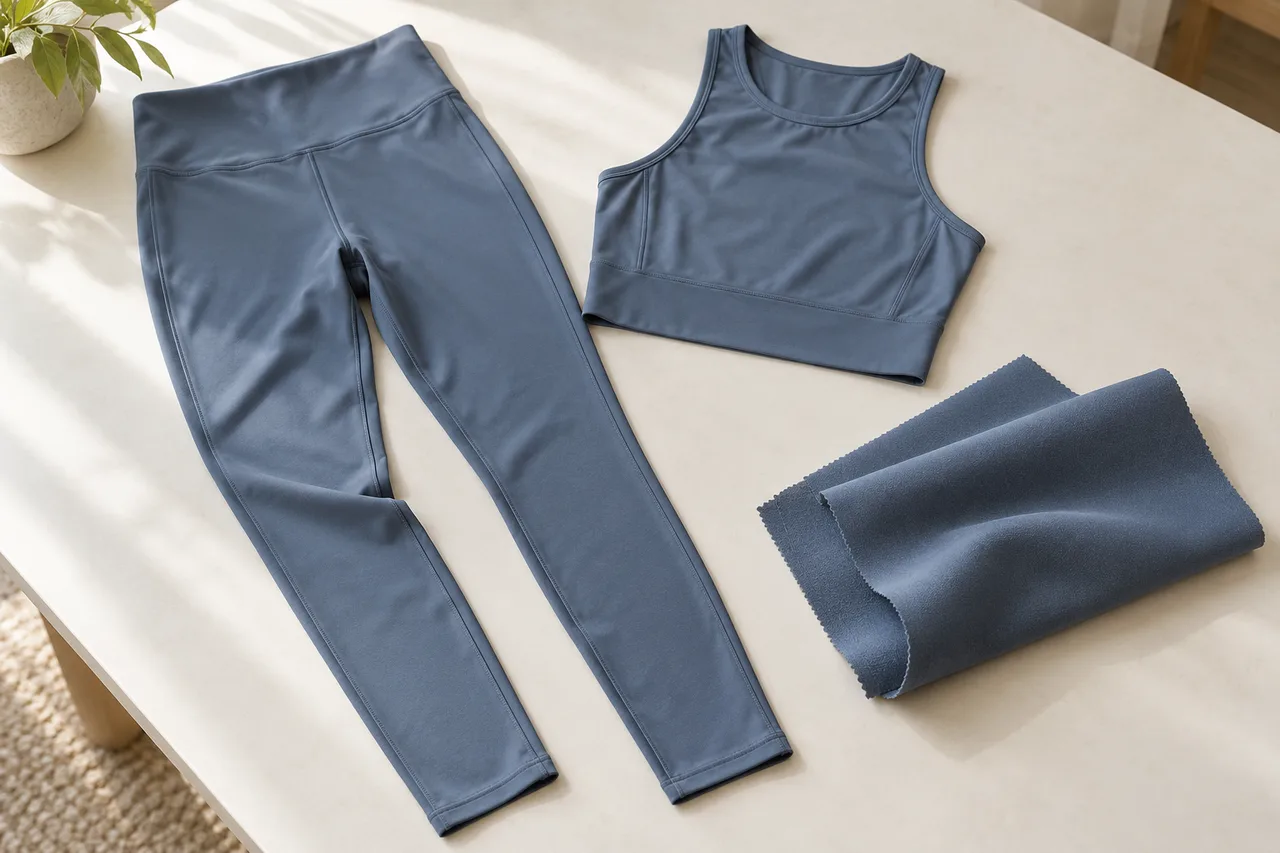
The garment pattern dictates the final fabric specification. For high-compression leggings and matching sets needing complete coverage and fit retention, specify a synthetic knit like the H2894 Matte Performance Double-Knit or the H3827 LULU High-Stretch Rib Fabric. For premium yoga tops or lightweight lifestyle sets where a silky handfeel is the primary goal, a nylon blend mimicking modal such as the H949 Lyocell-Touch Technical Grid can succeed. Note that drying behaviour and opacity follow the specific knit construction and fabric weight, not the fibre name alone.
Sampling, Approval, and the Selection Rule
Before bulk production, confirm elongation, recovery, drying speed, and coverage by sampling the selected fabric on the actual garment pattern. Use standard test methods to evaluate stretch and recovery rather than relying on supplier reference ranges or fibre reputation alone. The final selection rule is straightforward: specify synthetic performance knits for high-movement, high-fit-retention activewear sets, and reserve modal for low-intensity applications where softness and breathability dictate the purchase.