
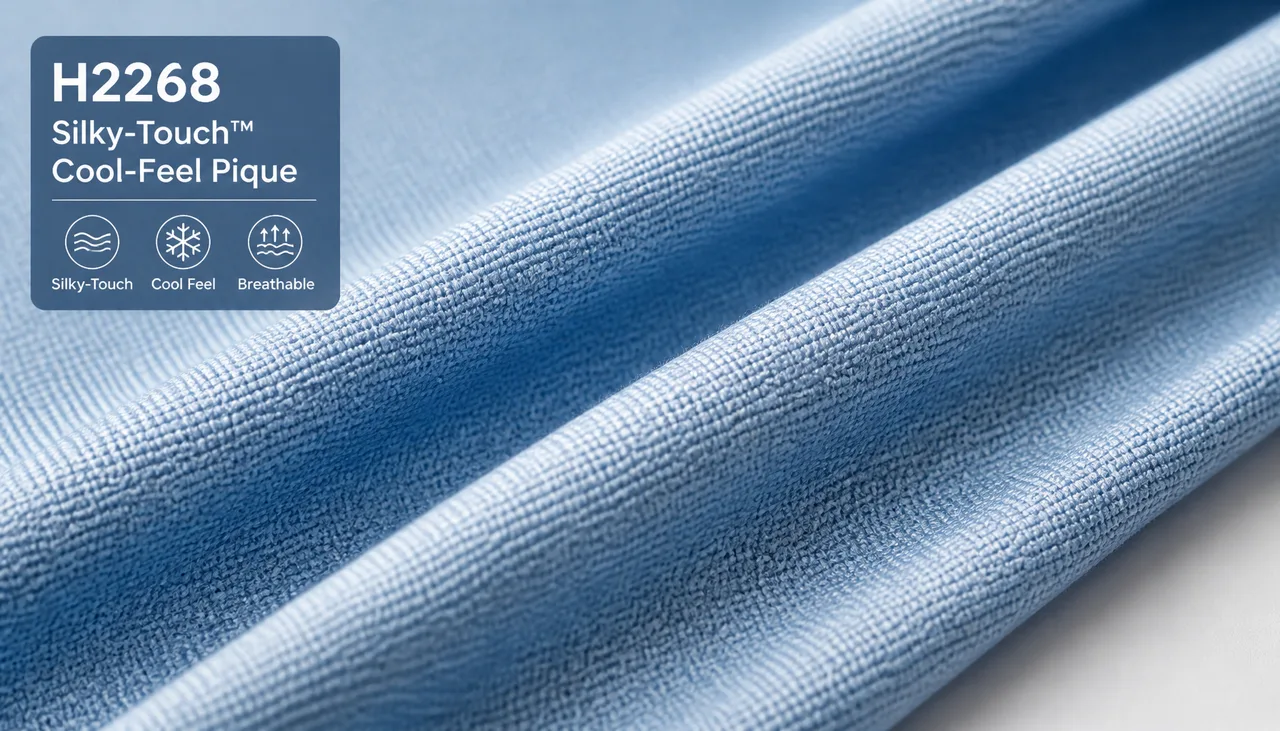
Motion Performance Pique is an 88% nylon/12% spandex pique specified at 170 GSM and 165 cm finished width. It should be shortlisted for summer polos only when its surface, moisture behavior, and collar-placket performance match the garment brief; a silky hand or cool first touch does not prove sustained cooling, breathability or wash durability.
Define what the polo must do
A golf polo, staff uniform, travel polo, and casual fashion polo can share the same silhouette while requiring different fabrics. Record the expected climate, activity level, fit, layering, care route, color range, and target appearance before requesting samples.
For a fitted performance polo, the body fabric must recover after shoulder and torso movement without making the placket ripple. A uniform programme may place more weight on repeated laundering, shade continuity, and abrasion from bags or equipment. These priorities determine which test results matter.
Evaluate the pique structure, not just the hand feel
Pique describes a textured knitted surface, not a fixed level of ventilation or durability. Yarn size, loop geometry, density, thickness, and finishing determine how open the structure is and how it behaves after washing.
Inspect the face for consistent texture, barre, snagging, and shade variation. Check the reverse against the skin if the polo will be worn without a base layer. After laundering, compare surface fuzzing, dimensional change, spirality, and the alignment of the placket and side seams.
Require evidence for cooling and moisture claims
Ask whether “cool feel” refers to initial contact, moisture spreading, drying, air permeability, or another measured property. The supplier should identify the method and provide results for the finished fabric under stated conditioning. If a finish is responsible, confirm how the effect changes after the intended wash cycle.
A quick water-drop demonstration can show surface wetting, but it does not establish drying time or wearer comfort. Garment fit, ambient humidity, air movement, color, and body coverage also affect the experience.
Check collar, placket, and seam compatibility
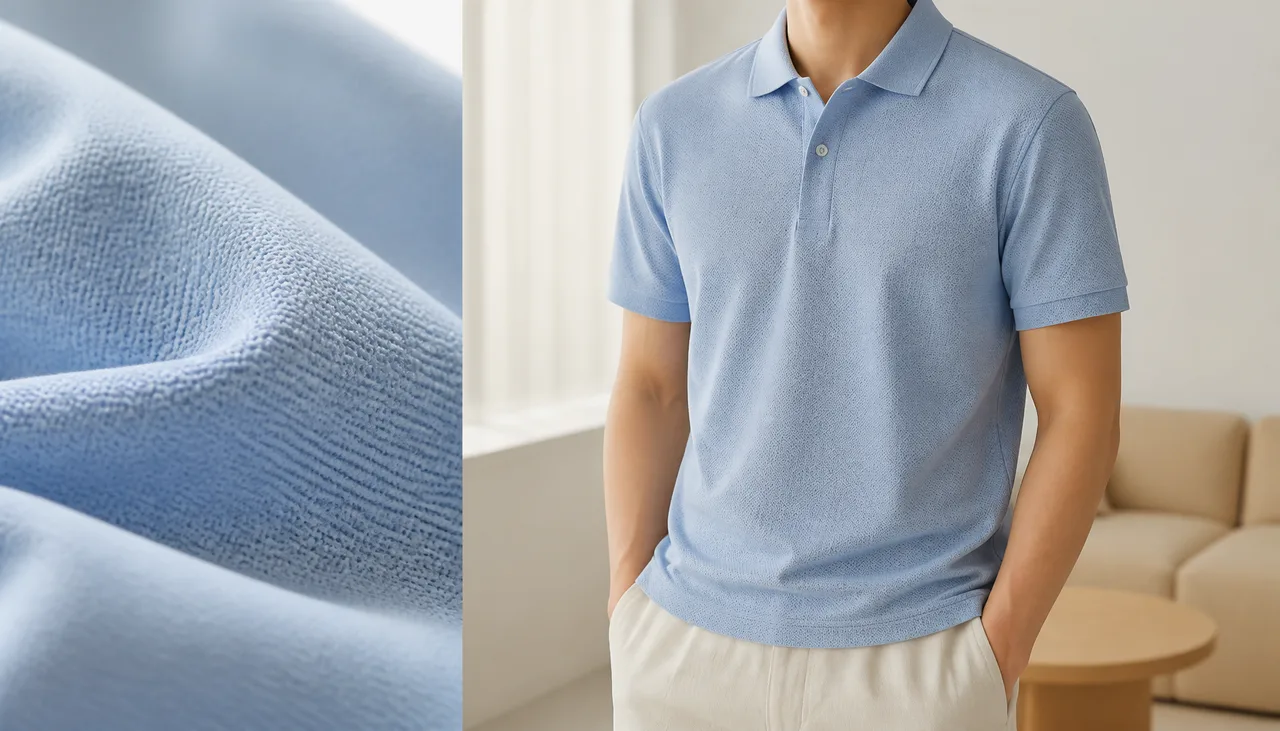
The polo body fabric does not automatically provide enough stability for the collar or cuffs. Confirm whether those components require a separate rib, reinforcement, or adjusted construction. Sew the selected fabric with the intended placket, collar, thread, and stitch settings, then inspect puckering, seam growth, skipped stitches, and recovery after washing.
Compare cost through finished yield
Request composition, finished GSM, usable width, shrinkage, and edge allowance with the quotation. Two fabrics with similar kilogram prices can produce different garment costs when width, shrinkage, texture alignment, and defect allowance are included. Costing should use conditioned finished measurements rather than nominal greige values.
Procurement next step
Send the supplier the polo use case, fit, target GSM and width, texture reference, color range, care cycle, cooling claim, and required appearance tests. Request identified swatches and sufficient yardage for a complete polo, laundering, and placket-collar assessment. Approve bulk only when the sealed sample and written specification describe the same finished fabric.