
Engineered Multi-Gradient Stripe is a 77% nylon/23% spandex fabric specified at 160 GSM and 165 cm finished width. Its texture and color transition can differentiate women’s training wear, but buyers should confirm repeat length, shade continuity, panel placement, stretch recovery and appearance under extension before costing or approval.
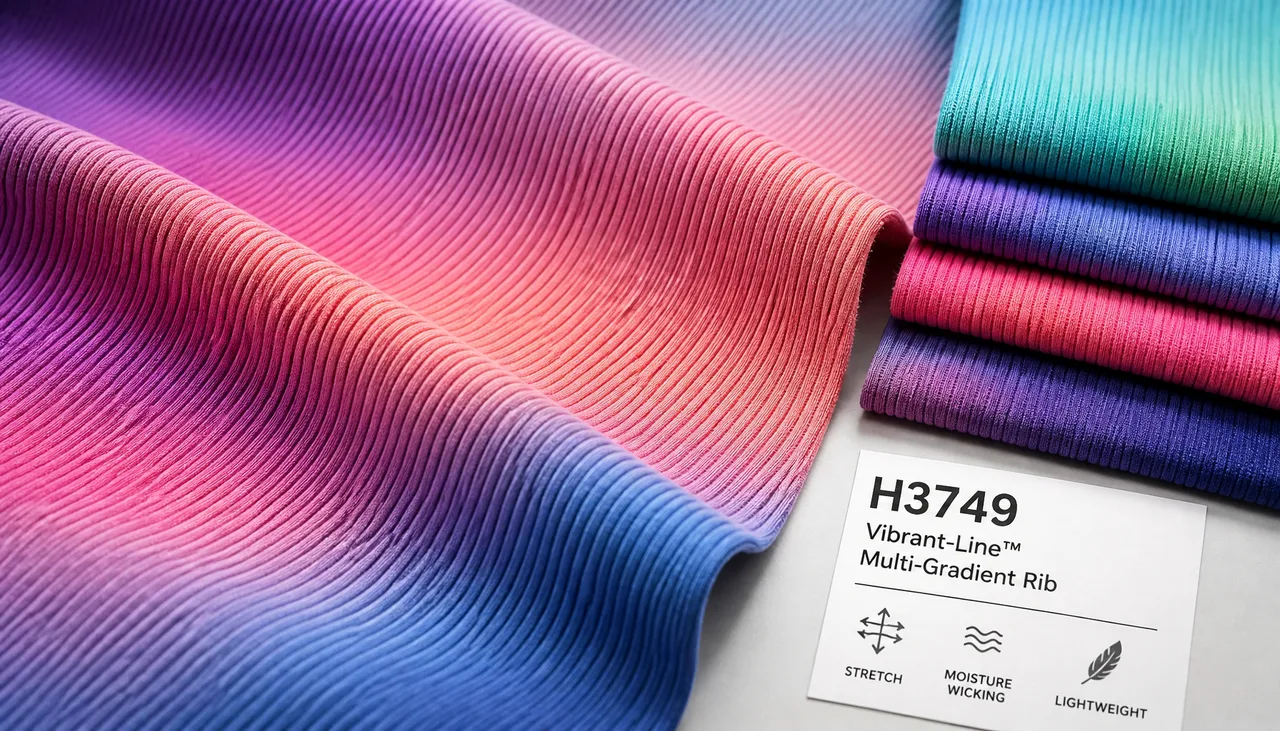
Decide whether the gradient is engineered or variable
Before costing, ask how the color transition is produced and repeated across the fabric. The buyer needs the repeat direction, repeat length, usable width, edge allowance, and permitted variation within and between rolls. Without these values, the design team cannot predict where a gradient will appear on a sports bra, legging leg, waistband, or matched set.
If the gradient position is allowed to vary, approve that variation deliberately. If matched placement is required, expect lower marker efficiency and additional cutting control. This is a commercial tradeoff: tighter visual matching can increase fabric consumption and panel rejection.
Review the rib under garment extension
Rib texture can change when stretched. Inspect the sample relaxed and at the extension expected in the garment zone. Check whether color gaps widen, the base becomes visible, ribs distort, or the surface develops unwanted shine.
Stretch and recovery should be recorded in both directions with the extension, hold time, recovery time, and wash history stated. Spandex content or a rib description alone cannot establish support or shape retention.
Plan panel orientation before bulk approval
Use a full-width sample or production-length trial to place actual pattern pieces. Small hand swatches cannot show repeat utilization or left-right leg matching. Confirm whether panels may be rotated, whether mirrored placement is required, and how size grading changes the visible gradient.
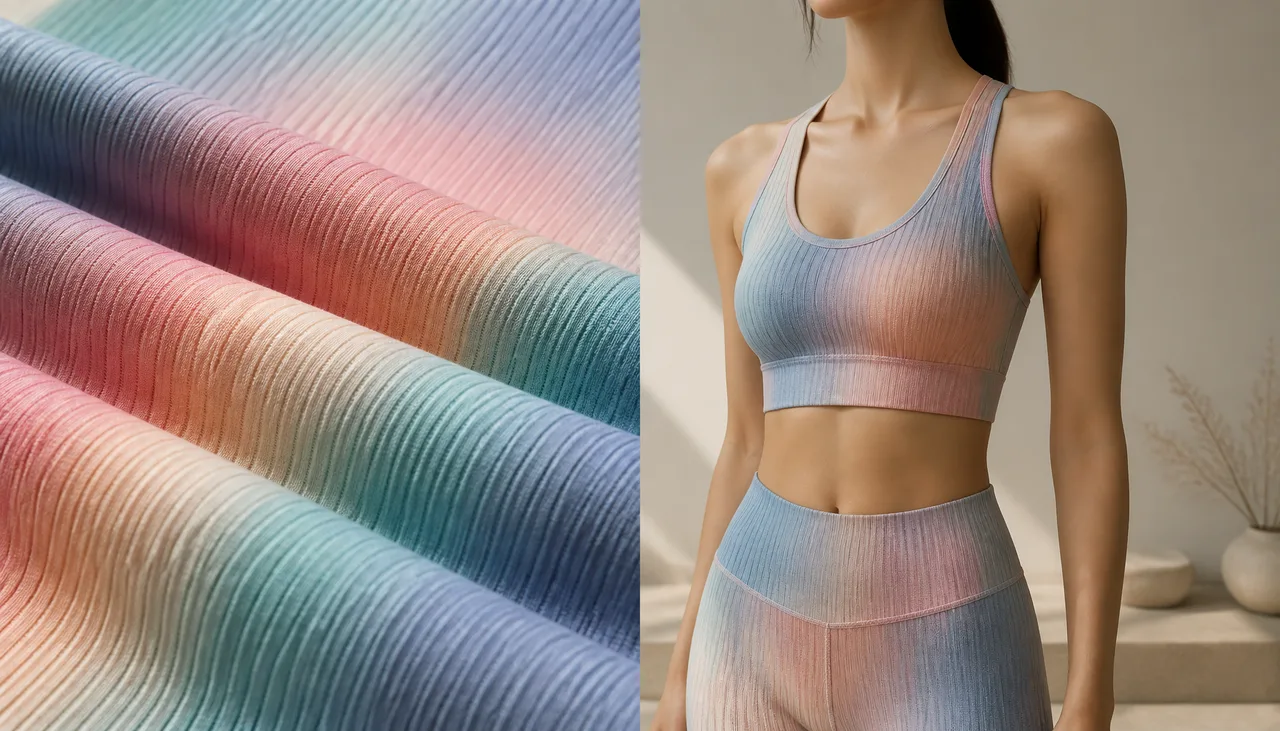
Establish color and surface acceptance
Approve the gradient in the lighting used for design review and inspect it again under retail-relevant lighting. Record acceptable shade change, banding, barre, streaks, and roll-to-roll variation. Because dye appearance can change with extension and finishing, evaluate both relaxed fabric and a fitted garment sample.
Wash the sample according to the intended care label, then check shade migration, colorfastness, rib definition, dimensional stability, pilling, and recovery. Do not treat one approved colorway as evidence that every color combination will behave identically.
Request information for comparable costing
The quotation should include finished GSM, usable width, repeat dimensions, expected matching allowance, minimum cuttable length, and any restrictions on roll sequence. Compare cost per accepted garment rather than price per kilogram alone; repeat waste and shade sorting can outweigh a lower fabric price.
Procurement next step
Provide the supplier with garment drawings, panel dimensions, desired gradient placement, size range, expected extension, color standard, care cycle, and acceptance limits. Request a full-width sample and enough continuous length for marker, sewing, wash, and matched-set trials. Approve bulk only after the repeat and variation rules are written into the specification.