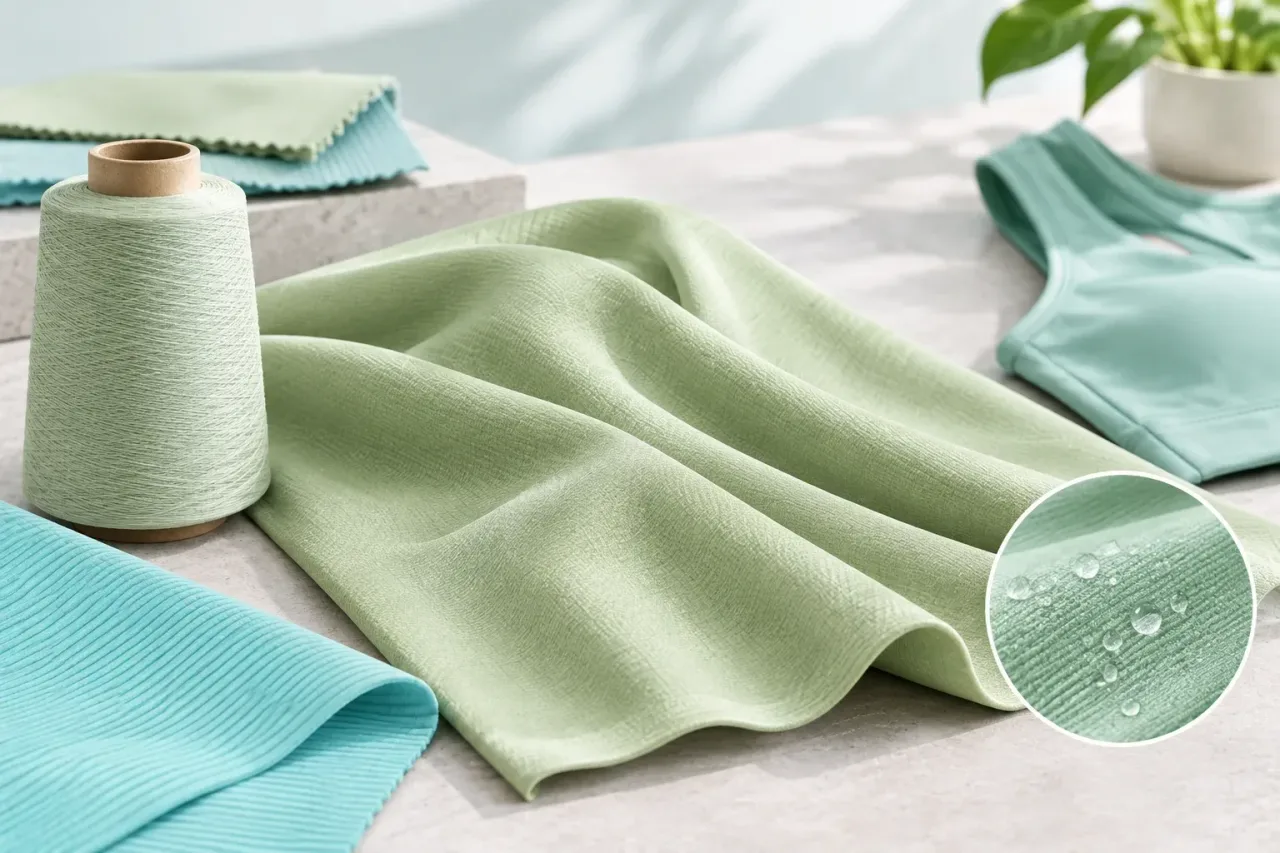
Yes, nylon-spandex fabrics can simultaneously achieve a soft, cotton-like hand feel and activewear sweat management. Buyers accomplish this by specifying Air Textured Yarn (ATY)—a mechanical process that blasts continuous nylon filaments to create bulky, spun-like loops—paired with moisture-wicking chemical finishes. This combination mimics the natural loft and matte appearance of cotton while preventing the fabric from holding heavy moisture during intense activity. To source effectively, bypass standard silky or brushed synthetics in favor of ATY constructions, balancing mechanical yarn texturing with chemical sweat management tailored for high-performance activewear.
Achieving a Cotton-Like Hand Feel with Air Textured Yarn
Standard synthetic filaments are flat and parallel, resulting in a smooth, shiny surface that feels noticeably artificial. To replicate the spun-like softness of natural cotton without using plant fibers, specify Air Textured Yarn (ATY).
During the ATY manufacturing process, high-pressure compressed air blasts the continuous nylon filaments as they pass through a specialized nozzle. This high-speed airflow forces the filaments to open, curl, and entangle, permanently altering the yarn's geometric structure. The straight alignment is replaced with three-dimensional crimps, coils, and loops.
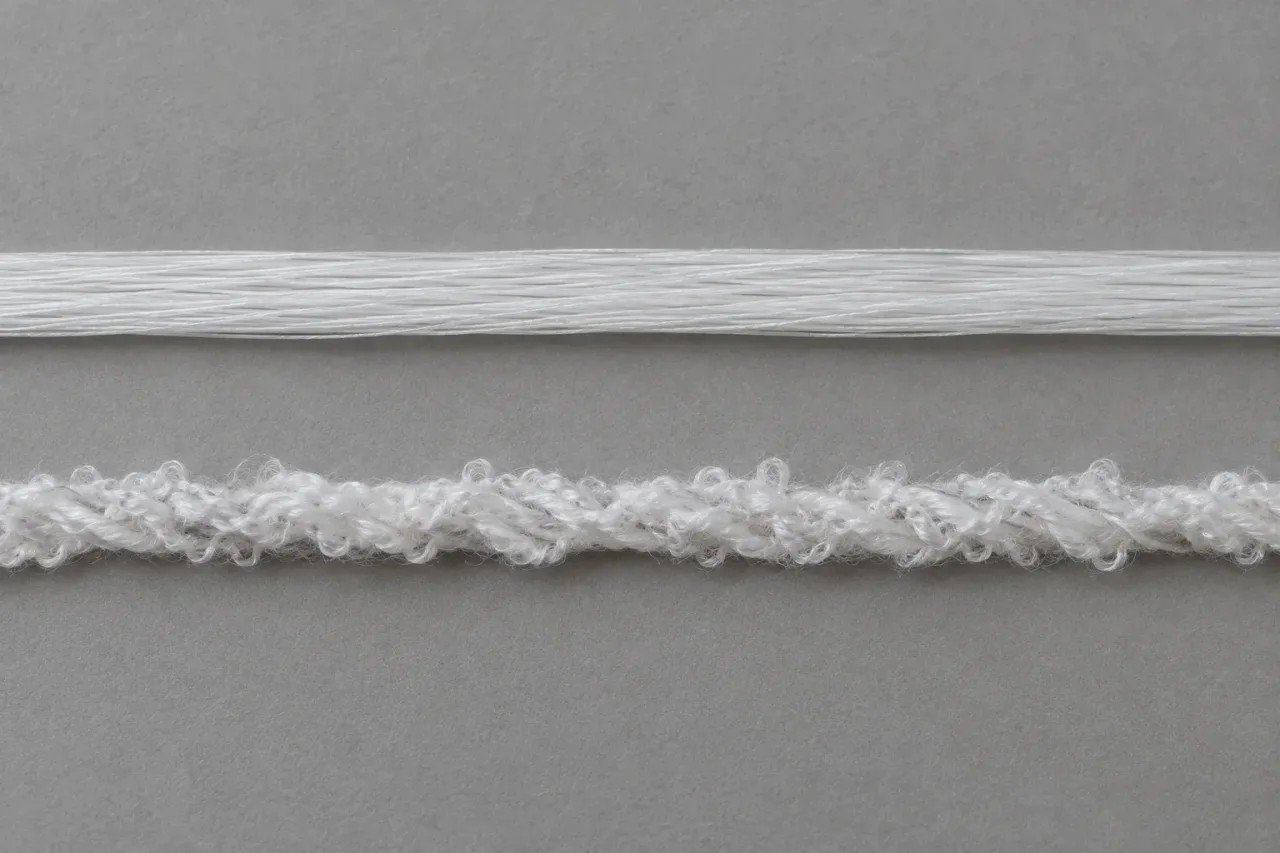
While standard Draw Textured Yarn (DTY) uses heat and twisting to create a springy texture common in basic activewear, ATY’s air-jet entanglement provides a tangibly thicker, more cotton-like bulk. The air gaps between the entangled loops create a lofty structure with a matte finish, effectively eliminating the typical synthetic shine. By specifying ATY over flat synthetic yarns, product developers secure a fabric with a natural hand feel and high opacity, all while retaining the high abrasion resistance and durability inherent to nylon.
Implementing Sweat Management in Textured Synthetics
Natural cotton is soft and breathable, but it holds moisture and dries slowly during heavy sweating, making it unsuitable for high-intensity activewear. While the ATY process gives nylon a cotton-like geometry, the resulting entangled loops and increased bulk also change how moisture moves through the knit.
To prevent the textured synthetic from trapping sweat, specify a moisture-wicking chemical finish alongside the ATY construction. The ATY structure provides the necessary surface area and capillary pathways, while the wicking finish alters the fabric's surface tension. This ensures that the material actively pulls sweat away from the skin and spreads it across the outer surface for rapid evaporation.
When evaluating fabric samples, explicitly confirm that the moisture-wicking treatment has been applied to the ATY blend. Relying solely on the yarn's mechanical structure is insufficient for active sweat management. A properly finished nylon-spandex ATY fabric delivers the fast-drying performance required for intense activity without compromising the requested spun-like softness.
Selecting Nylon ATY and Customizing Fabric Specifications
When sourcing synthetic fabrics with a natural hand feel, buyers must choose the correct base material before moving to bulk production. Both nylon and polyester can undergo the air-texturing process, but they yield different performance characteristics for activewear.
Nylon ATY generally provides superior elasticity, softness, and dye affinity, making it the preferred choice for seamless garments, premium yoga wear, and activewear requiring high stretch recovery. Polyester ATY typically offers better UV resistance and higher abrasion resistance at a lower cost, suiting outdoor textiles and upholstery.
|
Feature |
Nylon ATY |
Polyester ATY |
|---|---|---|
|
Softness & Elasticity |
Superior; ideal for stretch recovery and comfort |
Lower; feels slightly stiffer |
|
Dye Affinity |
High; accepts colors readily |
Moderate; requires different dye classes |
|
Best For |
Premium activewear, seamless garments, yoga wear |
Upholstery, outdoor textiles, budget sportswear |
|
Trade-offs |
Costs more than polyester |
Lower elasticity, less premium hand feel |
Standard fabric catalogs often default to either silky, smooth synthetics or heavily brushed thermal finishes. If off-the-shelf options do not provide the exact balance of a true cotton feel and sweat management, request custom fabric development. Work with the mill to adjust the nylon-to-spandex ratio, knit structure, and wicking finishes to hit the exact performance and tactile requirements of the garment brief.