
Choose fabric for performance polos and teamwear by defining the activity, uniform programme, decoration method, care cycle, and required fit before comparing composition or GSM. The selected fabric must maintain movement, appearance, shade, and dimensions under the actual use and laundering conditions.
Separate the polo and teamwear requirements
A golf polo, staff uniform, training shirt, and competition jersey do not need the same construction. Polos require stable plackets, collars, and hems; teamwear may face higher sweat load, abrasion, numbering, repeated washing, and strict shade matching across sizes and production lots.
Create a requirement matrix for each garment rather than approve one fabric for the whole programme. Identify the body fabric, collar and cuff material, reinforcement, mesh zones, and decoration locations.
Compare finished fabrics, not blend labels
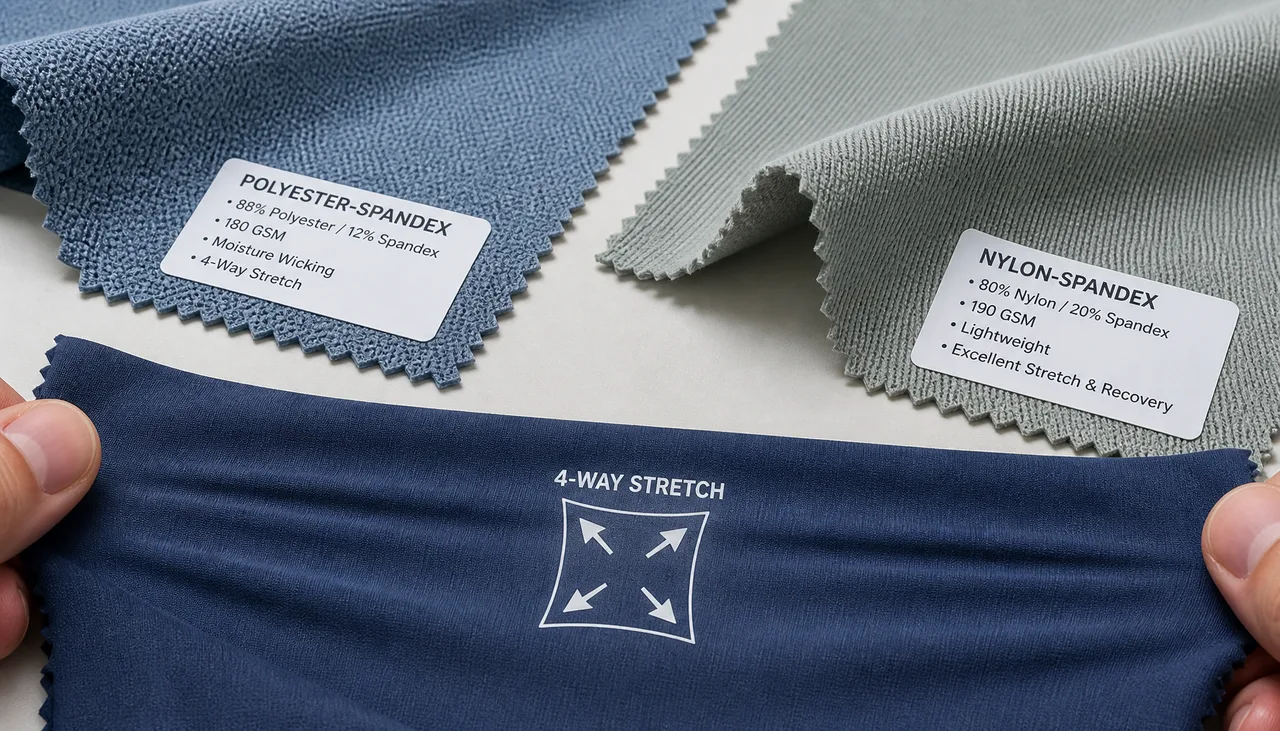
Polyester-spandex and nylon-spandex can both be developed for performance tops. Nylon-spandex is often shortlisted for a smooth hand, while polyester-spandex may be considered for programmes with particular dyeing or moisture objectives. Construction and finishing can change either result.
Record composition, knit type, finished GSM, usable width, thickness where relevant, stretch and recovery by direction, and post-wash dimensions. Specify moisture, quick-dry, UV, or anti-odor performance separately and request evidence for the finished material.
Test decoration and garment components
Heat transfer, sublimation, screen printing, embroidery, and badges expose fabric to different heat, pressure, needles, and local stiffness. Test the production decoration on the selected color and construction, then inspect shade, migration, distortion, adhesion, and stretch around the decorated area.
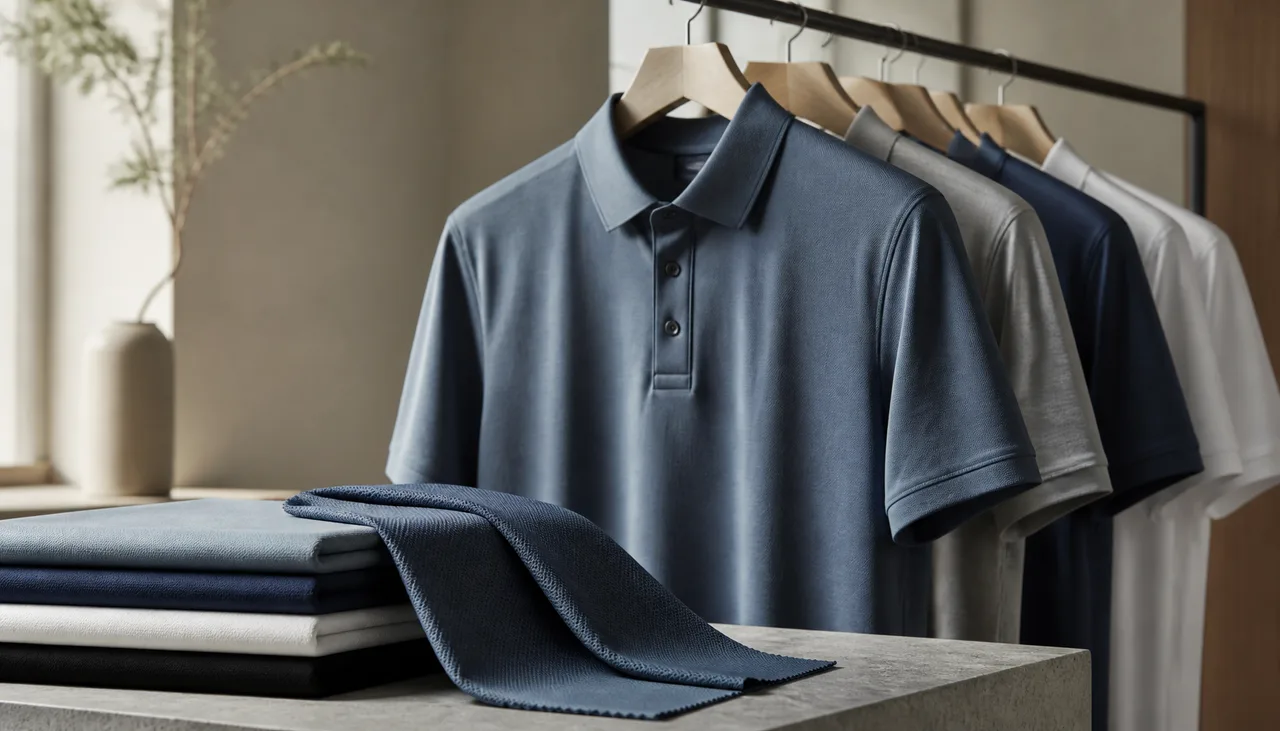
The body fabric may not provide enough stability for the collar or cuffs. Produce a full polo sample with the intended trims and reinforcement, then wash it and check placket puckering, collar shape, side-seam twist, hem growth, and shade compatibility.
Set durability and color controls
Define the wash and drying route, cycle count, and acceptance limits for dimensional change, spirality, pilling, abrasion, snagging, and colorfastness. Team programmes also need a shade-control plan so replacement garments and repeat orders remain visually compatible.
One approved color cannot represent every shade. Dark, bright, and pale colors may react differently to dyeing, heat transfer, crocking, and perspiration.
Compare total garment cost
Use finished usable width, shrinkage, edge allowance, defect limits, decoration loss, and marker efficiency when comparing quotations. A cheaper kilogram price can result in higher garment cost if narrow width, shrinkage, or decoration rejection reduces usable yield.
Procurement next step
Send the supplier the garment category, activity, fit, panels, decoration method, color range, care cycle, target GSM and width, and required tests. Request identified samples and enough yardage for decoration, sewing, laundering, and wearer-movement trials. Approve bulk against a sealed garment and fabric standard with written tolerances.