
Pique, interlock, and rib should be compared by the garment function they must deliver, not by a fixed ranking. Structure influences texture, stability, stretch direction, edge behavior, coverage, and production handling, but yarn, density, composition, GSM, and finishing can change each result.
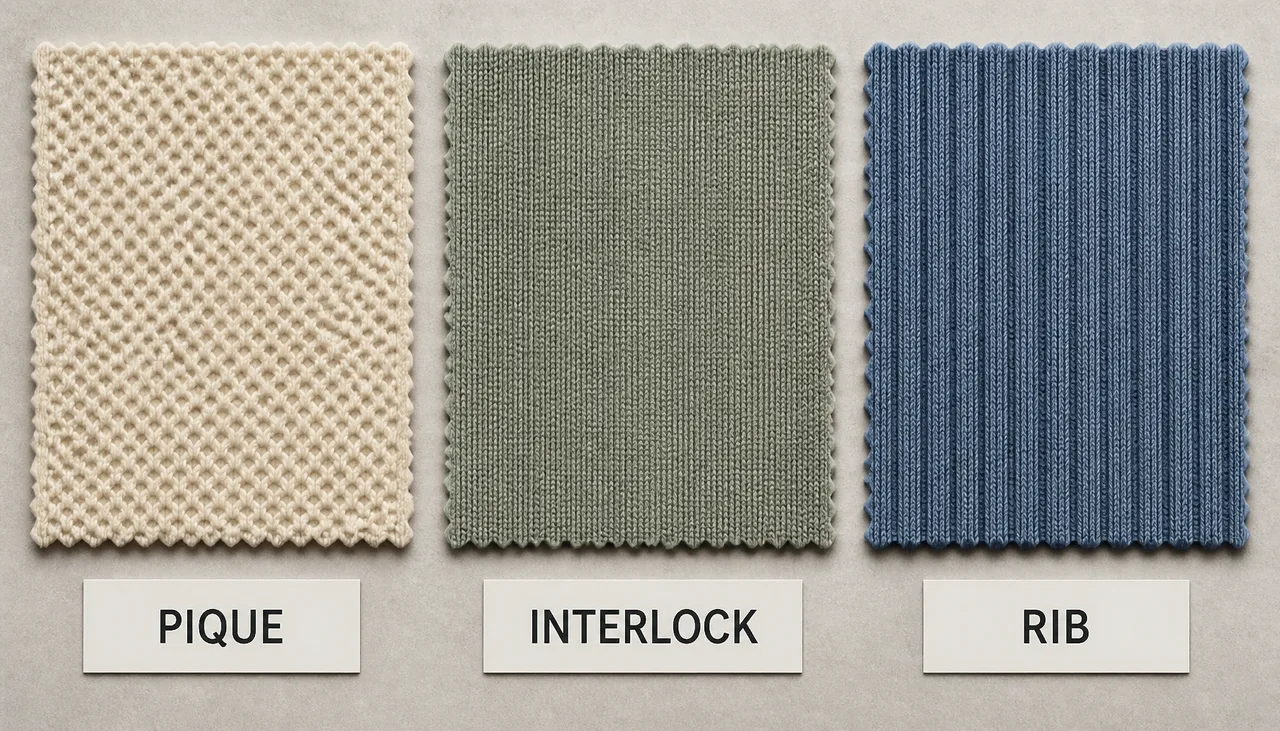
Pique: texture with construction-dependent openness
Pique uses a raised or recessed surface pattern that can provide visual depth and alter skin contact. It is widely associated with polos and sports tops, but the structure name does not guarantee airflow or moisture management.
Buyers should inspect snagging, pilling, texture consistency, air permeability where required, and placket or seam appearance. Directional texture may restrict marker rotation and affect garment yield.
Interlock: two-sided stability with added mass potential
Interlock is a double-knit structure with usable surfaces on both sides and generally controlled edge behavior. It can suit fitted tops, leggings, linings, or supportive panels when a smoother, more stable construction is required.
That stability may come with additional thickness or mass, depending on yarn and density. Confirm drape, drying, seam bulk, stretch force, recovery, and dimensional stability rather than assuming every interlock is heavy or supportive.
Rib: directional texture and high extension potential
Rib structures form visible wales and often extend readily across the ribs. They are common in collars, cuffs, waistbands, fitted tops, and full-garment fashion activewear.
High extension does not prove recovery or support. Inspect coverage as ribs open, force at garment extension, residual growth, direction alignment, curling, and seam behavior. A rib suitable for a cuff may not work as a legging body.
Compare structures using the same dimensions
| Decision area | Pique | Interlock | Rib |
|---|---|---|---|
| Visual surface | Textured, pattern-dependent | Usually smoother and two-sided | Vertical or directional ridges |
| Key sampling risk | Snagging, texture alignment, placket appearance | Bulk, drying, seam thickness | Opening under stretch, growth, direction mismatch |
| Typical development question | Does texture support the polo or sports-top design? | Does stability justify weight and seam bulk? | Does extension retain coverage and recovery? |
| Required measurements | Construction, GSM, width, airflow if claimed | Thickness, GSM, stretch force, recovery | Stretch, force, recovery, coverage under extension |
This table describes development questions, not guaranteed performance. Test the actual finished candidates under identical conditions.
Include manufacturing and costing
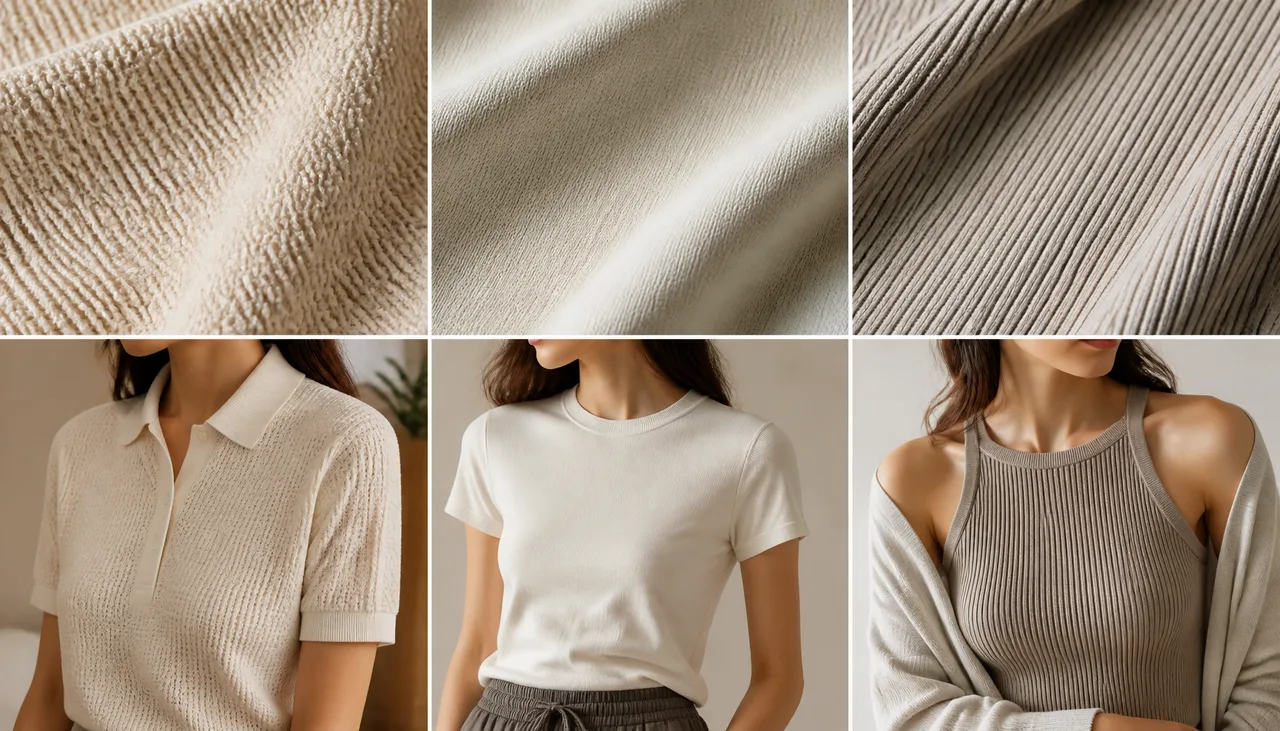
Structure affects spreading, cutting, panel direction, edge control, sewing, bonding, and decoration. Run production trials with the intended needle, thread, stitch, seam, and heat process. Record usable width, shrinkage, directional restrictions, and defect allowance for costing.
Price per kilogram cannot show garment yield when structures differ in width, mass, or marker orientation. Compare cost per accepted garment after conditioning and production loss.
Procurement next step
Send the supplier the garment panel, fit, expected extension, target hand and weight, color, care cycle, decoration method, and required performance. Request identified pique, interlock, and rib candidates only where each structure can meet the same brief. Compare data and washed garment samples before selecting the construction for bulk production.