
To select a polyester-spandex mesh for lightweight running shirts, specify a fabric weight between 80 and 150 GSM to maximize airflow, and keep the spandex blend ratio between 10% and 15%. This specific limit ensures necessary 4-way stretch mobility while preventing long-term recovery loss and seam gapping. Mesh openness dictates the physical trade-off between high-ventilation cooling and structural opacity in the final garment.
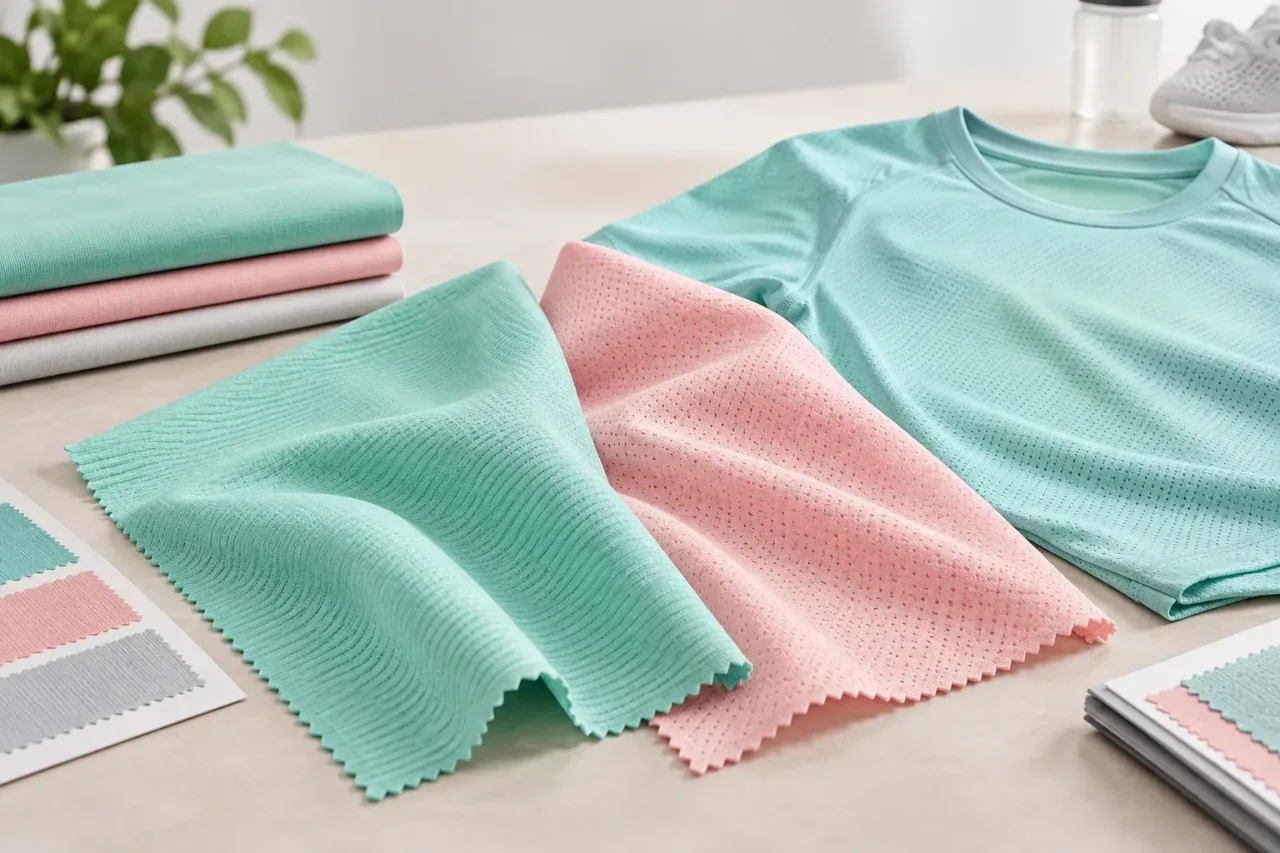
How Do GSM and Mesh Structure Affect Breathability and Opacity?
Fabric weight and knit structure dictate the physical trade-off between the running shirt's airflow and its visual opacity. A lightweight knitted mesh relies on an open loop structure to let heat escape and moisture evaporate quickly, which inevitably makes the material more sheer.
When specifying a mesh, align the measured GSM with the garment's target climate and coverage requirement. A lightweight mesh between 80 and 130 GSM offers maximum airflow but lower opacity, making it ideal for hot-weather racing gear, underarm gussets, or targeted ventilation panels. For a standard running shirt that requires more coverage, specify a stretch mesh between 150 and 200 GSM. This heavier range provides a sturdier structure and better visual opacity while maintaining enough porosity to manage sweat.
|
Measured GSM Range |
Recommended Garment Application |
Breathability and Opacity Trade-Off |
|---|---|---|
|
80–130 GSM |
Hot-weather racing singlets, ventilation panels |
Maximum airflow; highly sheer |
|
150–200 GSM |
Standard active tees, running tops |
Moderate airflow; higher structural opacity |
What Spandex Percentage Provides Optimal Stretch and Recovery?
While pure polyester provides the lightweight, fast-drying, and moisture-wicking foundation for athletic wear, it lacks dynamic stretch. Manufacturers use circular knitting to blend polyester with spandex, creating the 4-way stretch necessary for running mobility.
Keep the spandex content between 10% and 15% for loose mesh structures. A typical running shirt blend sits at 88% polyester and 12% spandex, which balances flexibility with durable recovery. Exceeding a 15% spandex ratio in an open-knit mesh actively degrades the garment's performance. High-spandex meshes lose structural stability; testing indicates that a 20% spandex mesh can lose up to 30% of its stretch recovery after 50 wash cycles. When the fabric fails to snap back, the garment distorts and seams begin to gap. To control both openness and recovery, suppliers can adjust the circular knit stitch length—typically between 2.8 and 3.2 mm—rather than increasing the spandex content.
Which Fabric Specifications Suit Different Running Shirt Applications?
Match the mesh configuration directly to the garment's commercial role and target environment. Comparing different mesh structures is critical, as the physical openness of the knit changes both coverage and moisture evaporation.
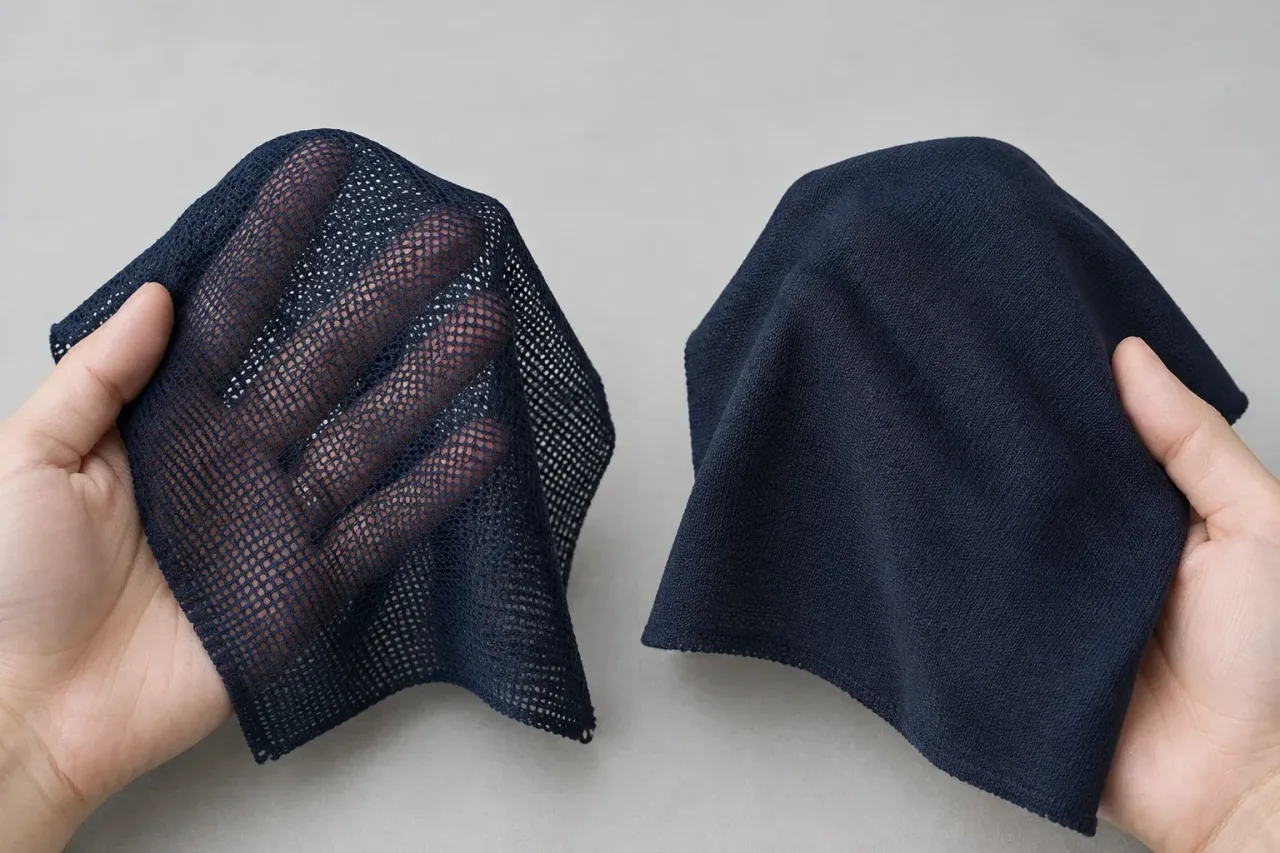
- Hot-Weather Racing Singlets: Specify an 80 to 130 GSM open-knit mesh, such as a micro-mesh or engineered pinhole structure, with 10% to 12% spandex. This configuration prioritizes maximum ventilation and a weightless feel. Because the open structure is highly sheer, it is best suited for dedicated athletic environments where high airflow overrides the need for complete opacity. Apply a quick-dry finish to accelerate moisture evaporation.
- Versatile Training Tees: Select a 150 to 200 GSM stretch mesh with a tighter knit structure and approximately 12% spandex. The denser loop structure provides the necessary opacity for casual gym or outdoor environments without sacrificing 4-way stretch. This specification delivers a durable, shape-retaining structure that withstands frequent washing and wear.
Define the target garment use case before requesting samples, then evaluate the fabric's opacity and recovery on the intended garment fit.