
To prevent pilling in stretchy, lightweight mesh sleeves subjected to arm and torso friction, specify continuous synthetic filament knits constructed with covered spandex rather than bare elastane. Filament nylon-spandex provides a smooth hand feel, close-to-body softness, and elastic recovery for activewear tops and dancewear, while filament polyester-spandex delivers durable stretch for athletic apparel. Apparel buyers should anchor their technical packs by requiring a laboratory rating of Grade 3 to Grade 4 on standard pilling evaluations before confirming bulk yardage.
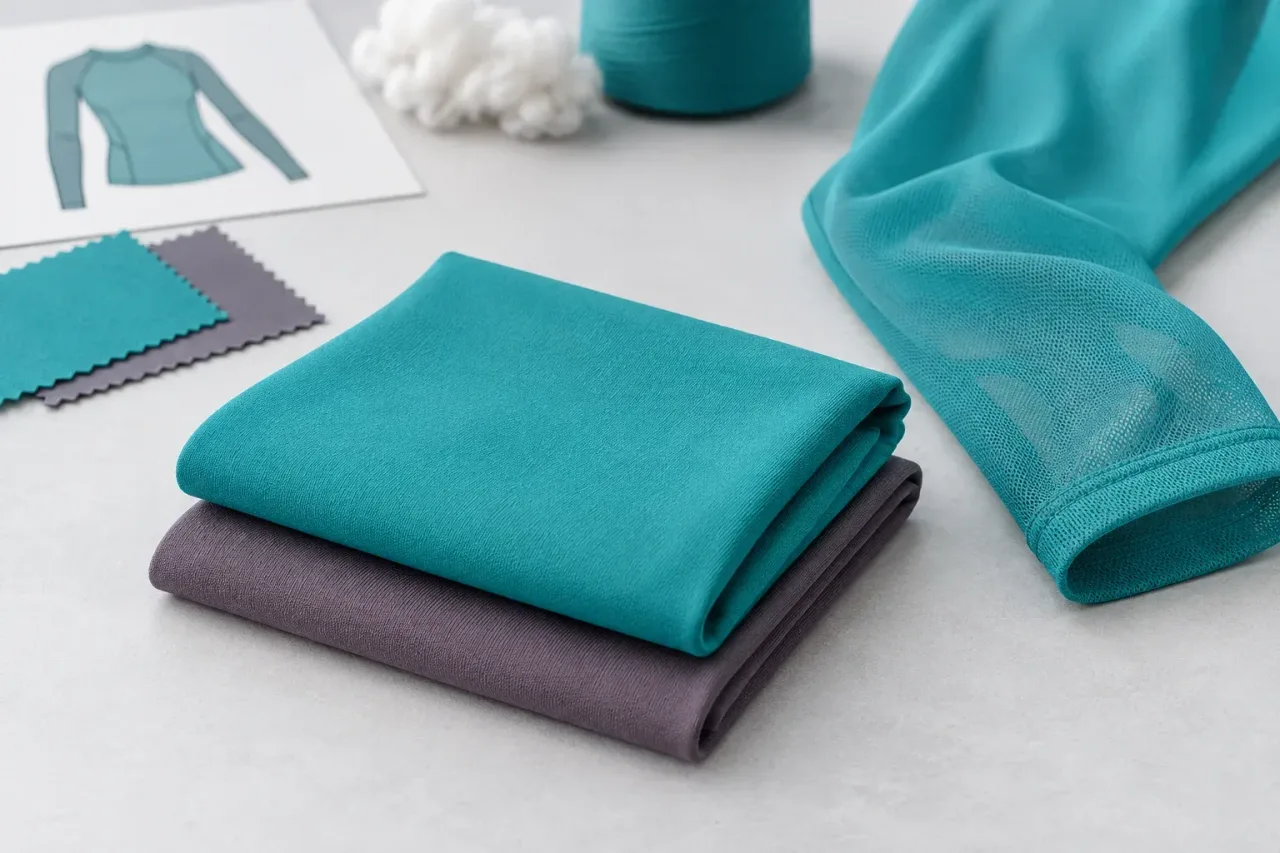
Yarn Construction: Why Covered Spandex Prevents Sleeve Fuzzing and Abrasion
Pilling develops when friction pulls loose fiber ends out of the yarn matrix, causing them to tangle into compact surface balls during repetitive movement. Underarm and torso contact subjects sleeve panels to continuous surface shear. When fabric mills use bare elastane filaments directly in knitting, the exposed rubbery core faces surface rubbing, cuts easily against sharp friction points, and degrades rapidly under wash cycles and mechanical stress.
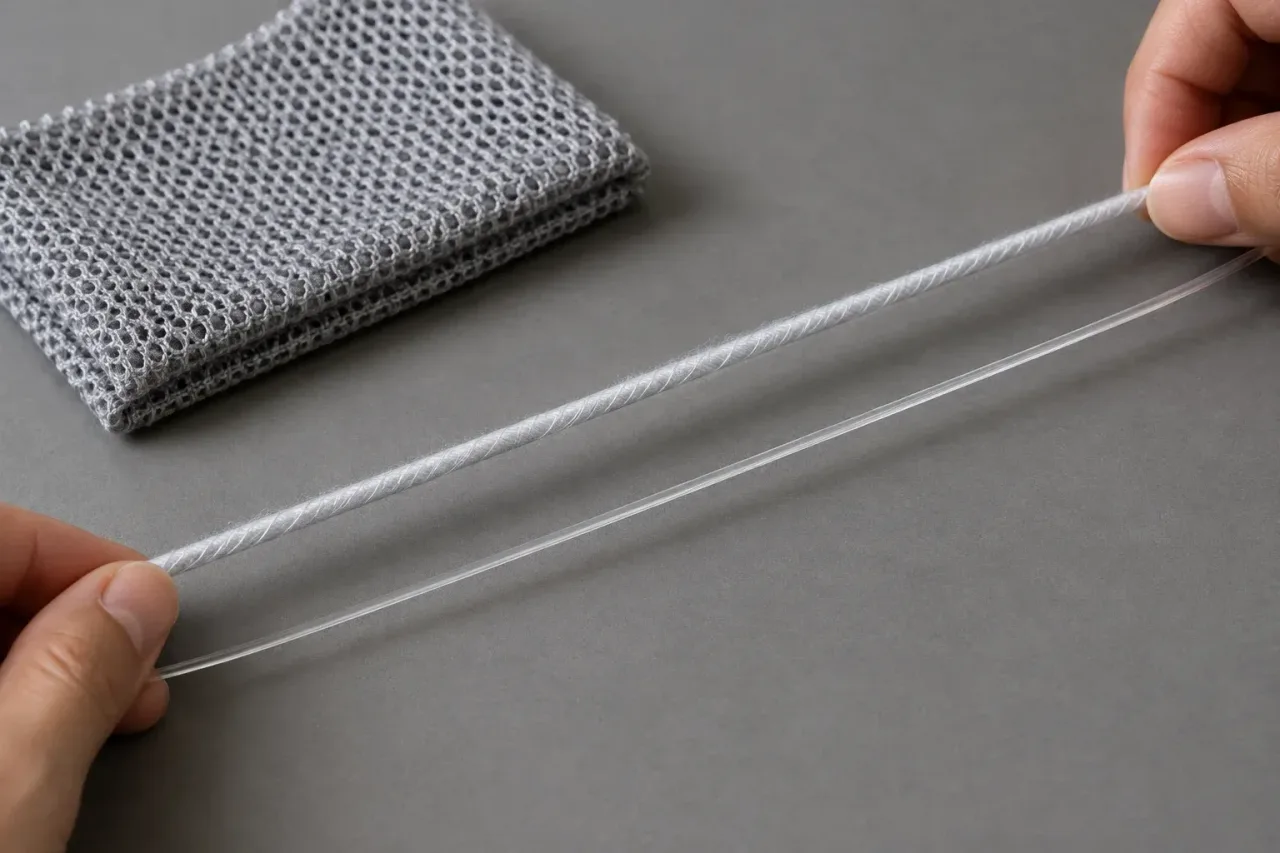
Specifying covered spandex eliminates this vulnerability. In a covered yarn, the interior elastane core is wrapped or air-entangled with protective filament nylon or polyester yarns prior to knitting. This construction ensures that only smooth, continuous outer filament jackets encounter external contact. Because synthetic continuous filaments lack free staple ends, covered yarns resist surface fuzzing and shield the core elastane from abrasive breakdown during repetitive arm swings.
Nylon-Spandex vs. Polyester-Spandex: Selecting the Right Base for Lightweight Sleeves
Both nylon-spandex and polyester-spandex mesh knits outperform natural staple fibers in sleeve friction zones, but their fiber properties serve different garment objectives. Nylon-spandex is the primary choice for close-fitting garments where skin contact comfort and recovery are paramount. Knitted nylon filaments provide a cool, smooth texture with flexible dimensional recovery, making them well suited for dance sleeves, athleisure tops, and form-fitting active layers. For example, ClothFactory's catalogue reference CF-TS-0012 220 GSM High-Stretch Nylon Spandex Yoga Fabric demonstrates how a 75% nylon and 25% spandex composition provides flexible fit and freedom of movement in close-to-body designs.
Polyester-spandex mesh offers high synthetic durability and versatility for athletic and performance sportswear that undergoes aggressive laundering. It pairs well with multi-panel athletic shirts requiring consistent shape retention over extended wear. ClothFactory's catalogue reference CF-TS-0010 180 GSM Microfiber Polyester Spandex Stretch Fabric illustrates a functional synthetic balance using 90% polyester and 10% spandex at a lightweight 180 g/m² specification.
|
Sleeve Fabric Base |
Primary Fiber Attributes |
Friction & Abrasion Response |
Recommended Sleeve Applications |
|---|---|---|---|
|
Filament Nylon-Spandex |
Soft hand feel, smooth surface, flexible recovery |
Resists filament breakdown; retains smooth skin contact under friction |
Form-fitting activewear tops, dancewear sleeves, lingerie layers |
|
Filament Polyester-Spandex |
Durable synthetic structure, stable recovery, versatile finishing |
Resilient against sustained surface rubbing; holds structure under wear |
High-movement athletic tops, outdoor sportswear, teamwear sleeves |
Standardized Test Protocols and Quality Grades for Sleeve Mesh
Apparel tech packs must define measurable laboratory methods and numerical acceptance criteria rather than relying on subjective vendor guarantees. Two standardized pilling test protocols evaluate knit fabric friction resistance on an objective 1 to 5 visual scale, where Grade 5 represents no surface change and Grade 1 indicates severe, dense pilling:
- Modified Martindale Method (ISO 12945-2): Rubs circular fabric specimens in a defined figure-of-eight Lissajous path against an abradant or against the fabric itself under controlled pressure. For general knit apparel quality control, tech packs typically require a measured result of Grade 3 minimum after 2,000 rubs, while higher-performance baselines specify Grade 4.
- Random Tumble Pilling Tester (ASTM D3512): Tumbles cut fabric specimens inside an impeller-driven, cork-lined chamber for 30 minutes to generate omnidirectional tumbling friction across open structures, graded from Grade 1 to 5 against photographic reference standards.
When sourcing lightweight mesh yardage, request lab test reports citing standard test method ISO 12945-2 or ASTM D3512 from supplier strike-offs. Confirming that the mesh construction relies on covered filament yarn and achieves at least a Grade 3 or Grade 4 test rating prevents premature fuzzing along garment sleeves during bulk production.