
Progressive Step-Ribbed Knit is an 86.5% nylon/13.5% spandex fabric specified at 170 GSM and 165 cm finished width. Its stepped texture can provide visual depth in performance apparel, but “bamboo-style” describes appearance rather than fiber content or proven breathability; airflow, recovery and surface durability still require finished-fabric verification.
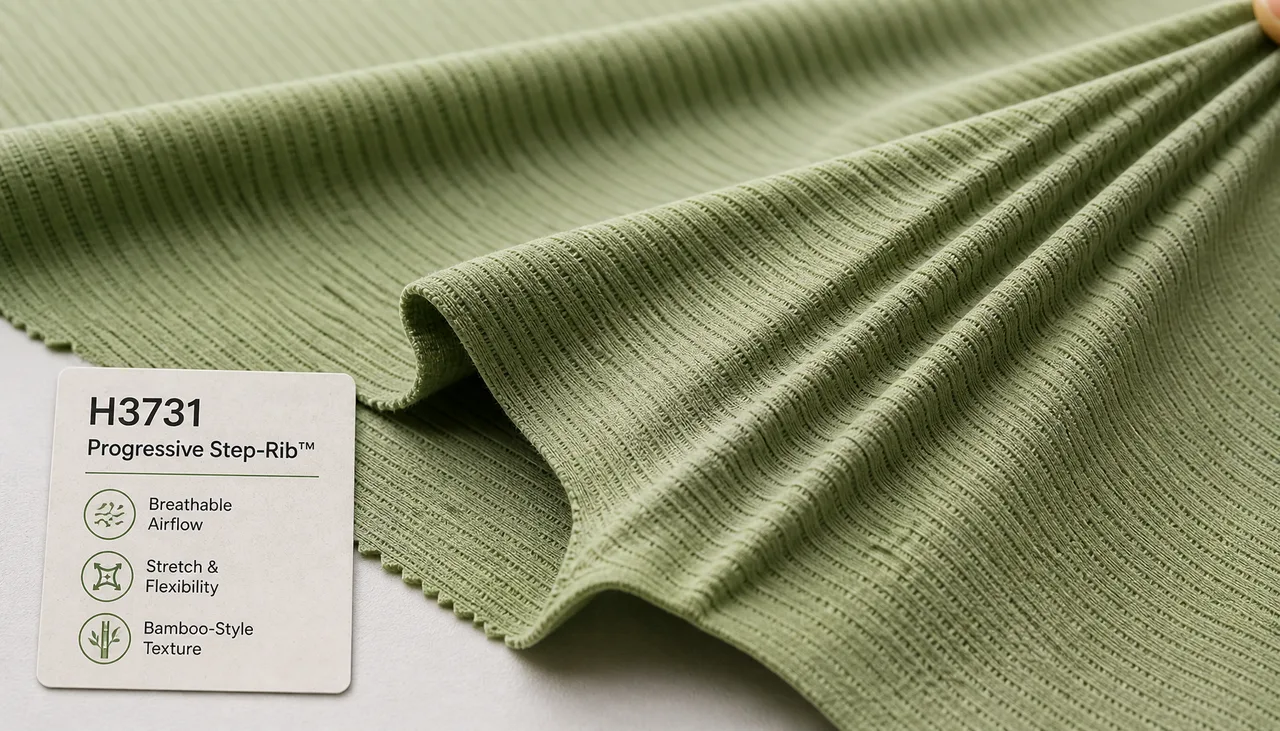
Treat the texture name as a design description
A bamboo-like or stepped surface does not mean the fabric contains bamboo fiber. The purchase specification should state the actual fiber composition and knit construction separately from the visual name.
The raised and recessed areas may influence contact with the skin, drape, moisture spreading, and surface reflection. Their effect depends on yarn, loop density, thickness, finishing, and garment fit. Ask for measured results if the product brief includes ventilation, cooling, or quick-dry claims.
Match the structure to the garment panel
A textured fabric used across an entire legging behaves differently from the same fabric used as a ventilation panel in a training top. Full-garment use requires consistent recovery, coverage, and surface appearance over large areas. Zoned use adds seam compatibility and differential-stretch risk where two materials meet.
During sampling, compare the step-rib candidate with adjacent fabrics at the extension expected in the garment. Check seam waviness, panel distortion, hand transition, and recovery after wear simulation and laundering.
Measure breathability under defined conditions
Visual gaps or raised texture are not a substitute for air-permeability data. Record the test method, pressure differential, conditioning, specimen orientation, and result for the finished fabric. If moisture behavior is relevant, assess spreading and drying separately; air flow and drying are not the same property.

Control texture direction and cutting yield
Step-rib direction can affect appearance and stretch. Mark the approved face and grain direction, then test whether rotating pattern pieces produces visible mismatch. If panel direction must remain fixed, include that restriction in marker planning and costing.
Request finished usable width, edge allowance, shrinkage, and any repeat dimension. Cost per kilogram alone cannot show the effect of directional cutting, edge loss, or surface defects on accepted garment yield.
Sample-review checklist
- confirm actual composition, construction, finished GSM and usable width;
- record stretch and recovery by direction before and after the care cycle;
- inspect texture relaxed and at garment-relevant extension;
- test air permeability or moisture behavior only when the product brief requires it;
- assess pilling, snagging and abrasion on raised areas;
- sew the fabric alone and against any adjoining panel material;
- approve shade, face, direction and permitted surface variation.
Procurement next step
Send the supplier the garment type, panel location, expected extension, target weight and width, texture direction, color, care cycle, and required airflow or durability tests. Request identified samples and sufficient continuous fabric for marker, sewing, washing, and garment-fit trials before approving bulk production.