Compare sample-yardage plans by the decisions they allow you to make, not by the number of free metres offered. A stock cutting, a development length and a production-representative sample may look similar but support different approvals. The useful plan provides enough correctly identified material for the required tests and garments without presenting unresolved assumptions as bulk approval.
What is each sample intended to approve?
Ask the supplier to state whether the material is for initial hand-feel selection, pattern development, colour approval, performance evaluation or production confirmation. A stock fabric can help establish a silhouette while differing from the proposed bulk colour or finish. That does not make it useless; it limits what the buyer can approve from it.
Record known differences in yarn, construction, dyeing and finishing. A sample described only as “similar quality” cannot support a precise technical sign-off. Ask which differences will disappear in the next sample and which remain part of the commercial proposal.
How much sample yardage is actually needed?
Build the request from the sampling plan. Include the number of garments and sizes, laboratory specimen requirements, retained references and any second-round sewing trials. Confirm laboratory cutting instructions before allocating fabric; different methods and repeat counts need different quantities.
In a hypothetical plan, six garments at 0.90 m each require 5.40 m. Adding an agreed 2.00 m for laboratory work and 1.00 m for retention gives 8.40 m before a separate contingency. The 2.00 m allowance is illustrative, not a universal laboratory requirement. Use consumption from a marker at the sample’s actual usable width.
Confirm units. Ten yards equals 9.144 m, not 10 m. That 0.856 m difference could remove almost one garment from the illustrative plan. Specify whether the requested quantity must be one continuous full-width length or can include separate pieces.
Is the sample representative of the proposed bulk order?
Request the article revision, sample lot, colour, finish, measured weight and usable width. Ask whether the material was produced through the proposed bulk route or prepared using a different development process. A supplier should identify any remaining scale-up or process differences so the buyer can plan confirmation testing.
For stretch activewear, a change in finish can alter hand feel and measured dimensions even when the commercial article name remains unchanged. Keep the approved cutting and a record of its preparation and care history. Do not approve production against memory of a sample viewed weeks earlier.
How should we compare two different offers?
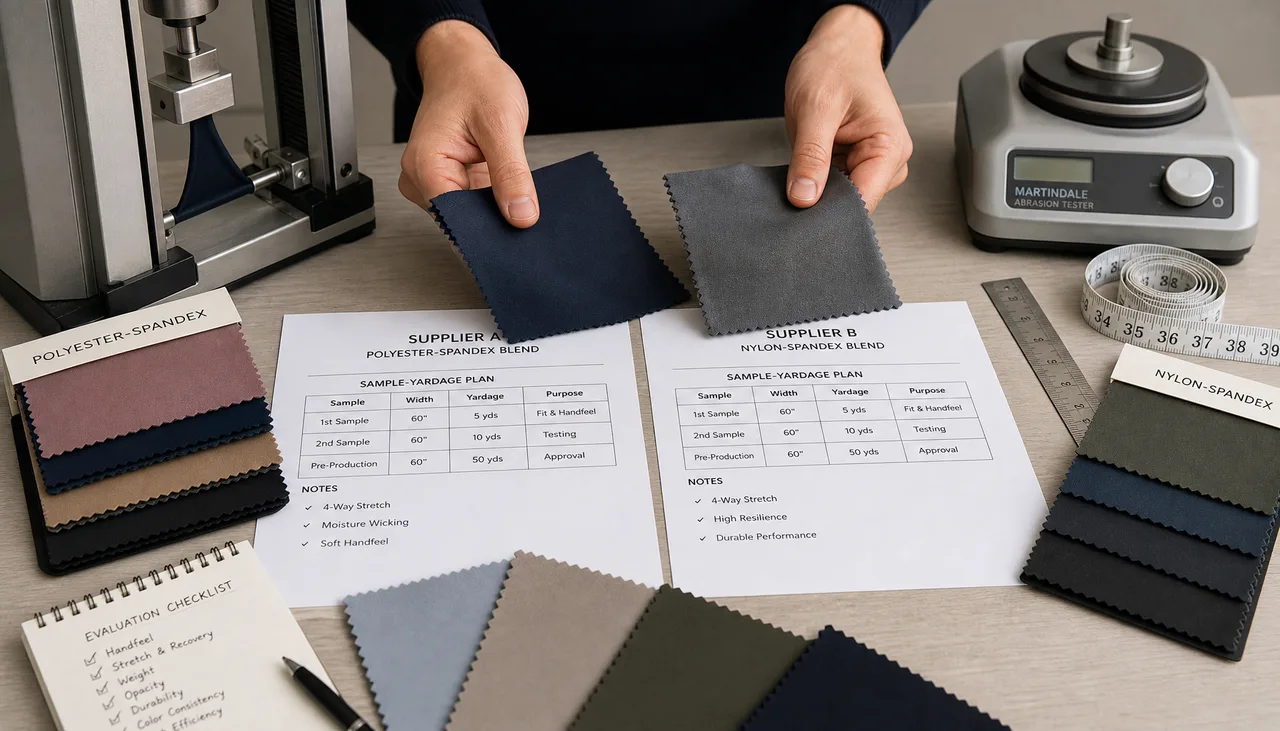
Suppose Supplier A offers 12 m of stock fabric in a substitute finish, while Supplier B offers 9 m using the proposed production construction and finish. These are hypothetical offers. Against the 8.40 m plan, B appears sufficient before contingency only if width, continuity and specimen needs match the plan. A supplies more length but may leave performance and finish approval unresolved.
Choose according to the development stage. A may be useful for an early pattern trial if the differences are acceptable and documented. B may reduce the need for a later material-confirmation round, but it still does not prove consistency of an unseen bulk lot. Compare the total number of remaining decisions, not just metres supplied.
Which costs and timing terms should be written down?
Separate fabric charges, development fees, colour charges, cutting fees, shipping and laboratory work. Confirm whether any fee is credited against an order, the conditions for that credit and whether a changed specification triggers another charge. “Free samples” can still create courier costs and repeat-development expense.
Ask when the lead-time clock starts: brief acceptance, payment, yarn availability or colour approval. Distinguish material-ready dates from dispatch and receipt. Specify who approves substitutions; an unannounced substitute can arrive on time while failing to support the planned testing.
How do we keep sample approvals traceable?
Assign a sample identifier and keep it on the cutting, technical sheet, test request, garment and approval record. Record receipt date, usable dimensions, visible defects and deviations from the request before cutting. Reserve the retention piece so it is not consumed by an unexpected extra fitting.
Use a change log to state what is approved, what is rejected and what remains open. If a fit sample passes but recovery testing fails, do not write a general “sample approved” message. State that pattern approval is conditional and material approval remains on hold pending the named correction and retest.
What makes a sample plan ready to place?
A workable plan identifies purpose, quantity, units, usable width, continuity, material revision, permitted differences, cost, timing and the next approval gate. It also assigns responsibility for test results and for replacing non-representative material.
For a ClothFactory enquiry, send the garment brief and that sampling plan together. The aim is to purchase enough reliable information to decide whether to proceed, revise or stop. Extra yardage has little value if its identity and approval scope are unclear.