
For trail-running tops, shortlist jersey, interlock, or mesh according to pack contact, ventilation needs, coverage, and garment fit. The structure name narrows the development route, but yarn, stitch density, finish, and panel placement determine whether a particular fabric works.
Map the running vest before selecting mesh
Consider a warm-weather top worn beneath a loaded hydration vest. The shoulder and upper-back zones experience contact that exposed side panels do not. An open construction selected for ventilation needs a snag and contact assessment in those zones. Ventilation under a covering vest also depends on the entire layering arrangement, so airflow measured on an uncovered swatch cannot describe the complete garment.
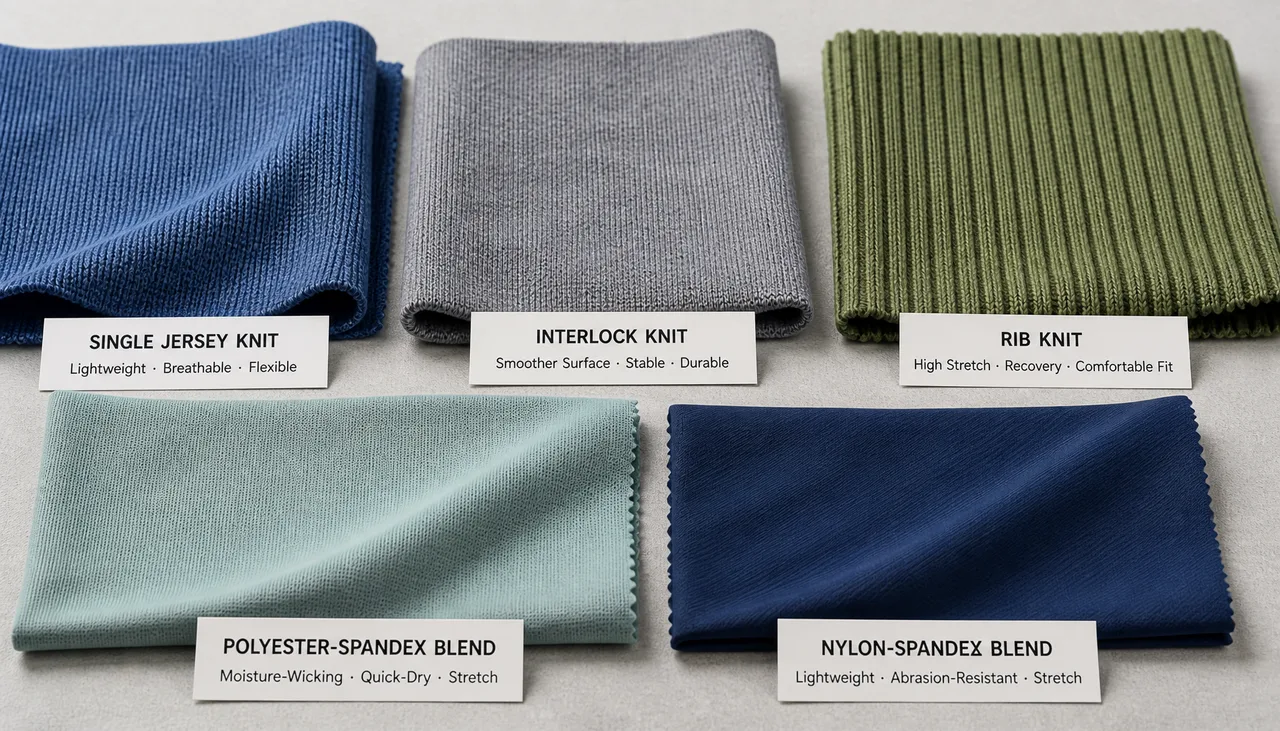
Compare candidates by panel function
| Candidate | Development role | Issue to resolve |
|---|---|---|
| Single jersey | A body-fabric option where low mass and drape matter | Edge curl, post-care rotation and coverage in the proposed construction |
| Interlock | A double-knit candidate for panels requiring a more substantial feel | Whether its actual weight and drying behavior fit the brief |
| Mesh or pinhole knit | A candidate for deliberately ventilated panels | Snagging, opacity and seam behavior around open areas |
| Rib | A candidate for neck or other fitted components | Recovery and compatibility with the adjoining body fabric |
These are screening roles, not guaranteed performance rankings. Compare the finished candidates at their actual GSM and width; equal fiber percentages do not make different constructions equivalent.
Is panel zoning worth the added complexity?
Using a more open side panel and a separate shoulder fabric can address different requirements, but adds seams, inventory, shade matching, and potentially separate minimum orders. For a small launch, one fabric that passes the contact and comfort brief may be commercially preferable. For a larger program, calculate whether the functional benefit justifies the added cutting and sewing operations.
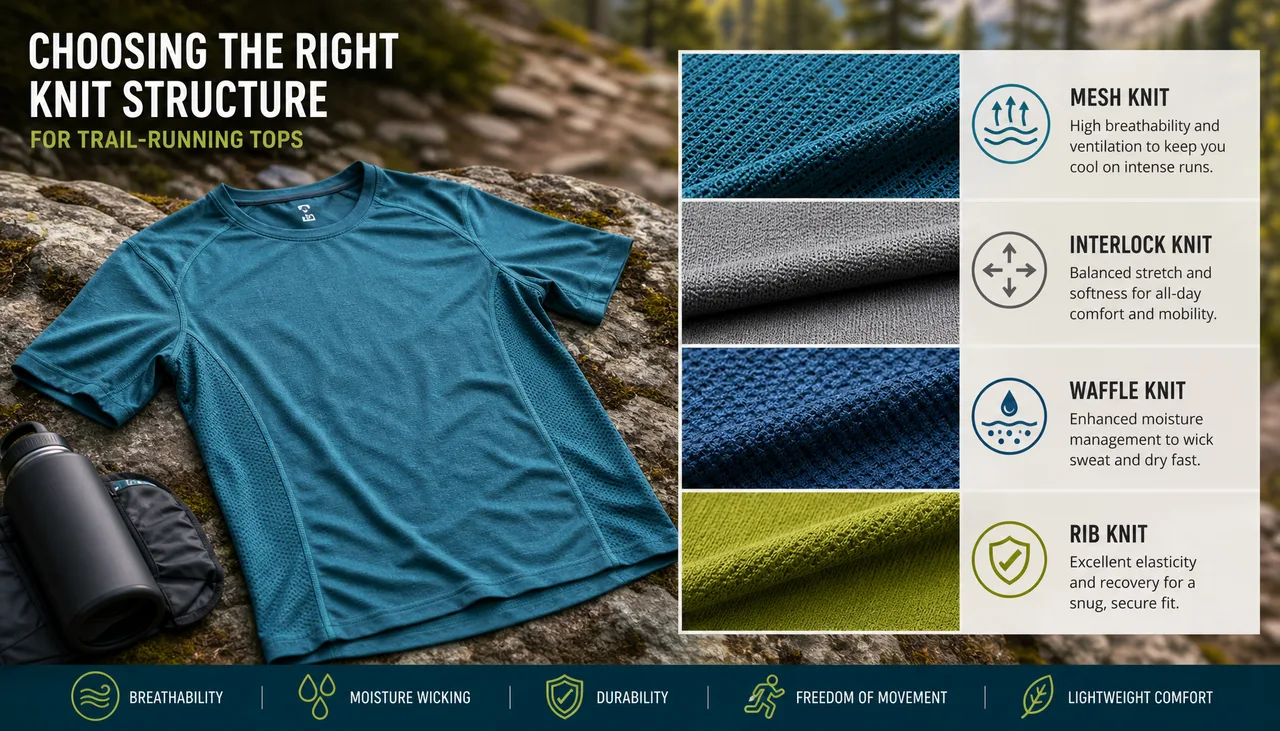
Separate structure from functional finishing
Specify any moisture-management or odor-control finish separately from the knit. Confirm its contribution after the agreed care procedure and check whether it changes hand, shade, or printing response. Neither nylon-spandex nor polyester-spandex composition alone verifies a drying or odor claim.
Approve in the intended running system
Make the top with production seams and decoration, then assess reach, hem movement, wet cling, and contact with the intended vest. Pair that trial with laboratory measurements chosen for the material risks. Record the vest configuration and garment size so comparisons are repeatable. Request candidate yardage with construction, finished GSM, minimum usable width, finish, and lot identity, then select the simplest panel arrangement that meets the brief.