
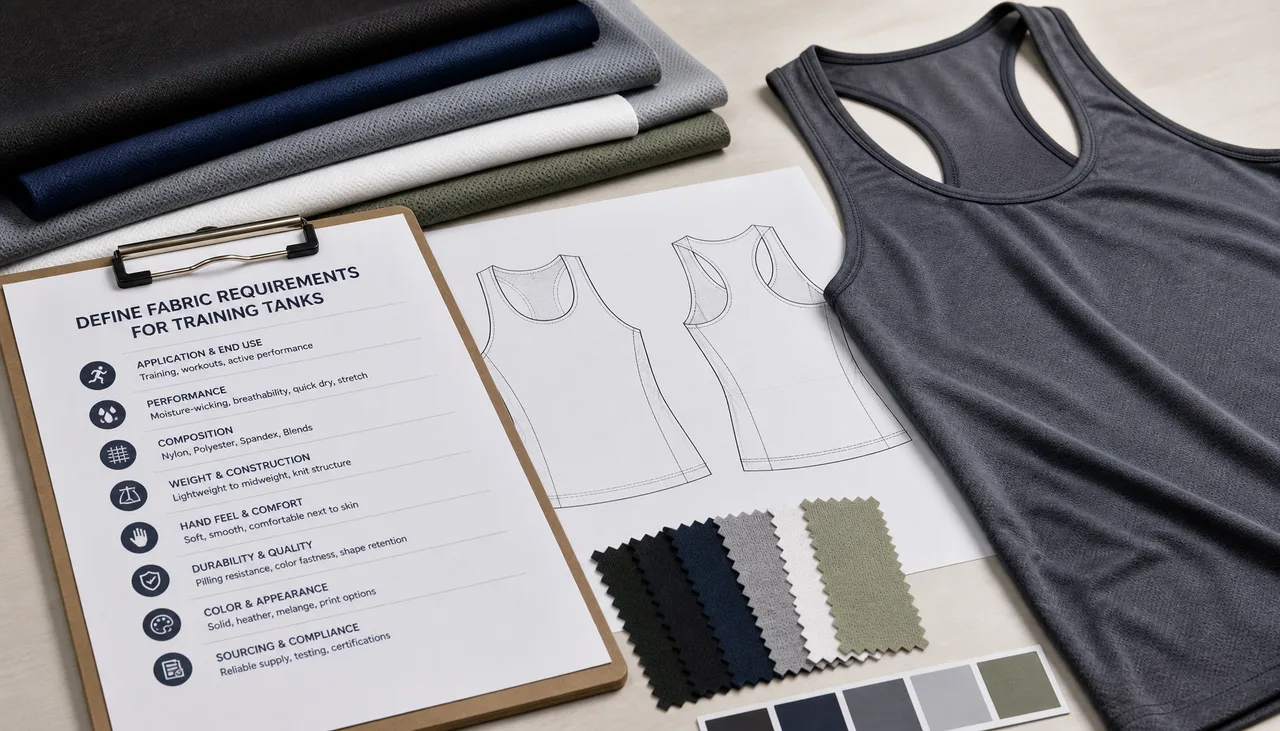
Define training-tank fabric from garment fit, armhole construction, movement, and required coverage before choosing composition or GSM. A loose gym tank and a fitted yoga tank need different balances of drape, recovery, ventilation, and edge stability.
Start at the armhole
Consider a fitted racerback tank used for overhead lifting. The chest and back panels extend during movement, while the armhole must return without gaping. An easy-stretch body fabric paired with stiff binding can restrict movement; a weak binding can distort the opening. Supply the fabric developer with the pattern, panel direction, binding method, and reference fit rather than requesting “high stretch” alone.
Choose coverage and weight together
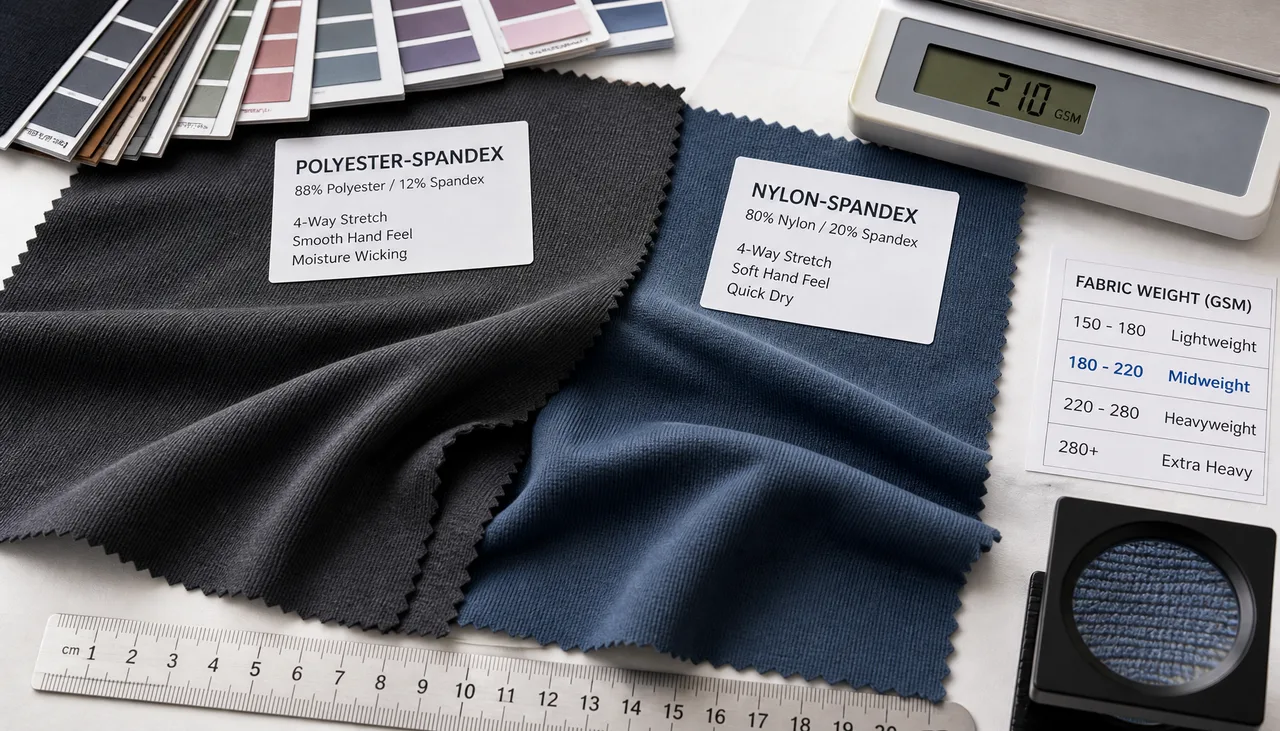
A lightweight candidate can reduce garment mass, but its suitability depends on coverage in the selected color and at garment extension. For pale tanks, assess the finished garment under agreed lighting, both relaxed and stretched, and include wet-state assessment where relevant. A dense knit may improve coverage yet change drape and thermal comfort. GSM describes mass per area; it is not a direct measure of opacity or airflow.
Hypothetical calculation: if the cut panels contain 0.50 m² of body fabric, changing from 150 to 180 g/m² adds 0.50 × 30 = 15 g before binding, thread, labels, or decoration. This is a garment-weight comparison, not a consumption estimate including cutting waste.
Keep moisture claims distinct
Water spreading, drying time, and air permeability answer different questions. Ask which property supports the proposed claim and compare candidates using the same specimen preparation and test conditions. Polyester-spandex and nylon-spandex labels do not establish these results. Where performance depends on a finish, assess the agreed washed state as well as the delivered fabric.
Use a short sewing trial to expose hidden costs
- Check armhole and neckline recovery after movement and care.
- Review hem curl, seam puckering, needle damage and side-seam rotation.
- Apply the intended print or transfer before approving appearance and dimensions.
- Run the actual size mix at the minimum usable width to establish consumption.
A fabric that handles poorly during binding or cutting can consume more labor and produce more rejected garments despite a lower material price. Record the sewing setup and sample identity so the trial can be repeated when the material changes.
Send a specification the supplier can act on
Provide the silhouette, size range, fit reference, knit preference, target finished GSM, minimum usable width, color plan, binding method, and required care conditions. Separate mandatory performance limits from preferences. Request identified yardage for a complete tank trial, then freeze the approved construction and tolerances before placing the bulk order.