
A cycling-short fabric specification should define riding discipline, garment fit, panel orientation, support, stretch and recovery, opacity at use extension, skin-contact comfort, finished GSM, usable width, durability, moisture and drying requirements, color, and care conditions. Buyers should validate the fabric in a sewn short with its chamois, seams, and waistband. Fiber percentage and a hand swatch cannot predict pressure, movement, coverage, or fit retention in the riding position.
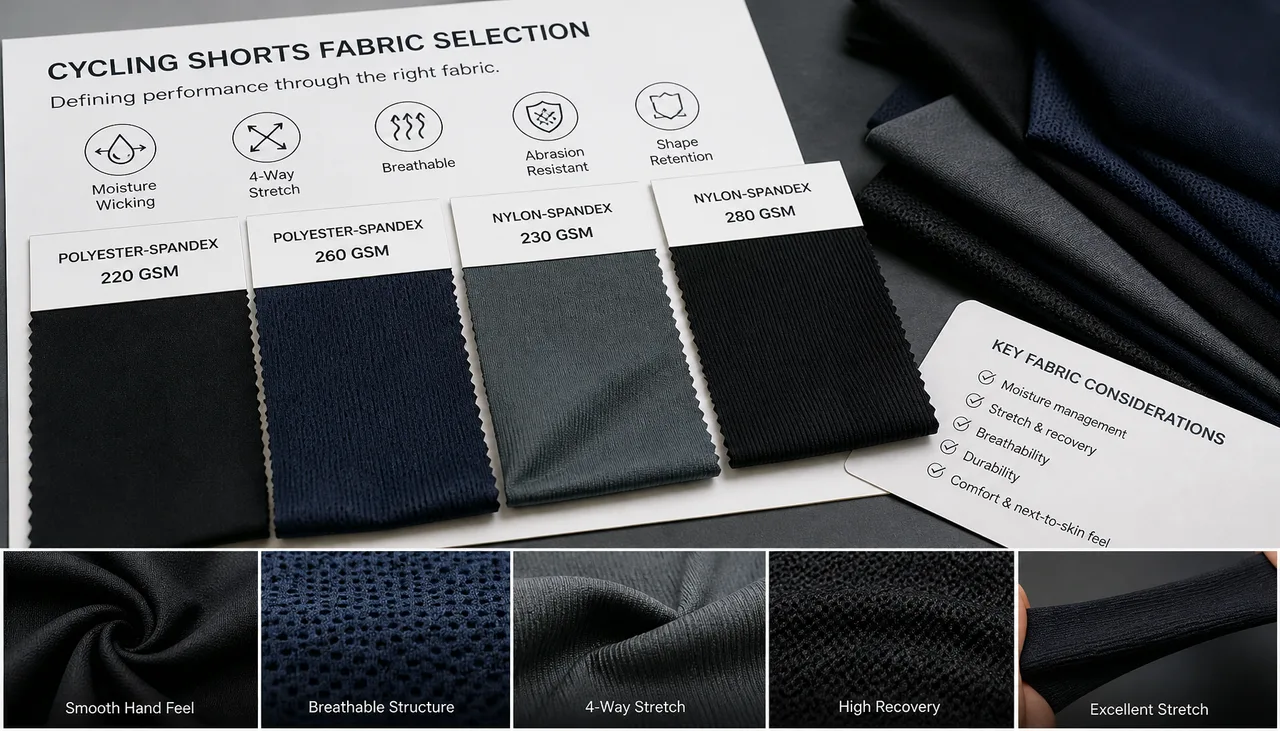
Describe the cycling application
State whether the garment is for road, indoor, commuter, gravel, or mountain use; the expected ride duration; climate; compression intent; size range; and whether it is a bib or waist short. Include chamois construction, pocket load, panel count, seam type, and high-abrasion zones. The forward-flexed riding posture stretches hip and seat panels differently from standing fit, so requirements must be based on the actual garment geometry and intended motion.
Specify stretch by direction and panel orientation
Define the required extension and recovery in the directions used around the body and along the leg. Provide the supplier and laboratory with panel orientation, test method, load or extension, cycle count, hold time, relaxation time, and allowable growth. “Four-way stretch” is not an acceptance criterion. A fabric can extend easily yet recover poorly, creating knee, seat, or waistband bagging after prolonged riding. Compare directional data under identical conditions and confirm it in fit trials.
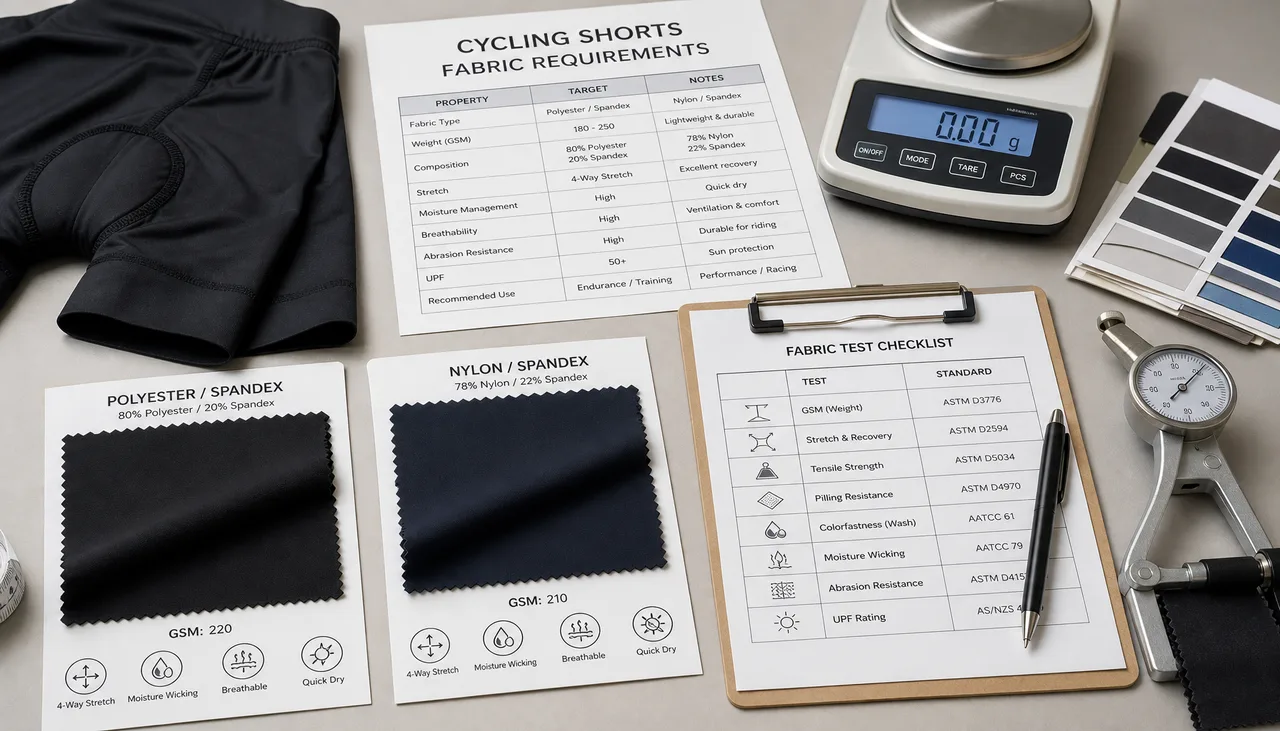
Set coverage at the intended extension
Opacity should be assessed in the approved color while the fabric is stretched to a condition representative of the finished garment. A flat, relaxed swatch can hide show-through caused by reduced stitch coverage, pale shades, print, wetting, or excessive negative ease. Define the specimen extension and viewing or instrumental method, then confirm the result on the sewn garment in the riding posture. Passing one dark color does not automatically approve pale or printed colorways.
Balance support, mass, and thermal comfort
Higher GSM can improve coverage and structure but may increase garment mass, drying time, and heat burden; lower GSM may improve lightness while reducing support or durability. Knit density and yarn selection matter alongside weight. Establish a target from reference garments and trial fabrics rather than using a generic range. Ask the supplier to state finished GSM with tolerance and measure representative positions after conditioning and any relevant heat or wash exposure.
Convert the fabric choice into garment mass
Illustrative calculation: if the cycling-short marker uses 0.62 m² and the fabric is 230 GSM, theoretical fabric mass is 0.62 × 230 = 142.6 g before cutting loss, chamois, elastic, pockets, thread, and trims. At 250 GSM, the same area contributes 155 g, or 12.4 g more. This does not decide performance; it quantifies a weight trade-off that should be reviewed with coverage, support, drying, and fit.
Control skin contact and durability
Evaluate the skin-contact face, seam interaction, edge behavior, wet cling, pilling, abrasion, snagging, and surface change after the intended care cycles. Seat and inner-thigh zones may require more attention than low-contact panels. If the garment uses sublimation, transfer printing, silicone grippers, bonding, or adhesive films, process representative fabric before approval because heat and chemicals can change shade, stretch, recovery, hand, or dimensions.
| Field | Required purchasing detail |
|---|---|
| Construction | Composition, knit, face, reverse and finished state |
| Dimensions | Finished GSM, minimum usable width and tolerances |
| Mechanical behavior | Directional stretch, recovery or growth, and test conditions |
| Appearance | Color, opacity at extension, luster and physical standard |
| Durability | Care procedure and relevant pilling, abrasion and stability criteria |
| Bulk control | Sampling frequency, roll limits, traceability and change notification |
Approve through a garment trial
Request enough identified yardage for testing, marker work, sewing, fit sessions, riding evaluation, decoration, and repeated care. Assess multiple sizes or the highest-risk sizes, and record the chamois, seam, elastic, and panel orientation used. Send ClothFactory or any candidate supplier the full use case, specification, color plan, forecast quantity, tests, and approval stages. Release bulk production only when the physical standard, numerical results, and finished-short performance refer to the same fabric version.