
Before approving fabric for a UPF 50+ shirt, buyers should verify a complete test report for the exact finished construction and color, then confirm whether the rating remains applicable after stretching and the intended care cycle. Fiber content, GSM, opacity, or a supplier declaration cannot replace matched test evidence.
Start with the claim and garment coverage
Define where and how “UPF 50+” will appear on the product, packaging, and sales page. The claim should match the market, test method, fabric condition, and garment design. Sleeves, collars, mesh panels, openings, and uncovered skin influence the protection delivered by the finished shirt even when the main fabric has a valid result.
Identify the activity, climate, fit, color range, and expected extension. A fitted sun shirt may open its knitted structure at the shoulders or torso, while a loose shirt may prioritize airflow and drape.
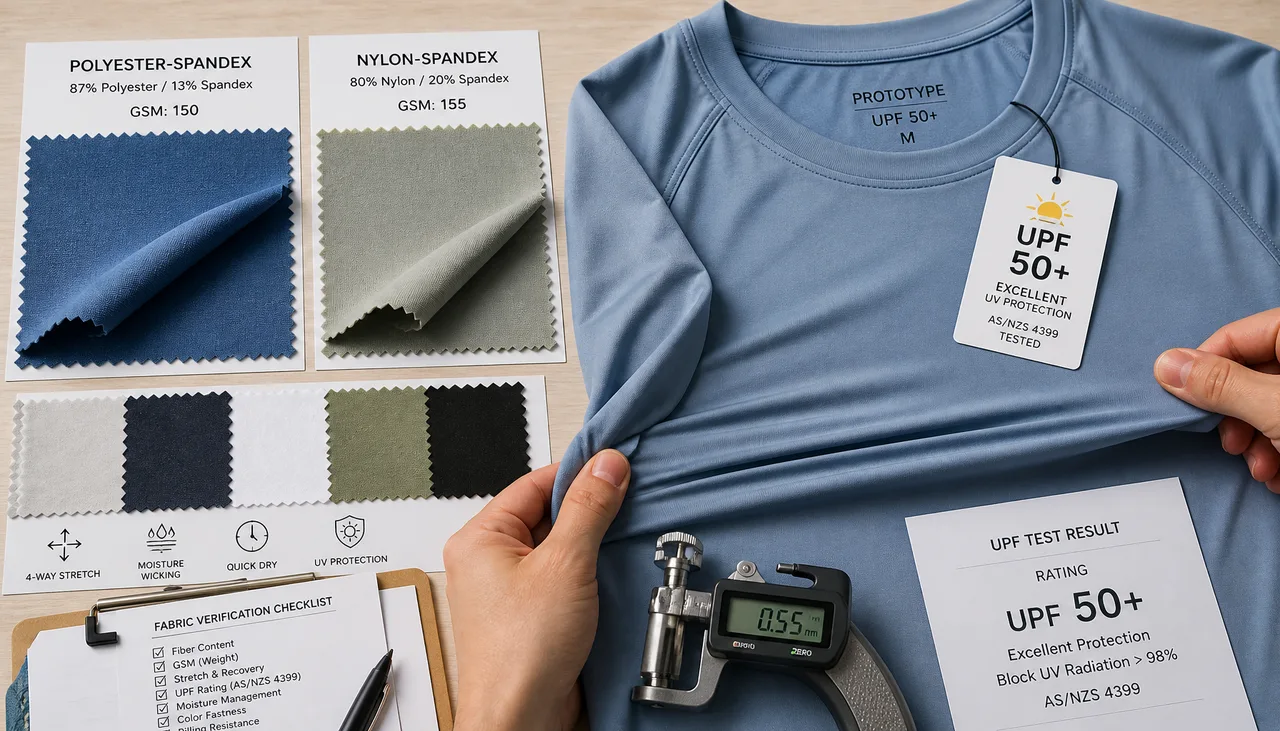
Read the full report, not the headline value
The report should identify:
- testing laboratory and test method;
- fabric code, composition, construction, color and finish;
- specimen condition and conditioning procedure;
- individual or reported UPF result and classification;
- whether the sample was unwashed, washed, wet, stretched, or otherwise conditioned;
- report date and traceability to the submitted sample.
Check that the fabric on the report matches the quoted and sampled material. A report for a similar composition or a different shade does not automatically support the current order.
Treat color, stretch, and washing as variables
UV transmission can change with color, construction, extension, moisture, and finishing. Establish which colors represent the range and whether each color requires testing or a documented validation approach.
If the shirt is close fitting, assess the fabric at garment-relevant extension. If the claim must remain after laundering, define the wash and dry procedure and the number of cycles before testing. Do not describe a result as durable when only an unwashed specimen was evaluated.
Evaluate comfort separately from UPF
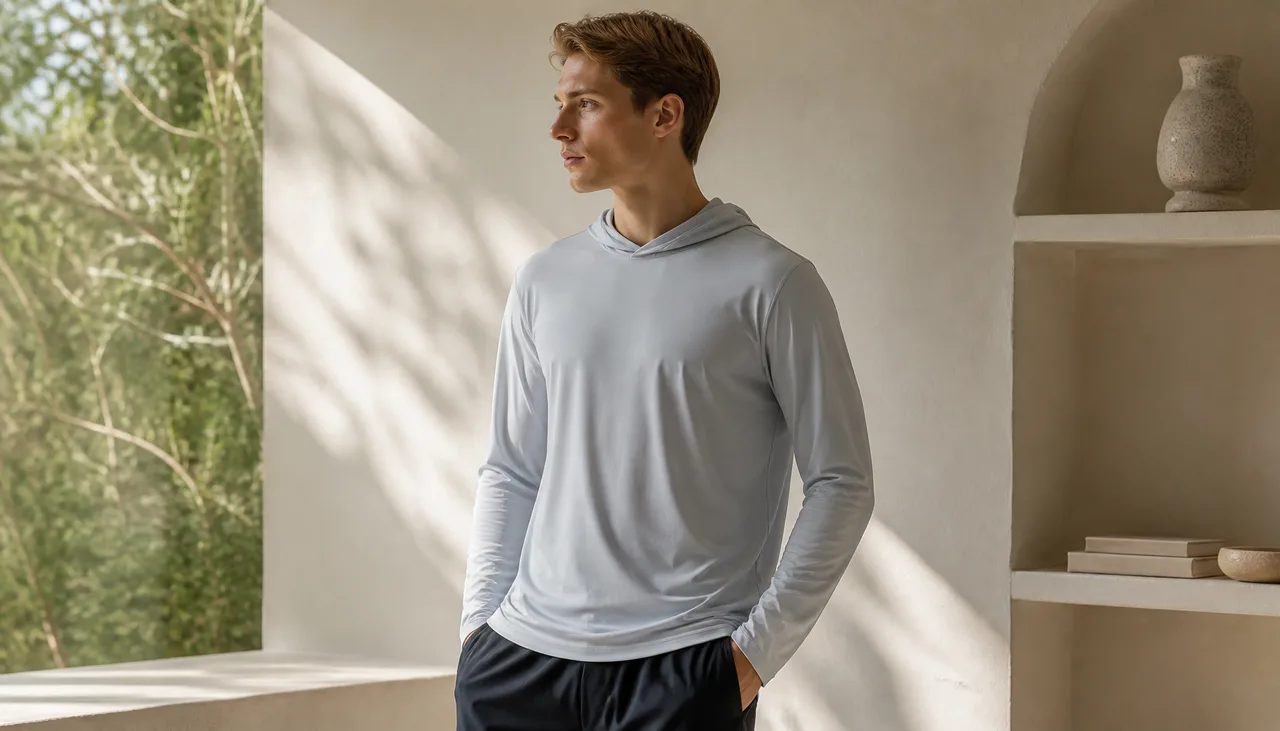
UPF does not establish breathability, cooling, moisture management, softness, or durability. Specify those properties separately and use relevant measurements. A denser construction may improve coverage while increasing weight or reducing airflow; a more open structure may feel lighter but require careful UPF validation under stretch.
Garment trials should check drape, seam puckering, collar and placket stability, dimensional change, colorfastness, and wearer movement. These checks support the product decision but do not replace the UPF report.
Supplier evidence checklist
| Evidence | Buyer check |
|---|---|
| UPF report | Exact fabric, color, finish, method and condition match the order |
| Specification sheet | Composition, construction, finished GSM, width and finish are recorded |
| Wash protocol | Care route and pre-test cycles match the intended claim |
| Color plan | Representative or complete shade validation is defined |
| Bulk control | Lot identity and change-control process are agreed |
Procurement next step
Send the supplier the garment design, fit, color range, care label, expected extension, target fabric weight and width, and exact UPF wording. Request matched reports, identified samples, and enough material for stretched panels and washed garment trials. Release bulk only when the claim, evidence, specification, and production fabric are traceable to one another.