
Engineered Vertical Stripe Knit is an 80% nylon/20% spandex fabric specified at 170 GSM and 165 cm finished width. It can be considered for lightweight athletic panels requiring visible texture and stretch, but the specification does not by itself establish opacity, support, breathability, moisture management or recovery.
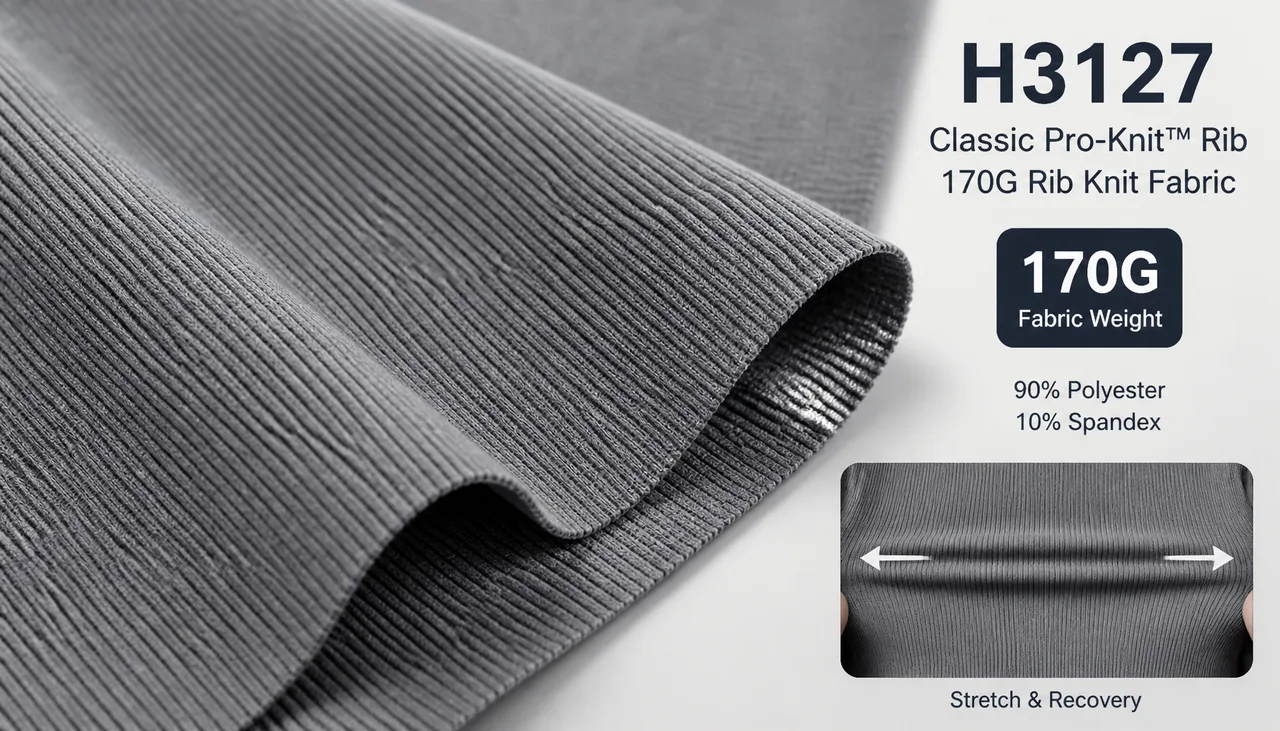
Decide where the rib will be used
Rib fabric may be used for a complete fitted top, waistband, cuff, side panel, or design insert. Each location creates a different requirement. A waistband needs controlled recovery and seam stability, while a body panel may prioritize drape, coverage, and comfort against the skin.
Define the panel, expected extension, target fit, and adjacent materials before comparing swatches. A rib that performs well as trim can distort a large garment panel, and a body fabric may lack the recovery required for an opening or band.
Interpret 170 GSM correctly
GSM states mass per square metre; it does not state thickness, density, usable width, or garment yield. Yarn size, rib geometry, finishing, and relaxation affect how two 170 GSM fabrics feel and cover the body.
Illustrative calculation — not ClothFactory production data: if a finished fabric is 170 g/m² and the assumed usable width is 1.50 m, 100 linear metres contain approximately:
170 g/m² × 1.50 m × 100 m ÷ 1,000 = 25.5 kg
The result changes with actual usable width and conditioned weight. Use verified finished measurements for costing rather than applying the example to an order.
Test stretch, recovery, and coverage together
Record stretch and recovery in both directions with the load or extension, hold time, recovery time, conditioning, and wash history stated. Inspect the rib relaxed and at the extension expected in the garment. Look for opening between ribs, loss of coverage, surface shine, and delayed recovery.
Spandex content does not by itself define compression or support. Pattern reduction, seam construction, fabric force at garment extension, and body movement all affect the finished fit.
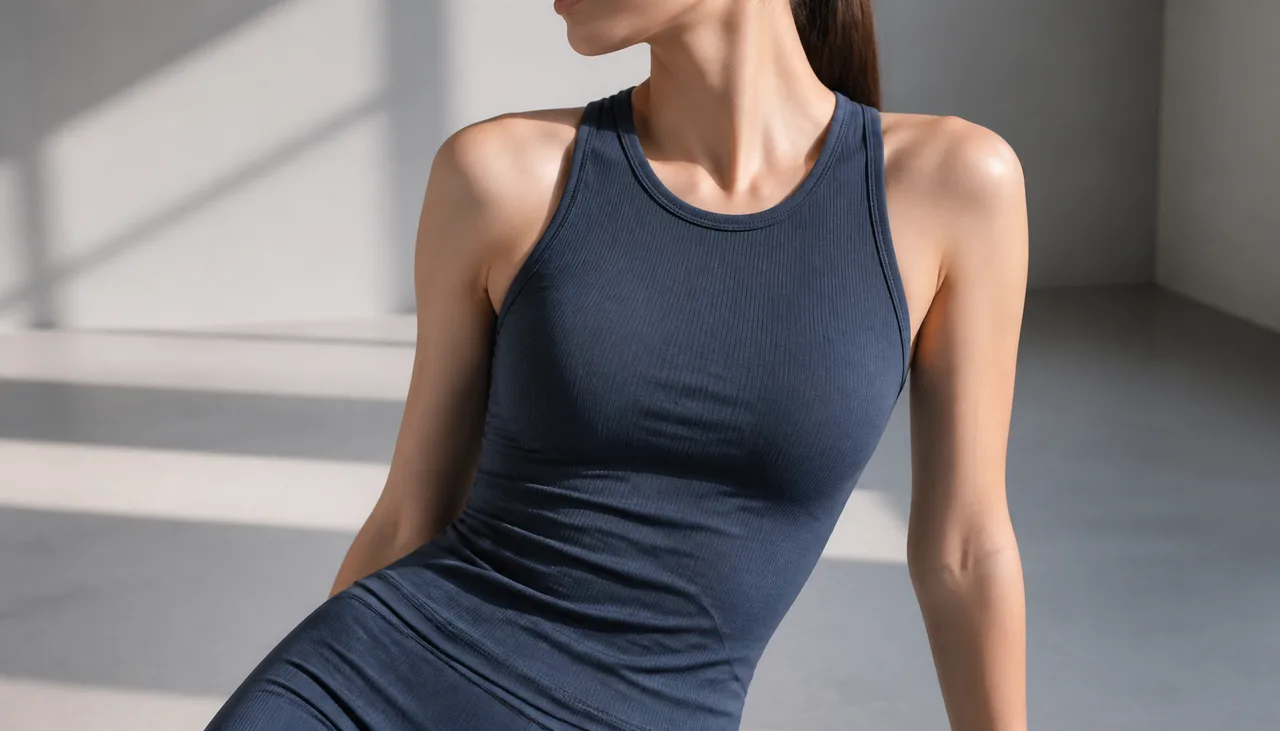
Control direction, surface, and seams
Ribs make grain direction and panel rotation visible. Approve the face and direction, then assess whether marker rotation creates texture or shade mismatch. Sewing trials should check needle damage, skipped stitches, seam grin, puckering, and recovery after extension and laundering.
If moisture, quick-dry, anti-odor, or cooling performance is required, specify it separately and request evidence for the finished fabric. Polyester content does not automatically prove those functions.
Procurement next step
Send the supplier the garment type, panel use, target composition, finished GSM and width, expected extension, color, care cycle, and required tests. Request an identified sample and enough yardage for marker, sewing, washing, and fit trials. Approve bulk against a sealed sample and written tolerances rather than the “170 GSM rib” description alone.